

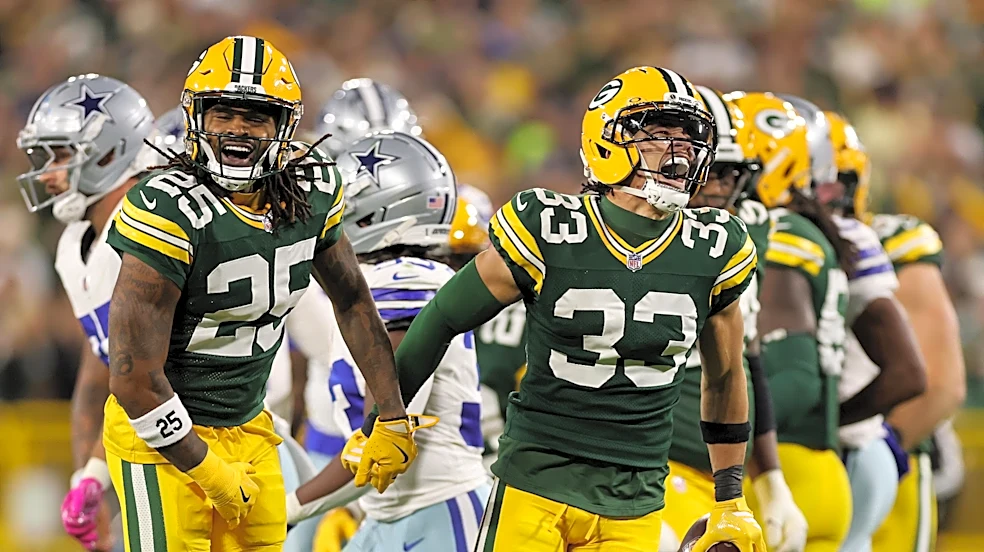
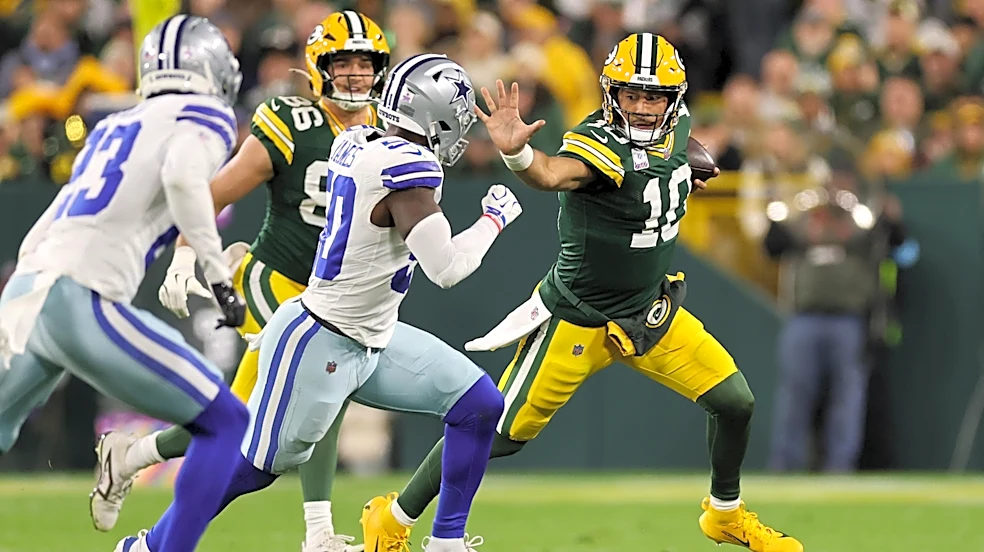
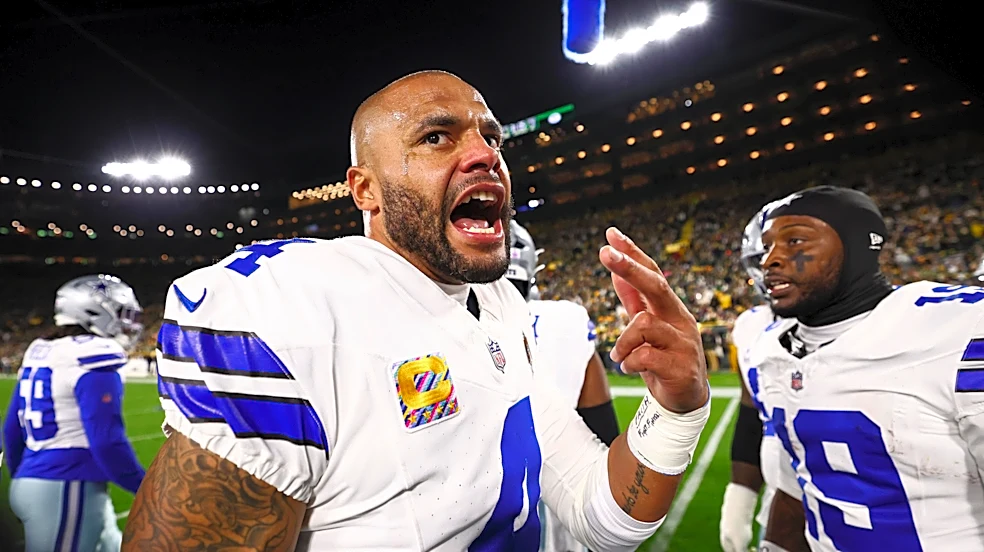

There is a point in every disappointing season when the conversation shifts from how a team can make the playoffs to whether it has any realistic chance of competing at all. After another lifeless start and a 23-13 loss to the Green Bay Packers, the Dallas Cowboys are getting dangerously close to that point.
At 2-4, with consecutive losses to Tampa Bay and Green Bay, this team looks less like a playoff contender and more like one that could be picking near the top of the 2027 NFL Draft… if they had
that pick. Instead, the New York Jets would likely have it for the Quinnen Williams trade unless the Green Bay Packers fall apart and the one Dallas got in the Micah Parsons trade is even higher up.
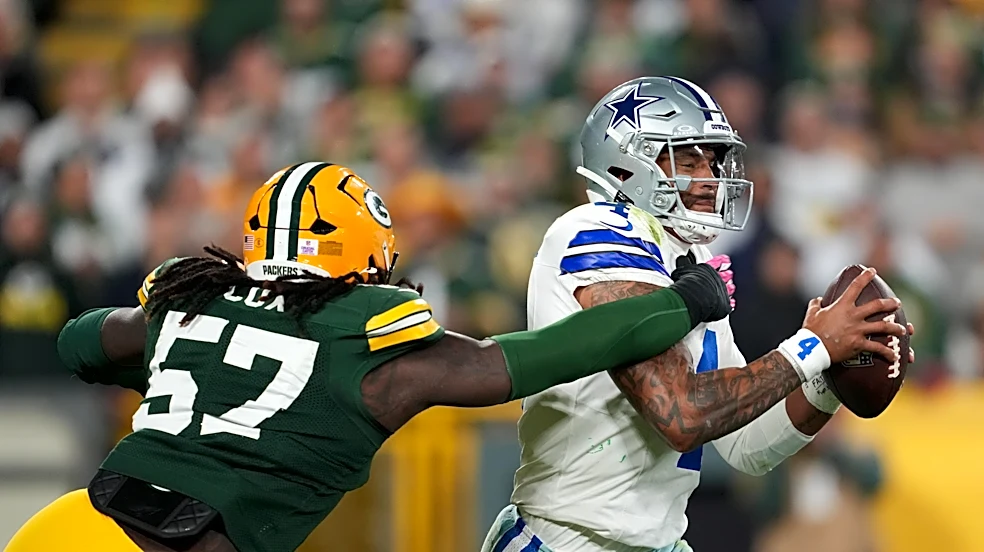
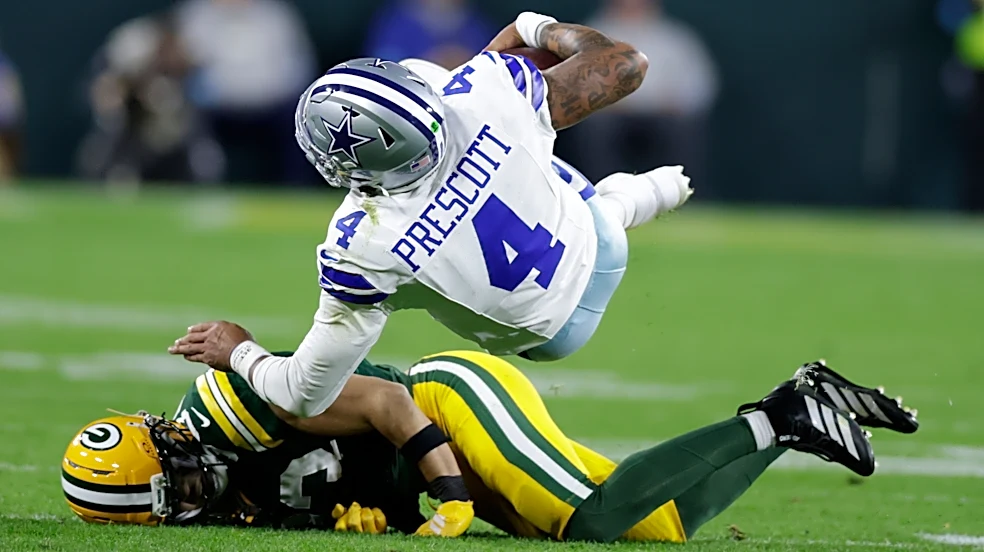
That is a brutal place to be for a team with Dak Prescott, CeeDee Lamb, George Pickens and an offense that entered Week 6 averaging 27.6 points per game. Yet the Cowboys have scored just 29 points combined in their last two games. They were held scoreless in the first half at Lambeau Field for the first time since November 2021, and the offense looked completely out of answers when Green Bay turned up the pressure.
Questioning the heart of football players is usually a foolish take. The desire to be a great team, however, doesn’t seem to show up consistently, particularly in the details that separate winning teams from losing ones. The discipline is missing, the adjustments are not translating into better football, and the leaders have not found a way to pull everyone out of this spiral, which feels like it has been going on since the last time the Cowboys made the playoffs in 2023. I wonder who that team lost to?
The same mistakes keep showing up
Good teams will lose games on the road. The Cowboys faced familiar problems and took extra time to regroup after their defeat in Tampa Bay. On Sunday, Dallas committed 11 penalties for 108 yards against Green Bay, reinforcing a season-long concern about discipline. Penalties extend opposing drives, put the offense behind the chains and erase opportunities for a team that cannot afford to give away free yardage.
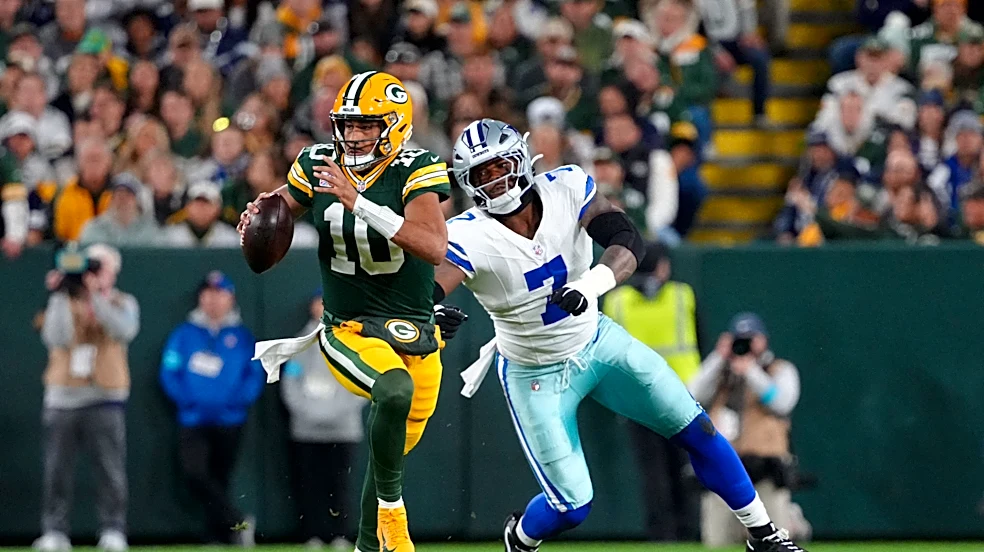
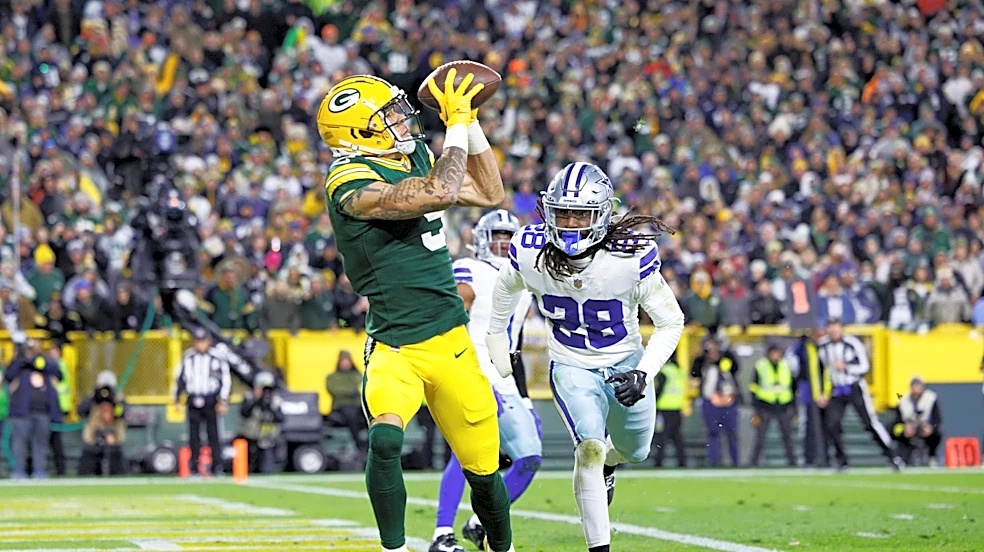
The defense did show some signs of improvement. Dallas held Green Bay to 57 rushing yards, recorded three sacks and kept the Packers out of the end zone in the second half. Joey Porter Jr. has brought a physical presence to the secondary, and there were stretches when the Cowboys made Jordan Love uncomfortable.
But the improvement remains inconsistent, and one of the defense’s biggest problems returned: third-down defense. Green Bay converted 11 of 18 third-down attempts, including nine of its first ten. The Packers repeatedly extended drives that should have ended, controlling the pace of the game and keeping Dallas’ offense on the sideline. On the opening touchdown drive alone, Green Bay converted four third downs, twice overcoming third-and-13.
That is how a defense can make individual plays and still fail to do its job. A sack or a tackle for loss means little if the opponent converts the next third down and keeps marching toward the end zone. Porter and the rest of the secondary can provide encouraging individual performances, but coverage and pressure must work together. The Cowboys cannot keep asking their defensive backs to hold up indefinitely while opposing offenses convert in the situations that should favor the defense. There is progress to acknowledge, but progress without consistency does not win games.
Brian Schottenheimer has to turn accountability into results
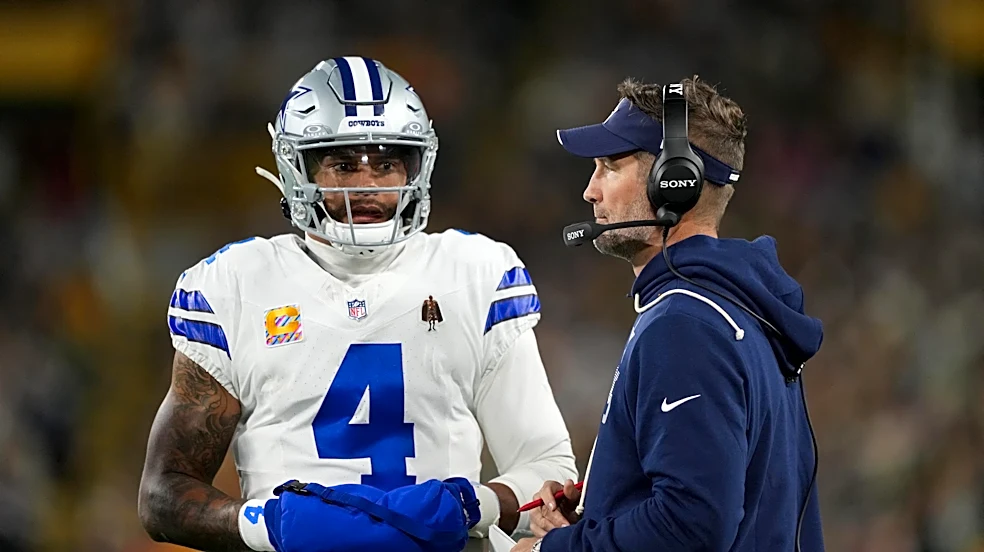
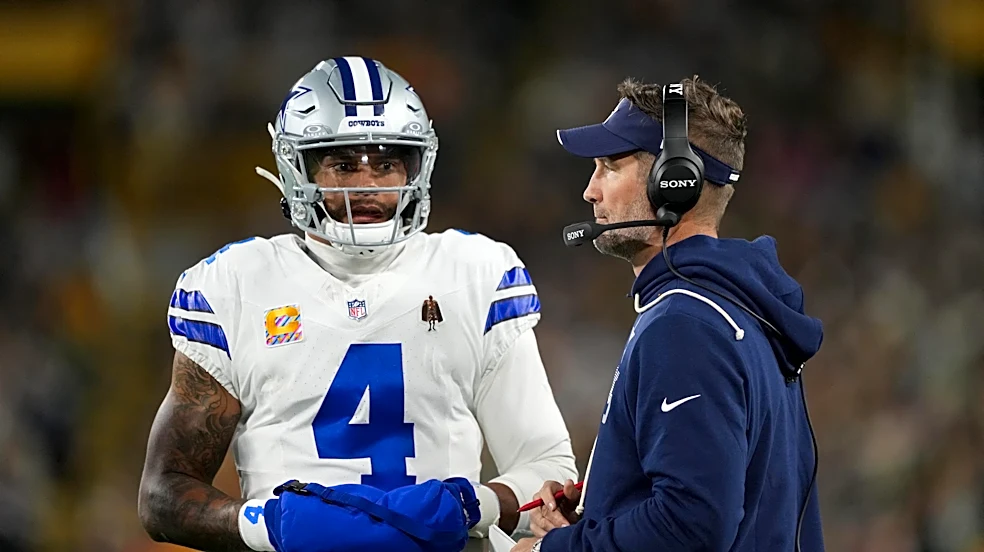
Brian Schottenheimer and QB Dak Prescott are starting to sound like broken records after taking responsibility for the offense’s shortcomings. Don’t get it twisted; that is the appropriate response from a head coach and a franchise quarterback. Neither should point fingers at teammates or make excuses for another loss. But accepting responsibility is the first step, not the finish line. It seems the Cowboys have been back to square one for a while now.
Schottenheimer’s play-calling continues to raise serious questions. Dallas rushed for just 48 yards on 15 carries, while Prescott attempted 54 passes. After Javonte Williams scored the Cowboys’ first touchdown early in the third quarter, Dallas ran the ball only once more. Schottenheimer acknowledged the imbalance wasn’t part of the plan, but that explanation only reinforces the problem: whatever the plan is, the Cowboys aren’t executing it or adapting effectively when the game changes.
Some of that imbalance stemmed from Dallas falling behind 17-0 at halftime. That’s important to note, but it doesn’t explain the broader offensive struggles, especially since the team had nearly two weeks of preparation between games and still came out flat.
Prescott finished with 258 passing yards, one touchdown and two interceptions. He was pressured 21 times, and his two first-half interceptions helped Green Bay build its lead. The offensive line struggled to protect him; the running game never established itself, and the play-calling failed to provide a consistent answer against Green Bay’s pressure.
That fourth-down throw late in the game was another painful example. Facing a fourth-and-11 at the Packers’ 14-yard line, Prescott heaved the ball toward the end zone under heavy pressure, but the pass sailed out of bounds. The situation was desperate, and the pressure was real, but the play ended without giving his receivers a realistic chance to make a play.
Prescott does not deserve all the blame for the loss. He was under pressure much of the night, and the offense around him wasn’t good enough. Still, franchise quarterbacks are expected to lead when things get difficult. That means making better decisions, helping the offense settle down and finding ways to keep the team alive when the game is slipping away.
The same standard applies to Schottenheimer. A coach can own the mistakes after a loss, but if the same mistakes keep happening, accountability starts to ring hollow. Dallas has heard the explanations. Now it needs to see meaningful changes in the game plan, the execution and the results.
This team cannot get all three phases right at the same time
The most frustrating part of the Cowboys’ season thus far is how rarely the pieces seem to work together. When the offense is producing, the defense has struggled to stop anybody. When the defense shows signs of life, the offense disappears. Against Green Bay, Dallas’ defense improved after halftime, allowing just six points and generating pressure, but the offense could not capitalize on the opportunity to make the game competitive.
The first half was the clearest illustration. Dallas failed to score, Prescott threw two interceptions, and Green Bay built a 17-0 lead. The Cowboys had opportunities to change the momentum, including a defensive interception by linebacker Dee Winters, but the offense immediately gave the ball back, in the red zone no less. It was Dallas’ first interception of the season, a welcome development that nevertheless came amid another frustrating night for the team as a whole.
Even the late touchdown did little to change the overall picture. Ryan Flournoy’s six-yard score cut the deficit to 10 points with less than a minute remaining, but the Cowboys failed on the two-point conversion. By then, too many possessions had been wasted and too many mistakes had accumulated. The game had been long over.
Green Bay wasn’t flawless, but the Packers made the plays that mattered, and Dallas didn’t. That is the difference between a team that can recover from a rough stretch and one that keeps digging itself deeper into a hole.
Is it too early to talk about the draft?
At 2-4, the Cowboys still have time to turn things around. The NFC East is not out of reach, and there are enough talented players on this roster to make a run if the team can finally put together a complete performance. Writing off the season in October would be premature.
But it is fair to ask what this team is building toward if the same problems keep showing up every week. If Dallas cannot establish a clear identity, clean up its mistakes or get consistent performances from its coaching staff and leaders, then talk about the draft will become more prominent.
Dallas does not need to panic after six games, but it does need to be honest about what it is seeing. The Cowboys have talent, and they’ve shown flashes of progress on both sides of the ball. What they have not shown is the ability to put it all together for four quarters, consistently.
Schottenheimer and Prescott are right to own the loss. Now they need to move the needle. The coaching staff must produce better answers, the leaders must set a stronger standard, and the players must turn accountability into execution. If that does not happen soon, the conversation about this season and the playoffs will be replaced by offseason talk.
Right now, the Cowboys do not look like a team that is one adjustment away from contention. They look like a team searching for answers — and running out of time to find them.