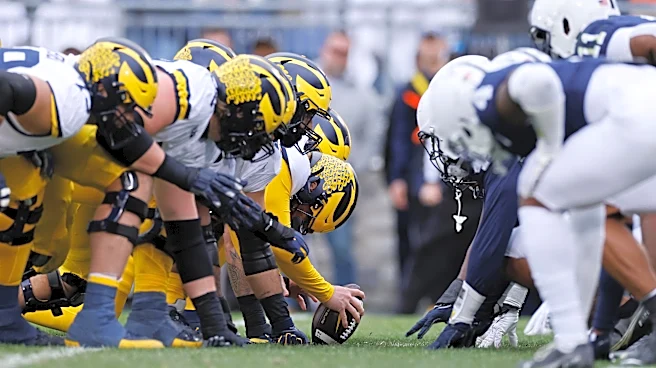


If you’ve been a Big Ten football fan for a long time, you know there’s a formula many teams follow year in and year out to succeed: dominant defense and just enough offense to grind out games. Over five games, Michigan has done its job on defense, but the offense has been worse than anyone could’ve expected.
After last week’s loss to Minnesota, the Wolverines now sit at 3-2 and are averaging just 23.0 points per game, good for 105th in the country, along with a dismal 315.8 total yards per game.
It’s hard to point the finger at specifically the run or the pass game, because both have been contributing to the lackluster start. If it weren’t for the dominant defense, the overall record could likely be as bad as 1-4.
Coming into the bye week, and before that, truthfully, fans have been asking for a change of any kind to spark the offense. Ideas have ranged all the way from firing coordinator Jason Beck to simply removing plays from the call sheet. Regardless of what it is, something has to be different in Michigan’s final seven games, or this season could turn out to be one of the uglier we’ve seen in Ann Arbor in quite some time. With that said, here are three adjustments that Michigan could make before its next game in an effort to improve its offensive production.
Stop relying so much on the Rhino
The Rhino, essentially a sixth offensive lineman that isn’t on the field all the time, was a position that fans knew about with Beck’s offenses coming into the year. At the time, it hadn’t been much to worry about, but through five weeks, it’s been clear that it’s not particularly beneficial for Michigan. Converted defensive lineman Manuel Beigel has been the primary starter there so far, with Avery Gach being the backup who has played there for the last two weeks with Beigel hampered by an injury.
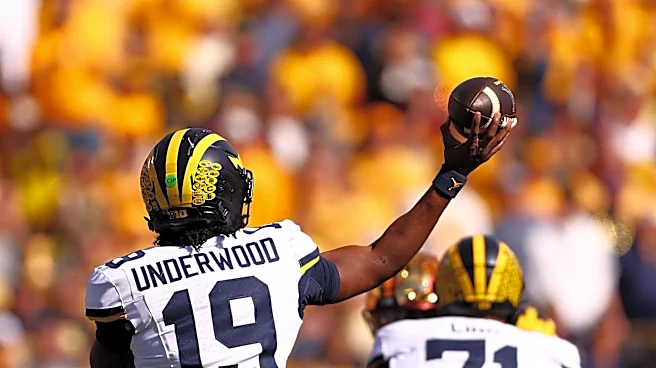
The Rhino’s primary advantage should be in the run game as an extra blocker, but Michigan’s rushing offense has been terrible this year. And although Beigel has graded out pretty well so far, his being on the field does nothing with the rest of the offensive line being unable to run block in this scheme (more on that momentarily). Being on the field for passing plays isn’t helpful either, as it only removes a tight end or extra wide receiver from the formation, something that could provide a useful extra target for Bryce Underwood.
Michigan’s loss to Minnesota demonstrated how over-reliant the offense has been on the Rhino this year. Down to its backup in Gach, he still was on the field for 28 of 49 offensive snaps – more than half the plays the Wolverines ran. This goes to show that even despite a major need to change something in-game, Beck and Michigan were still banking on production with an extra blocker on the field, a net-negative for the passing attack and a net-neutral at best for the run game. That’s not to say the position needs to be eliminated from the offense entirely, but the spots it’s used in should be chosen more carefully.
Less outside zone, more between the tackles
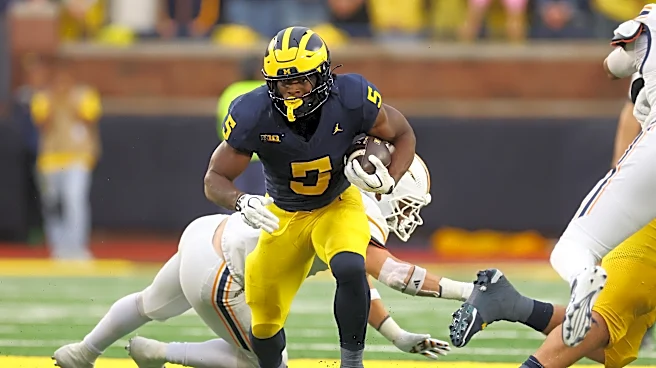
A lack of a run game has been perhaps the most frustrating part of watching Michigan’s offense so far. After a big year from Jordan Marshall last season, he’s averaging just 48.8 rushing yards per game this year, while five-star freshman Savion Hiter is averaging just 29.0 rushing yards per game. Both were viewed as major impact players entering the year, but Michigan’s run scheme hasn’t done them any favors.
The reason for this is Michigan’s over-reliance on outside zone concepts, something that this group of offensive linemen hasn’t been able to block regularly and doesn’t fit Marshall’s or Hiter’s bruising skill set. Furthermore, outside zone runs rely on running backs to cut back and find holes rather than get downhill, something that’s likely contributed to the holding penalties piling up on the big plays that have been made.
Running more duo and power runs like Michigan teams of the past should help spark things. These concepts were featured in each of Michigan’s offenses in 2024 and 2025, and although those offenses weren’t very good, it wasn’t because of issues in the run game. This identical group of offensive linemen and starting running back were successful with these concepts last year, but haven’t been able to adjust to this new West Coast style of running. The Wolverines need to go back to what works to help get the ground game going, which should in turn make things easier in the passing game too.
Explore a bevy of personnel adjustments
This final suggestion is more like a group of suggestions, but through five games, Michigan’s coaching staff should have more than enough evidence on where it needs to make changes, particularly in which players should be playing more or less.
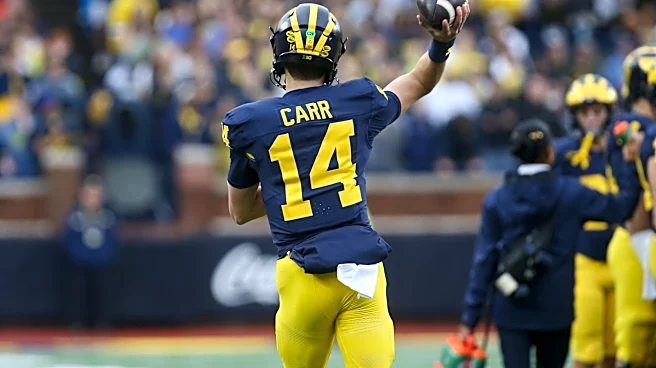
Quarterback is easily the lowest-hanging fruit after Underwood’s poor performance against Minnesota. There’s a wealth of arguments for and against moving to Tommy Carr or Brayden Fowler-Nicolosi at this time, but it’s something the coaching staff should at least start weighing the pros and cons of. Regardless of who’s playing quarterback, though, they won’t have much success if the other offensive issues aren’t addressed.
On the offensive line, Michigan should explore getting Andrew Babalola involved when he’s able to get on the field. Additionally, Nathan Efobi was Michigan’s lowest-graded offensive lineman against Minnesota and has been in that zone for much of the season, showing a potential need to get someone else involved at guard, like Blake Frazier, Evan Link, Malakai Lee, or Gach.
Finally, if Michigan does decide to go away from its Rhino more, it would open up more opportunities for the tight ends and wide receivers. Hogan Hansen has been more involved in recent weeks (albeit still in a small role), while freshman Mason Bonner should also see the field more as a receiving threat. Salesi Moa and Channing Goodwin could be utilized more out of the slot as well, in the hopes of opening up more opportunities for the quarterbacks through the air and preventing defenses from keying so heavily on Andrew Marsh and JJ Buchanan.
As you can see, Michigan’s offense has plenty of avenues it could go down to improve its offensive production. Staying stubborn with the personnel and play calls, though, will only lead to things getting worse.