
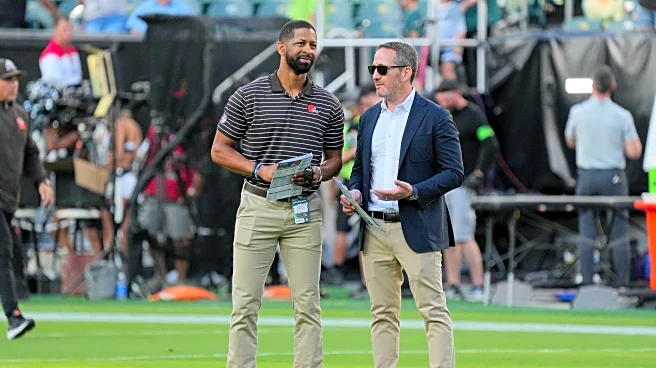
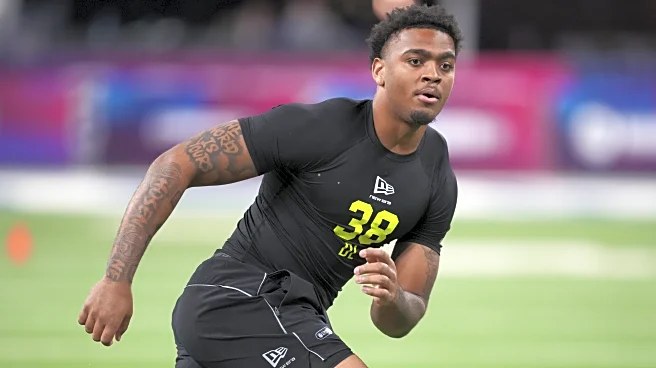
With March coming to a close, the focus on the 2026 NFL Draft is in full swing. In less than four weeks, the Chicago Bears are slated to make seven selections, including four in the first 89 picks. Typically, teams approach free agency by addressing their big needs, which allows them to stay more “open” once April’s draft rolls around. Although some might label general manager Ryan Poles and his front office as “active” during the opening days of free agency, there are still plenty of roles remaining
for this group as they head into the draft.
In total, the Bears had 25 free agents slated to hit the market. Among those, they re-signed eight players, including Theo Benedet, who was an Exclusive Rights Free Agent. 11 signed with other teams, including key defensive players such as Kevin Byard, Jaquan Brisker, Nahshon Wright, and C.J. Gardner-Johnson, as well as depth players like Olamide Zaccheaus, Dominique Robinson, and Andrew Billings. While the offense remained largely intact throughout this period, the defense underwent significant changes.
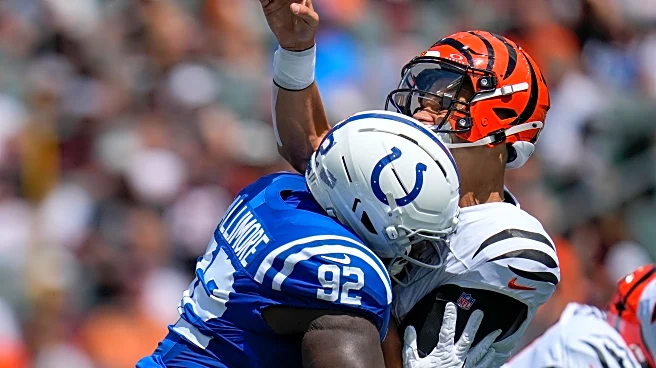
Among those changes was swapping out Byard for a younger and higher upside Coby Bryant at safety. They released two linebackers, including Tremaine Edmunds, but replaced him with Devin Bush, who is coming off a career year in Cleveland. In addition to their two big-ticket items, Chicago also signed a trio of defensive tackles, headlined by Neville Gallimore, and brought back linebacker Jack Sanborn on a rookie deal. Offensively, the biggest move (so far) has been trading away veteran receiver DJ Moore and a fifth-round pick to the Buffalo Bills in exchange for the Bills’ second-round selection that comes just three spots after the Bears’. Following the surprise retirement of center Drew Dalman, the team moved quickly to secure veteran Garrett Bradbury in a trade with the New England Patriots. However, it’s easy to argue that center, at least long-term, is still a sizable need for this offense.
Bringing back Braxton Jones and signing former Top 10 pick Jedrick Wills Jr. to a one-year deal should be enough to get the team by while Ozzy Trapilo heals up and gets into game shape, but when combining the two losses on the offensive line, it’s fair to wonder what their ceiling will be in 2026. Outside of those moves on the offensive side of the ball, the team replaced Zaccheaus– and likely Devin Duvernay– with 31-year-old veteran Kalif Raymond.
When taking a zoomed-out approach before the draft, it’s hard to argue, at least in good faith, that the Bears are a better team than they were at the end of last season. While some of that is out of their control, I’d classify their offseason approach (to this point) as relatively conservative. Similar to the 2019 offseason, when they were forced to let many key players walk following a surprising 12-4 campaign, it’s fair to wonder why the front office didn’t take a more aggressive approach after their first playoff victory in 15 seasons.
If you squint hard enough, it may be easy to find a path forward in 2026 that resembles a better overall football team. That said, the picture is far from complete, and they’ve now put an uncomfortable amount of pressure on themselves to have another highly impactful draft in Year 1. While this might not be a conversation that some fans are comfortable having, their approach to the offseason is exactly what every single fan would have hated if you’d told them this was how it was going to go back in January following their heartbreaking Divisional Round playoff loss to the Los Angeles Rams.
Now, does that mean that fans should panic and write off the season five months before it begins? In short, no.
That said, it’s fair to question their process heading into the draft. From a salary cap perspective, the team sits around an alarming $243,078 in available space. Yes, you read that right. Not millions, thousands.
That figure– and the team’s approach thus far– has sparked plenty of conversations surrounding ownership’s willingness to spend money. Without additional context, it would be fair to assume that the Bears have done what they could and that’s it, right? After all, the salary cap is a tricky thing that most fans don’t have the time to understand on a deeper level. The good news for those of you reading this is that I do, and have always enjoyed following how teams operate from a financial perspective.
Sure, on the surface, the Bears are broke. After all, that’s exactly what Adam Schefter meant when he made waves a few weeks ago when speaking about a potential Maxx Crosby trade to Chicago… Well, no. Not really.
Here are the facts of the situation:
- The Bears will have to clear a minimum of $14 million (or so) in additional cap space. Why? It’s simple. They need to pay their draft class (projected at a true cost of $4.674 million without any trades or additional picks), and require around $9-$10 million in additional space for in-season moves, including the practice squad, getting to 53 players, and any movement on the roster during the season, such as injuries. That $14 million is the bare minimum.
- To date, Poles has yet to restructure a single veteran to save cap space. At some point in the coming months, he’ll have to, but it’s become clear that he’ll only make those moves when the need arises. Barring any surprise signings that cost anything above the Top 51 minimum, the upcoming date to circle is Sunday, April 26th. That is the day after the draft, when some teams typically start signing their draft picks. There will also be around $100,000 in bonuses handed out to undrafted free agents, but that should still keep them ever so slightly under the cap.
- Even with some extension potential in the immediate future, there isn’t likely enough flexibility within those moves to clear enough cap space to get them by without a veteran restructure or two. That, of course, is barring a surprising veteran cut that would likely go down as a Post-June 1st move, saving them more space in 2026.
With all of that laid on the line, what exactly was Schefter talking about? If the Bears have flexibility, how can they be broke? Well, the simple answer is cash flow. Contrary to popular belief, not every NFL owner is cash-rich. Unfortunately for the Bears, the McCaskey family would fall in the bottom 10 to 15 in terms of annual cash flow outside the operations of owning an NFL franchise.
Couple that context with upcoming extension-eligible players like Caleb Williams, Darnell Wright, Rome Odunze, and others coming up over the next 12 months, and there’s going to be a hard requirement for George and company to have a certain amount of money in escrow to execute those deals. This doesn’t make them cheap; it’s simply a harsh reality of owning a professional sports team when you’re not a billionaire.
It stands to reason that Schefter called the Bears “broke” not because they are short on cap flexibility, but because of a stadium project three years in the making and multiple costly extensions that MUST happen to keep this team competitive. Before anyone starts freaking out, that doesn’t mean that exceptions can’t be made. If there’s a post-draft trade out there that could take the team over the top, maybe team president Kevin Warren and Poles can get ownership’s sign-off to make it happen. While I wouldn’t hold my breath on something like that happening, I also wouldn’t rule it out.
After a short detour, let’s get back to the topic at hand- Have the Bears truly “improved” so far this offseason? In my opinion, no. They’ve lost plenty of veteran leadership, haven’t really improved their defensive line, and have many more question marks than any contender should have going into the draft. Luckily, the NFL isn’t played on paper, and the offseason isn’t over.
That said, the front office has put an uncomfortable amount of pressure on itself heading into the draft. Talk to any draft analyst, and they’ll tell you this is one of the weaker overall draft classes in recent memory. Thankfully for the Bears, the draft’s strengths and the team’s needs align on paper. Even so, the combination of Poles’ draft history on the defensive side of the ball and the Saints’ draft choices under Dennis Allen doesn’t exactly inspire much confidence, especially on the defensive line. After all, we are just two months removed from both Poles and head coach Ben Johnson pinpointing the defensive line (and the pass rush) as the biggest area needing improvement for 2026.
So far, they’ve added a rotational defensive tackle in Gallimore, and two bottom-of-the-roster pieces in Kentavius Street and James Lynch. On the edge, they’ve added nobody and lost Robinson. At best, the changes have been equal, but for anybody who watched this defense last year, it’s clear that substantial improvement was, and is now needed.
Going back to Poles’ and Allen’s histories in the draft, it’s hard for me to draw much confidence from their recent track records. While some might argue that Poles’ first three drafts were influenced by former head coach Matt Eberflus and his staff, the results still weren’t promising. Looking at the defensive players taken since Poles took over as general manager in 2022, here’s the list by round:
1st: None
2nd: Kyler Gordon, Jaquan Brisker, Gervon Dexter, Tyrique Stevenson, and Shemar Turner
3rd: Zacch Pickens
4th: Ruben Hyppolite
5th: Dominque Robinson, Noah Sewell, Terell Smith, Austin Booker, Zah Frazier
6th: None
7th: Elijah Hicks, Travis Bell, Kendall Williamson
While you’ll rarely see me criticizing picks made after Round 4, the “hit rate” through Poles’ first four drafts on the defensive side of the ball has been.. Really bad. Gordon and Hicks are the only names on this list to have received second contracts so far. Pickens, Robinson, Bell, and Williamson are no longer on the roster, with three of them not making it through their rookie deals.
So, where does that leave the rest of the picks?
Brisker was solid, yet unspectacular. Dexter has been OK, but has yet to take the next step. Stevenson has all the talent in the world, but has now been “downgraded” by two different coaching staffs, despite that talent. Turner tore his ACL midseason in 2025, but even before that, he looked completely overmatched. Hyppolite wasn’t on the Top 300 consensus board, yet somehow went early in Day 3 and didn’t look like he belonged on the field. Sewell has been disappointing and is far from a lock to make the 2026 roster, coming off a serious injury. Smith was below-average in short stints but has not been able to stay healthy. Booker looks promising, but a Year 3 leap will be needed. Frazier didn’t play his rookie season and was already on the older end for a rookie.
That’s it. That covers it all. No first-round selections, no Pro Bowlers, just two second contracts (so far), and only a few above-average players. So… What about Allen’s track record in New Orleans?
Although Allen was head coach for just two and a half seasons, he has been the Saints’ primary defensive mind since 2015. With that in mind, let’s take a look at their defensive draft picks by round (those starred are selections made as the head coach):
1st: LB Stephone Anthony, DT Sheldon Rankins, CB Marshon Lattimore, DE Marcus Davenport, DE Payton Turner, *DT Bryan Bresee
2nd: DE Hau’oli Kikaha, S Vonn Bell, S Marcus Williams, LB Pete Werner, *CB Alontae Taylor, *DE Isaiah Foskey, *CB Kool-Aid McKinstry
3rd: CB P.J. Williams, LB Alex Anzalone, DE Trey Hendrickson, LB Zach Baun, CB Paulson Adebo
4th: DT David Onyemata, S Natrell Jamerson, DB C.J. Gardner-Johnson
5th: DE Davis Tull, DT Tyeler Davison, DB Damian Swann, *LB Demarco Jackson, *DB Jordan Howden, *LB Jaylan Ford
6th: DE Al-Quadin Muhammad, CB Kamrin Moore, S Saquan Hamilton, *DT Jordan Jackson, *DT Khristian Boyd
7th: LB Kaden Elliss
That’s 35 selections spanning 11 years with the same organization. Of those 38 picks, five were in the first round, 12 on Day 2, and 15 on Day 3. Of those defensive selections, none made First-Team All-Pros with the Saints, but Lattimore accounted for four 4 Pro Bowls on his own. Anthony, Williams, Davenport, and Garner-Johnson made the All-Rookie teams in their respective draft years, while Lattimore and Hendrickson made some form of the All-NFC or All-NFL teams in separate seasons.
In total, the trends are easy to see. Allen’s track record in drafting and developing defensive backs and linebackers is rock-solid. Lattimore, Bell, Marcus Williams, Taylor, P.J. Williams, Anzalone, Adebo, Gardner-Johnson, Jackson, and Elliss have all had successful NFL careers and/or have signed lucrative second contracts with various teams. His track record when it comes to the defensive line is much more checkered, though. While Rankins and Hendrickson can be considered successes, it’s worth noting that most of Hendrickson’s production has come outside of New Orleans. Baun was miscast as a pass rusher, and once he went to Philadelphia and switched to linebacker, he became an All-Pro.
The selection of Davenport was always a gamble, but he at least produced when healthy. Turner, Bresee, Kikaha, and Foskey have all been borderline disasters. Bresee had one year with 7.5 sacks, but there isn’t one objective observer who would say he’s played anywhere near his first-round draft status.
If you’re looking for some optimism, his eye for defensive tackle talent has far outweighed anything on the edge. Rankins and Onyemata stand out as unquestioned “hits”, while Davison earned his stripes as a mid-Day 3 pick who played in the league for eight seasons.
When combining the two’s work, there should be plenty of questions about their ability to identify and develop defensive line talent overall. Allen has always been a defensive back guy, and his work at linebacker is also notable, but what about the trenches? That’s the area where anyone with eyes could see that they needed the most help last season.
Well, that’s exactly why, at least in my opinion, there’s cause for some concern with their approach (so far) to the offseason. Counting on another productive year in the draft is one thing. After all, that’s how the most successful teams are built. That said, the track record with the front office and the defensive coordinator has told a different story. Free agency is a crapshoot, and no one should debate that. Even so, given how much help this group needs, it stands to reason that taking a bigger swing or two would have helped stabilize the defensive line’s floor. Sure, there’s always a chance they come away with another Dayo Odeyingbo and Grady Jarrett, but the lessons learned from last offseason should be clear. Don’t pay aging veterans starting money, and believe a player’s production through four years over what they *could* become.
There’s no doubt in my mind that the Bears’ offense will take another step forward. In fact, I’d fully expect quarterback Caleb Williams to be in the MVP conversation once Year 3 ends. That said, this team’s ceiling will be defined by how much their defense improves. Allen is a great defensive mind, and he did more with the talent on last year’s depth chart than 90% of defensive coordinators could even imagine.
Without adding much talent to last year’s defensive depth chart, this was the offseason that the issues facing the defense were supposed to be addressed. As of now, it’s hard to see the vision. Sure, they could add a veteran defensive end like Cameron Jordan or Jadeveon Clowney, but the goal shouldn’t be simply raising the floor. It should be expanding the ceiling, and without a real pass rush (or solid run defense), how is that supposed to happen? Couple that with losing the majority of their turnover production from 2025, and there are many more questions than answers for this defense heading into the draft.
Maybe a trade materializes during or shortly after the draft that drastically changes the outlook of this group, but as of now, counting on a season-changing draft class on the defensive side of the ball would run counter to recent history with the primary voices in charge of adding young talent to the room. Although the season doesn’t start until September, it’s fair to wonder how much of their draft fortunes and upcoming personnel decisions will define where they stand once January rolls around. Arriving a year early is fun in the moment, but without the right follow-up, it’s all for not. Let’s hope this isn’t a repeat of their approach in the 2019 offseason, because if so, they are wasting yet another valuable season of their quarterback on a rookie contract.
For now, I remain skeptical of their approach, while optimistic about the offense’s future. Hopefully, by the time the draft concludes, we’ll all feel like this is a better team overall with a real chance to win a Super Bowl in 2026.