



The Buffalo Bills and the rest of the NFL are off on a much-deserved summer break — so it’s time to research and reflect.
And you can place this article in the reflect bucket.
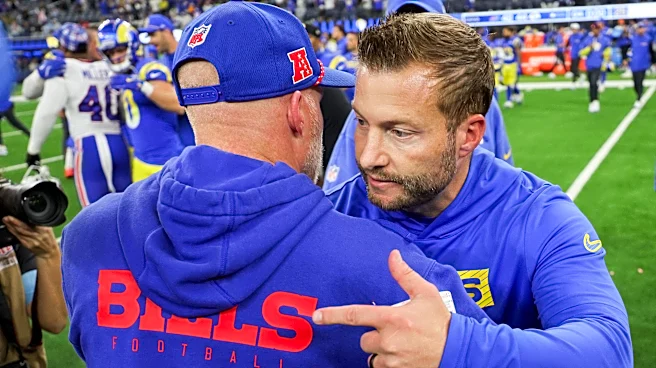
Recently in my Twitter mentions, I observed from afar a back-and-forth between WGR 550’s Jeremy White and a Twitter follower, Michael Czerwonka, on the reputations of the Bills vs. the Rams over for the Sean McVay vs. Sean McDermott eras (they both were hired in 2017).
The Rams have become one of the gold standards in team-building
and perennial success in the modern-day NFL. The Bills have been outrageously successful in the regular season since McDermott was hired… but their playoff success pales in comparison. Josh Allen has the most playoff wins in NFL history (8) without a Super Bowl appearance. That fact is a probably a big reason why McDermott is no longer Buffalo’s head coach.
After witnessing the conversation between White and Czerwonka, I wanted to comparatively inspect these two franchises entering the 2026 campaign. The below exploration is not meant to take sides in this mini-debate I was not originally part of. I only wanted to examine one of the claims made — it didn’t seem like Czerwonka and White were disagreeing that much anyway.
At the outset here I must write this disclaimer, of course — THE RAMS REACHED TWO SUPER BOWLS AND WON A CHAMPIONSHIP in this time period, which definitively puts them “ahead” of the McDermott-era Bills.
But as Czerwonka pointed out, since 2017, the Bills are 98-50 and have missed the playoffs once. In that same time frame, the Rams’ record is 92-57, and they’ve missed twice. To Czerwonka, the Bills and Rams have been “closer” than many believe, and he cited the presence of luck (or lack thereof) as the main driver of differences between these two powers.
Speaking of differences, the main, most overt difference between these two clubs over the past nine seasons is the the Rams record in conference title games (2-1) compared to the Bills 0-2 record in such contests.
The Rams beat the Saints in New Orleans in the 2018 NFC Championship Game to reach their first Super Bowl of the McVay era. Three seasons later, they beat the 49ers at home to reach the Super Bowl they won against the Bengals. They lost a nail-biter NFC title game in Seattle just a few months ago on the cusp of another Super Bowl appearance.
Of course, the Bills lost to Patrick Mahomes and the Chiefs in the 2020 and 2024 AFC Championship Games.
Czerwonka’s main point, or at least what jumped off the screen to me most, was this — “it’s not just four games that makes the difference, it’s actually four plays.”
Let’s explore that assertion:
Play No.1 – Missed Pass Interference
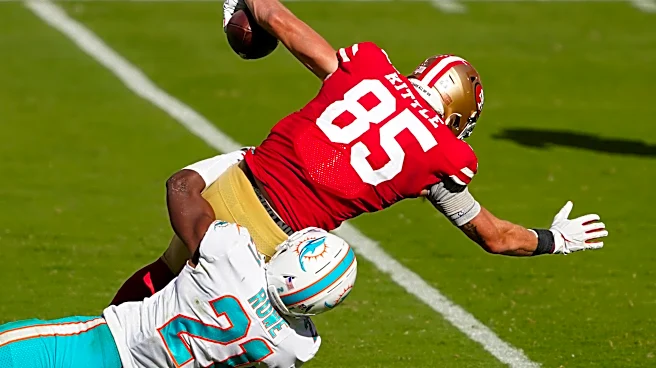
We’re starting early in the McVay era here, and there may not be a more controversial, legacy altering non-call featuring two (likely) Hall of Fame quarterbacks in NFL playoff history than this one. You remember it — the missed pass interference on (former Bills corner) Nickell Robey-Coleman with under two minutes to play in a tied NFC Championship Game between the Saints and Rams in January 2019:
In essence, if that flag was thrown, the Saints would’ve had first and goal. The Rams only had one timeout. New Orleans could’ve easily run the clock down to very close to 0:00 before attempting a chip-shot field goal to send Drew Brees and Co. to their second Super Bowl with Sean Payton as head coach.
Instead, they were forced to kick a field goal with 1:45 remaining — as that incompletion occurred on third down — and Jared Goff matriculated the ball down the field for a game-tying field goal before eventually winning in overtime.
Luck was undoubtedly on the side of the Rams in that moment.
Los Angeles laid an egg in the ensuing Super Bowl against the Patriots, but reaching the Super Bowl is still what the Bills, in this era, are searching for.
Play No. 2 — 13 Seconds
I won’t emphatically tear open the wound here, and if we’re being technical, I don’t know if 13 Seconds can be dwindled to one specific play. But everyone can agree it was a massive blunder by the Bills at large.
Let’s group Buffalo’s special teams and defensive planning/performance on the Chiefs’ 13-second, game-tying field-goal drive as one play.
Certainly not “unlucky” for the Bills — yet something extraordinarily, almost unfathomably bad (and unlikely) occurred that night inside Arrowhead Stadium to Buffalo.
Play No. 3 – Stafford to Kupp in divisional round
In the same postseason and round as 13 Seconds, the Rams had a 27-3 lead in Tampa Bay against Tom Brady and the Buccaneers that vanished in a quarter and half. After blowing the 24-point second-half lead, Matthew Stafford received the ball with 42 seconds remaining, got sacked on first down back to his 27-yard-line before completing back-to-back passes to Cooper Kupp for 20 yards then 44 yards down the middle of the field to push the Rams into game-winning field-goal range.
Now, with this play — that is just an absolute dime in crunch time, on the road, after stalling following a 27-3 lead. Have to take your hat off to Stafford and Kupp for that connection.
Yet, it was still extraordinarily improbable for the Rams to make a field goal on that drive. Per SumerSports, since the start of 2022, only 3.7% of drives that began with under 45 seconds remaining in the game ended with a made field goal.
Play No. 4 — Jaquiski Tartt dropped interception
There is a very infamous drop in 49ers lore that came in the fourth quarter of their NFC Championship Game loss to the Rams after Stafford and Co. manufactured that three-play, 42-second field goal drive the previous week in Tampa Bay.
It came with San Francisco clinging to a 17-14 lead with under 10 minutes in the fourth quarter and was about as gimme of an interception opportunity as you’ll see for a safety, especially in the playoffs:
Certainly, the contest wouldn’t have been officially over if Tartt secured that catch. And the Rams again deserve credit for their execution late, as they entered the fourth quarter down 17-7.
There was a polarizing game-management decision by Kyle Shanahan on San Francisco’s drive before this dropped pick too. On 4th and 2 from the Rams 45-yard-line and a three-point lead, Shanahan elected to punt instead of going for it.
It’s silly to flip outcomes of (playoff) games to change narratives about teams and their success or lack thereof. But Czerwonka’s four-play difference claim represented quite a fascinating (and not completely unreasonable) “what if.”
In an alternate universe, Robey-Coleman is called for that pass interference. The Saints win that NFC Championship Game over the Rams in January 2019. The Bills execute a squib kick — or mortar ball — and 13 Seconds never exists. The Bills host the Bengals the next week in the AFC Championship Game. Kupp drops the ball down the seam against Tampa Bay and Brady completes the comeback or Tartt secures the fair catch interception in the fourth quarter the following week.
And those are only four plays — I haven’t yet mentioned Joe Burrow missing Ja’Marr Chase down the sideline on the final Cincinnati play in the Rams Super Bowl win, Stefon Diggs drop vs. Kansas City, Wide Right II, or about five separate plays in the fourth quarter of Buffalo’s division-round loss to the Broncos.
All of this investigating has brought me to one main conclusion — the margins between victory and defeat are definitely razor thin in the playoffs. And, yes, so thin that those contests often are decided by one play. Or a small collection of plays. During the McDermott era, the Bills were almost always making a poor decision, or getting thisclose to hitting the big, game-sealing play late in games. Meanwhile, the Rams were making those clutch, game-altering plays near the expiration of the clock in the postseason.
That, more than anything is what needs to change in January for Buffalo.
The Joe Brady Bills need to intensify their focus and improve their performance in the fourth quarter of the playoffs to get to — and win — a Super Bowl.