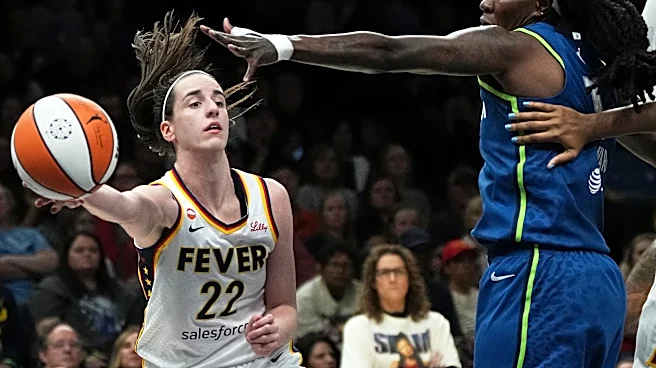





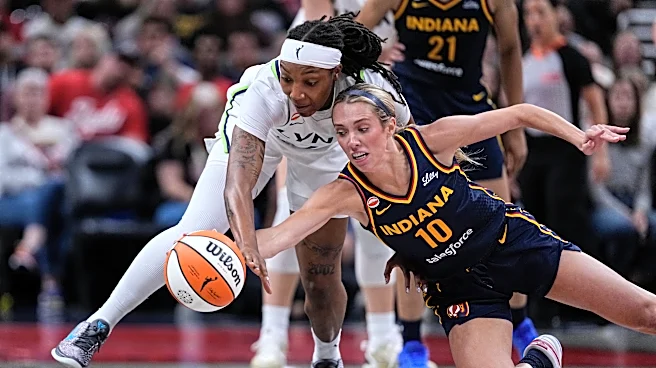
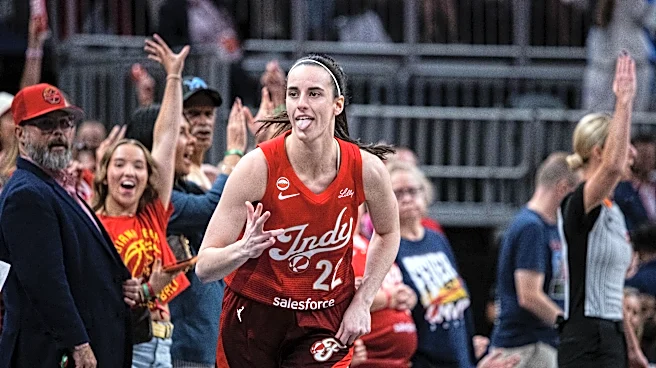
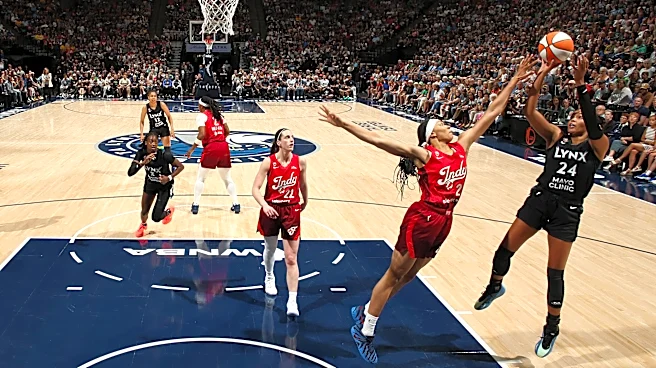
If you’ve followed Caitlin Clark’s career since she graduated Iowa, you’ve been on quite the ride. After a promising and historically great rookie season, Caitlin struggled with injuries in year 2 and we all had to wait to see what she would become with a full year of professional experience to build on. It still amazes me that in April of 2023, there were people seriously wondering if she could even stick on a WNBA roster, and now we are talking about her MVP case just 3 years into her professional career.
Year 3 has been the breakout that fans have been excited for. At 24 years old, Caitlin Clark has overcome doubt, adversity, bias, injury, and open hostility from opposing fans, media, and, players to become one of the very best women’s basketball players in the world.
MVP CASE BY THE NUMBERS
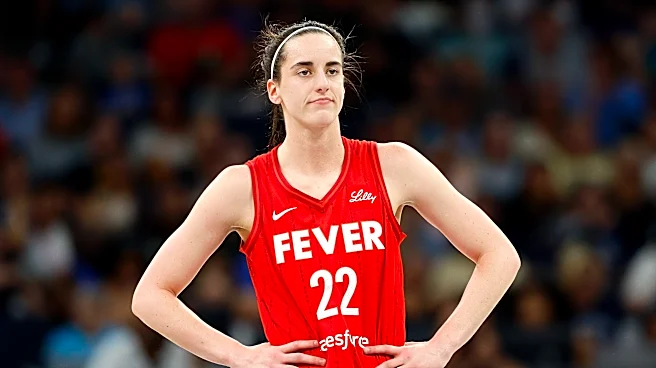
At 22.8 points per game, Caitlin is third in the WNBA in scoring per game. She leads the league in assists per game at 8.5 per game. She will finish as the only player in WNBA HISTORY to be top 5 in both categories. No one prior to CC has ever averaged more than 20 points and 8 assists per game for a season.
Rounded shooting splits of 45/37/85 and a true shooting percentage of 61% shows that her efficiency has improved greatly since her rookie season. Those numbers are very good for a player who boasts a 32.2% usage rate (2nd highest in the league), and they are very good for a guard since guards do much of their shooting away from the rim.
As a facilitator, no one has ever come close to what Caitlin is doing. She has a personal assist percentage of 43.8%, which means that when she is in the game, almost half of all made baskets are a direct result of her passes. That is downright absurd! Through scoring and assists she is responsible for 39.2 points per game which is an unprecedented number in WNBA history.
On the way to some impressive stats, Caitlin has set some crazy records. This SEASON, she has had 5 games where she scored at least 30 points with at least 10 assists. There have only been 4 other such games combined in the history of the WNBA. She’s already the all time leader in 20/10 games, having taken that spot after only 57 career games. This year she became the fastest player in WNBA history to reach 800 points and 300 assists in a season.
THE GREATEST OFFENSE IN WNBA HISTORY
When we talk about a player who is “valuable” we should also look at the ways she helps the team win games and not just the stat sheet. Prior to Caitlin Clark’s arrival to the Fever, they were one of the worst teams in the WNBA. Since her arrival, they have been a playoff team. This year, the Fever took it to a new level; CC has captained this team to 96 points per game, which is the highest points per game average for any team over a season in WNBA history, beating out the Phoenix Mercury’s 93.9 points per game in the 2010 season.
Caitlin has been referred to as the ultimate offensive engine. It is hard for anyone to credibly deny that when the team she leads is historically great at scoring points. In addition to making a lot of those points herself, her gravity has allowed teammates to get easy buckets and she is elite at finding the open player and hitting them with the ball in stride on the way to the cup or putting it where they want it for a wide open catch and shoot. Her teammate, Kelsey Mitchell, will likely be first team all WNBA in part because the attention CC garners allows her to get open looks and favorable one on one matchups.
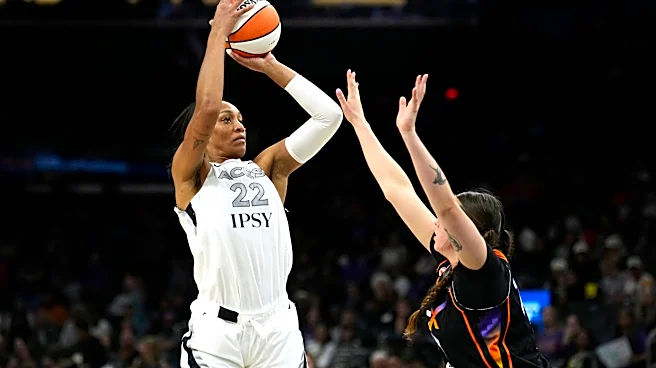
For as good as defending MVP and current favorite A’ja Wilson is, she simply does not raise the floor of those around her the way CC does.
NARRATIVES
Anyone who has followed the WNBA since Caitlin’s arrival has noticed that a disproportionate amount of the discourse is dedicated to things that are not purely basketball related. It’s a league uniquely driven by narratives and storytelling. In particular, CC’s arrival to the WNBA has been treated strangely, with some league personnel, media, players, and even coaches inexplicably downplaying CC’s impact on women’s basketball.
Not even 10 games into this season articles were written claiming that CC was overrated and could not live up to the hype; this despite the fact that she was already on pace to have one of the best seasons a guard has had in league history. That’s how high the bar has been set for CC – that a historically great season is still not good enough to avoid claims that she was overhyped.
On top of that, this season was rife with exhausting and seemingly endless discourse about whether Caitlin Clark should apologize for things like getting a fist jammed into her throat while she was on her back, and her teammate getting flagrantly fouled. Fever fans and Clark were also blamed for a racist message that was later discovered to be from a disgruntled better while bad faith actors continued to push a completely fabricated narrative that the average Indiana Fever fan is a member of the ku klux klan. Meanwhile, Caitlin’s antics on court during a basketball were compared to one of the worst race based lynchings in American history. It was a banner year for the “anything but basketball” Caitlin Clark haters. Apparently, there wasn’t much to criticize in Caitlin’s game, so multiple players and journalists decided to make CC’s basketball season into a referendum on race and privilege in America.
For all intents and purposes the MVP race concluded in mid June, not even a third of the way through the WNBA season. By that time, WNBA writers were already declaring A’ja Wilson the MVP of the league, and vegas and the WNBA already had Wilson’s MVP odds at -200 or more. I mentioned the WNBA has been strange about Caitlin Clark, and since her arrival at least, it has also been strange about A’ja Wilson. She has been hoisted by some as a kind of anti-Caitlin; in the minds of some a living monument to the WNBA that existed prior to CC’s arrival. A symbol of all that is right as far as both game play and culture, as opposed to what some see as an unwelcome play style and culture that CC has brought to this league.
It is clear that many do not want to see a Caitlin Clark MVP, and as a result there was a strange push this year to anoint Wilson MVP of the league well before half of the games had even been played. Caitlin’s early struggles were amplified, while the fact that Wilson really wasn’t doing anything we haven’t seen before didn’t affect her place as the unquestioned GOAT of the present WNBA.
As much as we would like to believe that sports awards should be about sports, the unfortunate fact is that narratives and biases do matter and they do affect how players are perceived and ultimately how media cast their votes.
THE BEST SEASON BY A GUARD IN WNBA HISTORY
Even more confounding than the narratives mentioned above is the fact that Caitlin Clark has been below Olivia Miles and Paige Bueckers all season in MVP odds. Unless you value turnovers higher than anyone ever has in the history of basketball, there is no metric by which either player is having a better season either as an individual or by what they contribute to their team.
Caitlin’s season not only dwarfs those of her peers this season, but it also eclipses the greatest guard seasons in WNBA history. If you look at the MVP seasons of Cynthia Cooper, Sheryl Swoopes and Diana Taurasi, none of them had more points per game or assists per game in those seasons than Clark does this year. Taurasi’s 2009 season, considered by many to be among the greatest seasons ever for a guard, saw her score 20.4 points per game on splits of 46/41/89 with 3.5 assists per game. While Taurasi’s shooting efficiency was slightly better, it would be hard to argue that her 2009 MVP season, the gold standard season by the gold standard WNBA guard, is better than Caitlin’s 22.8 PPG on 45/37/85 when paired with 8.5 assists per game.
Given the above, it is confusing why Caitlin, who is having the best season a guard has had in the history of the league, would be behind any guard in the current MVP race.
MORAL VICTORY
In sum, there’s no question that by any metric commonly used to assess the award, Caitlin Clark has made a compelling case for MVP. It’s also obvious at this point that CC will NOT be the 2026 MVP. What we have learned from Caitlin’s arrival in this league is that early ascension is not welcomed by this league. For some, CC’s identity as a person and the culture associated with her are also unwelcome. This hostility toward her has hamstrung her as far as her ability to receive acknowledgement by the league and the media. Caitlin’s greatness is recognized by many, but not yet by enough of the people needed to give her a serious shot at MVP of the league. Somehow she will have to improve on what has been a season that is without precedent in the history of this league to win this award. That does not, however, mean that she isn’t the best offensive player in the league. It does not mean she is not the most valuable player in the WNBA. And if this season is the new standard for Caitlin Clark, she is objectively on pace to be the greatest of all time, regardless of who acknowledges it.