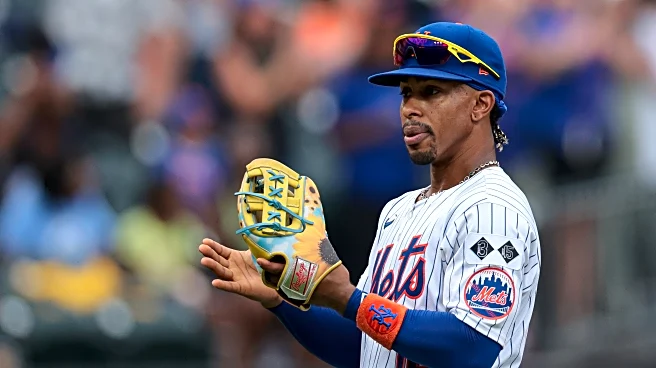

The Mets have made it very clear that improving their outfield is important before we get into February and really begin to think about the 2026 campaign. They offered Kyle Tucker a monstrous four year, $220m deal before the lefty chose the back-to-back champion Dodgers offer of four years, $240m, showing how important they view an upgrade to the outfield.
The Mets pivoted from the rejection quickly, signing Bo Bichette to a three year, $126m deal (with two opt outs, really making it a one year pact,
but I digress) the day after Tucker went to the West Coast. Signing Bichette shored up their other biggest need, a strong right handed hitter to balance out their lefty-heavy lineup, something the Mets coveted all winter. While Bichette, obviously, does not help fix their outfield woes, which is currently constructed as rookie Carson Benge, Tyrone Taylor, and Juan Soto, signing the infielder does make their pursuit of an outfielder more flexible than it was previously.
Bo Bichette is a very good hitter, as he comes into 2026 with a career slash line of .294/.337/.469 (124 wRC+), and that includes his injury plagued 2024 where he hit .225/.277/.322 (70 wRC+), which likely causes his career numbers to undersell his overall production. Slotting into third base, and somewhere between one through four in the everyday lineup, makes their pursuit of an outfielder much more interesting than it was previously.
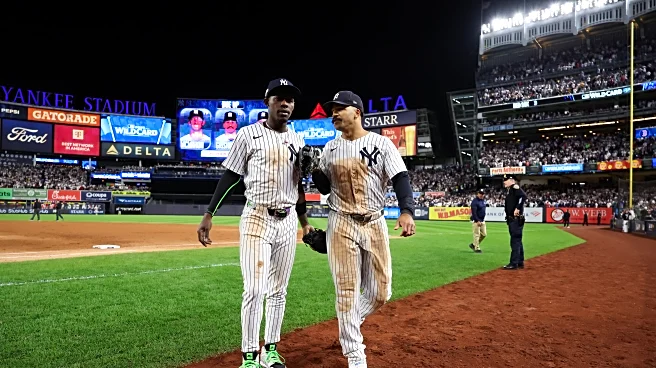
The Mets chased Kyle Tucker because he killed two birds with one stone — filling in their need for an outfielder and an impact bat in one swoop, despite being left handed. They have also been linked to Cody Bellinger, who is riding a bounce back 2025 season in the Bronx into a very demanding contract ask, as he is currently spurning some very generous offers by the Yankees.
The Mets have been pretty consistently linked to Bellinger, with the caveat that the lefty would accept a similar contract to the one that Bichette signed; a short term contract with opt outs, one that gives the Mets the long-term payroll flexibility that President of Baseball Operations David Stearns covets. Bellinger, prior to the Bichette signing, felt like an awkward fit for the Mets, however. While a good player, he has not been an offensive superstar since his first three years in the league with the Dodgers. His last three years have been up and down offensively, literally, as he had a 135 wRC+ in 2023 with the Cubs, a 108 wRC+ in 2024, again with the Cubs, and a 124 wRC+ last season with the Yankees. The Mets, who moved on from Brandon Nimmo and Pete Alonso this winter, needed someone a little more stable offensively than modern-day Bellinger can provide.
Bichette’s signing, however, makes the sometimes inconsistent Bellinger a better fit for the Mets, in my view. He is a good defender, and is a flexible one, able to play all three outfield spots and also first base, which fits the roster’s needs like a glove. He will not be relied upon to be a foundational offensive player, and more of a complimentary one, which suits his strengths more in 2026.
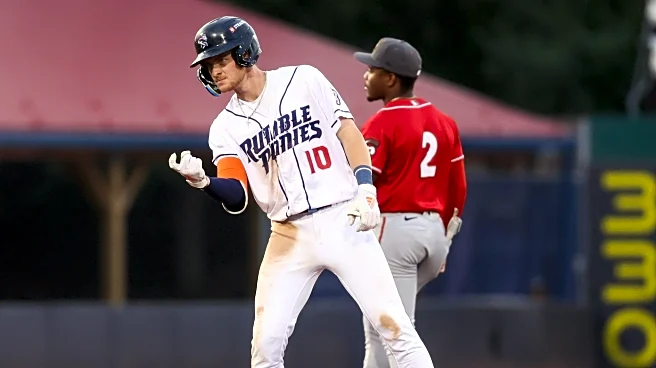
If Bellinger and the Yankees want to continue their very expensive game of chicken, the Mets suddenly can go a myriad of ways to fix their outfield issue. Carson Benge, who is one of the very best prospects in the sport, will get every opportunity to be in the Mets everyday lineup come March 26th. With him likely locked into a spot, upgrading on Tyrone Taylor (70 wRC+, 0.8 fWAR) is the goal.
Similarly to how I feel about Bellinger, the Mets can chase more complimentary offensive outfielders than necessarily needing a middle of the order hitter. Will Sammon, in The Athletic, suggested something similar, naming guys such as Harrison Bader, Lars Nootbar, Jake Meyers, and Luis Robert Jr. Bader and Meyers are more defensive minded players who can pitch in offensively and play center field, kicking Benge to left. Nootbar and Robert are bounce back candidates that a team with a revamped Major League hitting apparatus can get more out of after they battled injury.
Those are just a few names from a very tight lipped organization, but it does show a peak into their thinking. The flexibility of a strong defensive center fielder that pushes Benge into left field and allows for the best possible outfield you can have, or a better hitting left fielder that allows Benge to be the center fielder himself, something prospect evaluators have little doubt he can handle, means that there is likely a few interesting tricks up the Mets sleeve during this offseason of immense change.