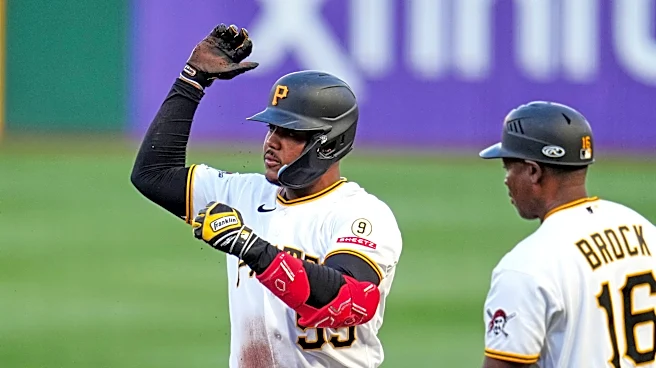





In a year of anniversarial festivity across the United States, a less rounded celebration will make its annual occurrence in just a month and change. The 105th anniversary of the first radio broadcast of a baseball game will occur on August 5th. That initial voyage on the airwaves was appropriately undertaken by MLB’s most ancient seafarers, the Pittsburgh Pirates, taking on their intrastate rivals in Philadelphia.
That 1921 afternoon at Forbes Field was broadcast on KDKA, the first licensed radio
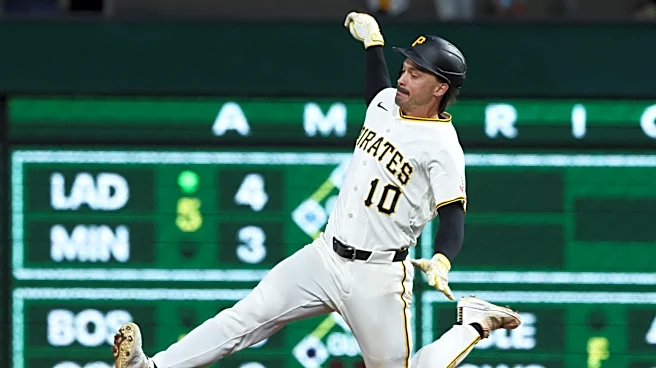
station in the United States. Harold Arlin, holding a converted telephone in a box seat converted to little more than the sort of station basketball broadcasters tend to utilize courtside, made history just three miles from where the Seattle Mariners took on those same Pirates today at PNC Park. Still broadcast on KDKA over a century later, fans heard, saw, and otherwise were treated to a 5-1 Pirates win that swept aside their maritime counterparts in a broadcast that Seattle’s television crew struggled to capture due to numerous technical difficulties.
It was for the best. And, with a tinny quality likely reminiscent of Arlin’s original broadcast, Aaron Goldsmith and Angie Mentink made the most of the limitations for one of their best duo shows of the year. It was just as well, because the club’s offensive performance was not so much Transatlantic as Goldsmith’s accent drifted for a delightful moment, but subaquatic.
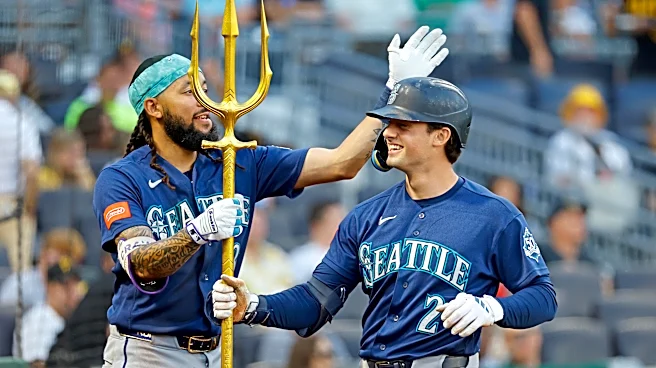
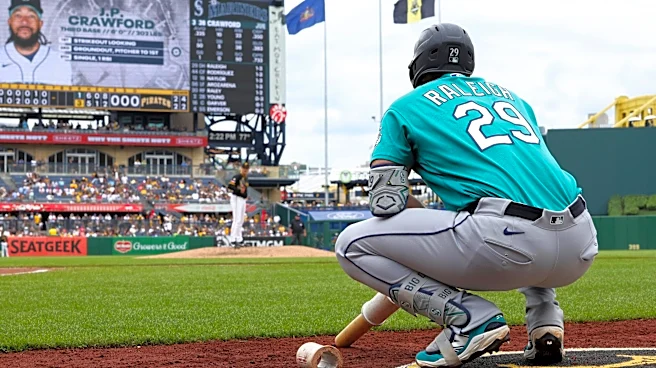
The Mariners stretched their three-or-fewer runs scored streak to two full weeks on Thursday, though not without some fight. Against Pittsburgh rookie righty Bubba Chandler who sits 98-99 on his heater, the 23 year old worked around five hits, three walks, and a lot of hard contact to stymie Seattle repeatedly. A bases-loaded opportunity came for Seattle in the fourth frame, with Julio Rodríguez singling and seeing the bases loaded behind him by a Josh Naylor hit and, following a dicey stolen base attempt that Julio managed to make work, a Luke Raley walk.
Cole Young rapped a 100 mph heater nearly exactly as hard right back into the left center gap, only to see it swallowed up by a slick sliding catch from Jake Mangum.
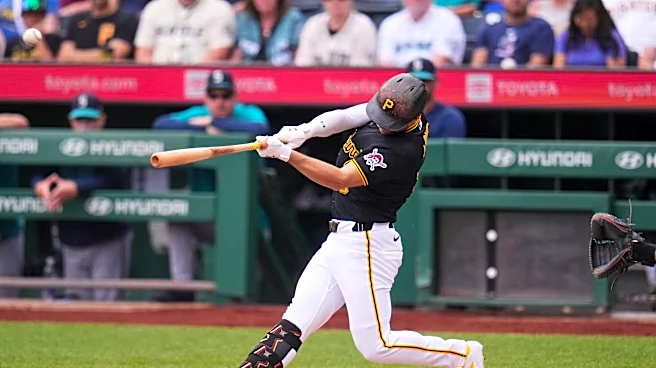
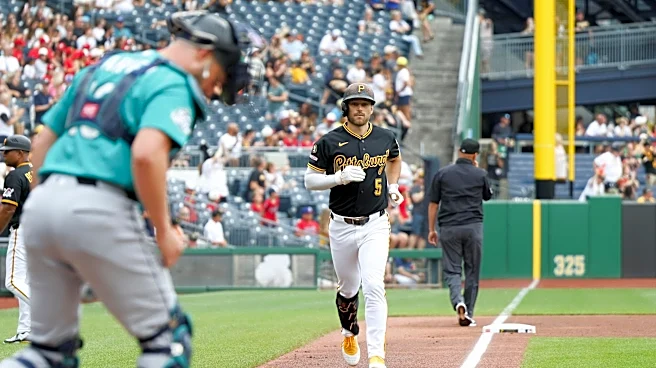
Though Seattle had chipped away at the lead built by Pittsburgh’s set of homers off otherwise-sharp Bryce Miller, the 3-1 lead would have been enough even before Alex Hoppe once again fluffed the final total, concluding at a tasteful-but-rigid 5-1.
Most of the day, as has been a common refrain, Seattle could not produce with runners in scoring position. An eternal complaint nearly every season for all 30 teams, it is actually accurate in many ways to highlight the M’s shortcomings w/RISP this year. They entered the day with the third-worst batting average (.226) and fourth-fewest RBI (212) with runners in scoring position. The RBI are descriptive of circumstance here, not intended predictively, but merely to highlight that the M’s have around 30 fewer runs than the average club does to this point generated in RISP situations. That’s not the whole story, of course, as the M’s actually have a 10th-best in MLB wRC+ of 105 w/RISP, and a middle-of-the-pack .315 weighted on-base average (wOBA). If you’re putting two-and-two together there, the M’s walk lots with runners on, but their .254 BABIP is worst in MLB, compounded by having the fourth-fewest total RISP opportunities of any club.
1-10 on the day in their RISPportunities, Seattle loaded the bags again with two outs in the top of the 6th, this time for Colt Emerson against lefty reliever Evan Sisk. Emerson emulated the dream of every Little League Coach and baseball fan reared on 70s and 80s slap and dash baseball. He took the ball right back up the middle, blistering a low line drive on a single hop, at 104 mph just for good measure.
Obviously, an easy out. The ball was hit at almost the exact same just-oppo trajectory as Young’s lineout, in fact. And that is at least part of the issue.
Seattle spent the past two games pulling the ball less than any other club in MLB in that time, and spent all afternoon continuing that trend. Sprayed contact can commonly drop or catch defenses out of position, but it is physically impossible to hit a ball as authoritatively the other way as it is to pull it. That’s why home runs are pulled far more than not, and home runs are better than singles, and way better than outs. It’s crucial to highlight here that Seattle isn’t purely to blame for this. Pittsburgh’s pitching staff threw 40 of the 41 hardest pitches of the game, all from 98.4 to 101.4 mph, including 13 pitches over 100 mph, 12 of which were by the starting pitcher Chandler.
It’s not easy to pull this caliber of stuff in the air, but it does hurt your chances of scoring in bunches. And for Seattle, whose roster is especially home run dependent particularly without Brendan Donovan and Dominic Canzone in the lineup, it’s not great to be in a spot of such power outage.
The final threat came in the top of the 7th, with an all-too-familiar frustration. Cal, Naylor, and Randy Arozarena walked off Sisk and old friend Yohan Ramírez, setting the stage for another relief appearance by flamethrowing southpaw Mason Montgomery. Pushed to a key moment in the game with a lefty on the hill, Dan Wilson went to Rob Refsnyder to relieve Luke Raley. Montgomery is a more ferocious lefty than Sisk, who Raley had been allowed to face earlier and managed a single, but it’s hard not to manage more than utter rage and frustration to see the 35 year old trot out in any capacity at this point. In Refsnyder’s line of work, you typically only get one good pitch to hit, and to his credit he attacked it, unleashing on a 1-1 curveball over the heart of the plate after waving over the same pitch in the dirt at 1-0.

He fouled it off, stomping in frustration with some manner of precognition for what was to come. A 100 mph ball high on the heater merely reset his eyeline for pitch five, the breaking ball at the bottom of the zone, flied lazily to left to quell the final threat. Crowd noise buzzed around the edges of the broadcast. Fuzziness around the edges from millions of games across a century of this sport. The Mariners once again share the same record as the cumulative achievement of all of baseball’s history: .500.