
It’s no secret that, for the strong majority of the past 25 years, college football’s national championship has run through the Southeastern Conference, otherwise known as the SEC.
Of the 25 national championships won since 2000, 14 have been won by teams from the SEC. If you include current SEC membership in that tally, the total jumps to 16. That makes 64% of national titles won since 2000 coming from current SEC programs. That’s dominance, cut and dry.
At the heart of the SEC is the city of Atlanta,
Georgia, the South’s metropolis boasting the ninth-largest metropolitan area in the United States. The city plays host to the yearly SEC Championship game and regularly hosts the national championship which, more often than not, features at least one team from the SEC.
The city also hosts the Peach Bowl, one of the top postseason games in college football. Traditionally played by teams in the ACC or SEC, the bowl has called multiple stadiums in Atlanta home but currently takes place in Mercedes-Benz Stadium, home to the aforementioned SEC title game.
The SEC leads the way in Peach Bowl appearances with 41 and a winning percentage of 59.8%, followed by the ACC with 37 and independents with 14. The Big Ten is a distant fourth behind independents 13 appearances. Worse, the league has the worst winning percentage of any power conference (including independents if you wanna get weird) at just 27.3%. The league wouldn’t have a win in the game since 1982 if it weren’t for a 2021 Michigan State win over Pitt.
Yet here, in the heart of SEC country, the stadium where its champion is crowned and in a game its teams have dominated both in appearances and winning percentage, two Big Ten teams will meet for a shot in the national championship game.
A game the SEC hasn’t played in since 2022.
Ole Miss has a shot to break that streak with a win over Miami, but that’s still quite the mark on the sport’s most dominant conference. Well, what was the sport’s most dominant conference.
In case you hadn’t heard, college football is quite a bit different now than it was when it was a given for the SEC to play in the title game during its heyday in the 2010s. Players are getting paid (legally) through NIL and their movement pretty unrestricted through the advent of the transfer portal. The SEC has not adapted well to this new reality. Not as well as others at least.
The Big Ten has won the past two titles and, no matter the results of the Peach Bowl, will have a team in this season’s national championship game. The SEC came close with a Texas loss to Ohio State last year and, again, has a shot with Ole Miss this season, but even those programs represent a bit of the new reality of the sport as examples of ones that have adapted better than other.
The yesteryear of the 2010s featured powerhouse Alabama teams that were loaded in the trenches most of all. The Crimson Tide’s defensive linemen were bigger, stronger, more physical and just all-around better than whoever they lined up against and their counterparts on opposing teams. When one went out, a different former 5-star jogged onto the field to replace him.
Keyword: were.
That 5-star depth? Gone. Off to find playing time through the portal. The starters? Some remain, but they’re not all clustered in Tuscaloosa like they used to be. They’re a bit more spread out around the sport, with some even heading to programs up in the Midwest.
Their heirs donning those crimson lettered helmets? Getting torn to shreds by an offensive line and tough as nails running backs wearing a trident helmet. Indiana.
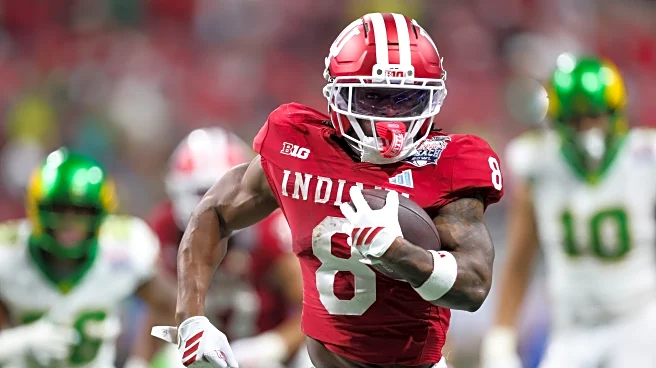
Yes, Indiana. The former losingest program in the history of the sport. The Big Ten champion Hoosiers beat down the Crimson Tide, the SEC’s runner-up by 38-3. Worse than the SEC’s champion, Georgia, did in the league’s title game.
No longer can SEC programs like Alabama, Georgia, LSU and others load up on talent and dominate with depth. The game has changed and it’s probably part of why legendary Crimson Tide head coach Nick Saban is on a pregame show instead of the sidelines.
Some programs, like Indiana and Oregon, were well positioned to embrace the new reality of the sport. Both aren’t hurting for wealthy donors and both have earned the No. 1-seed in the first two iterations of the 12-team College Football Playoff format.
With the Peach Bowl looming, SEC graduates in the Atlanta area who’ve been accustomed to seeing Georgia red, LSU purple or Alabama crimson shuffling around the streets this time of year have a new reality awaiting them: Hoosier crimson and Ducks yellow.
The Big Ten has taken over the Peach Bowl and the surrounding area in Atlanta. Just like it’s taken over the sport.
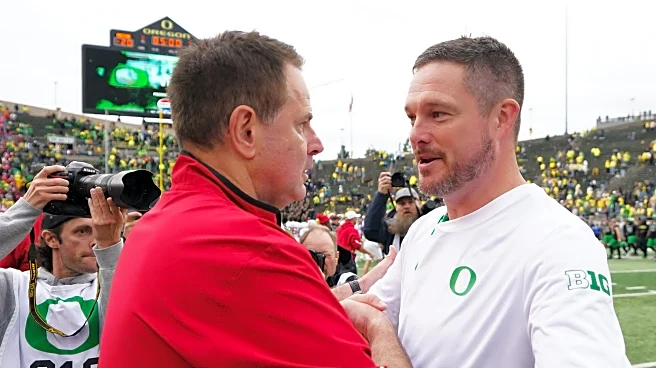
Indiana’s Curt Cignetti and Oregon’s Dan Lanning cut their teeth at SEC programs. Cignetti was a recruiting coordinator during Saban’s first years with Alabama helping scout stack all that aforementioned talent. Lanning led one of the sport’s great defenses under Kirby Smart at Georgia, which was similarly loaded on the line, after spending time with Alabama as a graduate assistant.
Neither of the programs they lead boast even one national title. There’s no weight of history at their backs, at least not nearly as much as their counterparts at SEC programs.
Instead they’re moving forward, carrying the future with them into and out of the heart of the South for a shot at changing that 0 to 1.