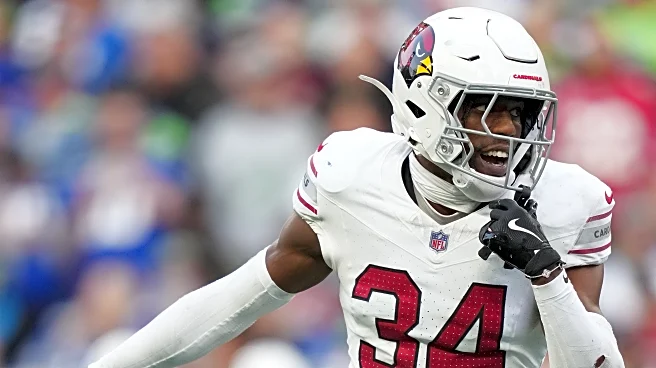

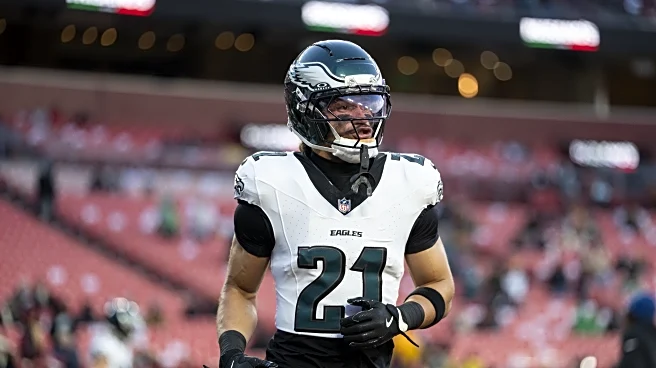
The Seattle Seahawks continue to follow a very clear blueprint in this year’s free agency cycle, and the addition of Noah Igbinoghene is another example of it: low financial commitment, high athletic upside, and a bet on development rather than proven production.
A former first-round pick by the Miami Dolphins, Igbinoghene arrives in Seattle after bouncing through multiple defensive systems, still trying to establish himself as a consistent contributor at the NFL level. That said, this isn’t a random
swing. General manager John Schneider has stated that Seattle had interest in him in the past, which suggests this move has been on their radar for a while.
Noah Igbinoghene’s background
To understand Igbinoghene, you have to go back to his time at Auburn Tigers, where he didn’t even start out as a cornerback. He was originally a wide receiver and return specialist, relying on burst and open-field speed before switching to defense in 2018.
That late transition matters. He’s still, in many ways, learning the nuances of the position. The Miami Dolphins bet on the traits anyway, selecting him 30th overall in the 2020 NFL Draft. The idea was simple: take an elite athlete and develop the technical side later.
That development never fully materialized in Miami. Over three seasons, he saw limited defensive action and started just five games. By 2023, the Dolphins moved on, trading him to the Dallas Cowboys in a player-for-player deal involving Kelvin Joseph.
Dallas didn’t offer much more opportunity. Igbinoghene was mostly a special teams contributor, though he did flash with a memorable blocked field goal return touchdown early in the season.
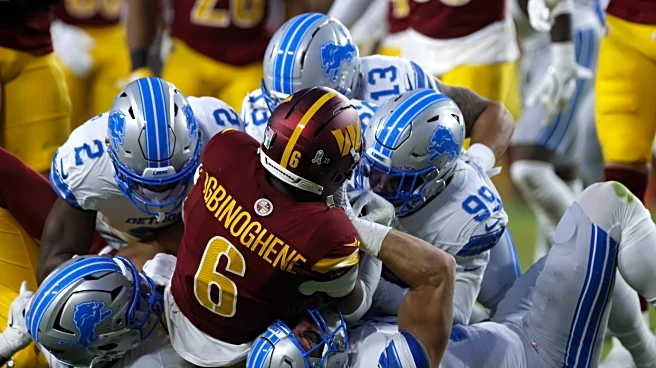
His first real opportunity came in 2024 with the Washington Commanders, where he finally saw meaningful defensive snaps and put together the most extensive season of his career.
Usage and production: a clear nickel profile
Igbinoghene’s 2024 season tells you exactly what he is right now: a slot corner.
He logged nearly a full season’s worth of defensive snaps and started 12 games, with the overwhelming majority of his usage coming in nickel. Washington trusted him primarily against quicker, short-area receivers rather than on the boundary.
From a raw production standpoint, the numbers are solid but not particularly impactful. He was active as a tackler and around the play, but the lack of turnovers stands out, especially for a player with his athletic profile.
In coverage, he was targeted often and allowed a fairly high completion rate. The yardage totals and touchdowns allowed point to a player who can stay in phase at times but struggles to consistently finish plays.
In 2025, his role decreased, and the efficiency didn’t take a meaningful step forward. Advanced metrics paint the picture of a below-average defender: middling grades across coverage and run defense, a passer rating allowed near triple digits, and continued issues with penalties and missed tackles.
One trend that carries over year to year is yards after catch. A significant portion of the yardage he allows comes after the reception, which ties directly into both tackling consistency and reaction timing.
All-22 Review: where the tape confirms the concerns
Igbinoghene’s footwork remains a work in progress. Off the line, he frequently struggles with transitions, which puts him in recovery mode early in routes. The encouraging part is that his speed allows him to close that gap, but he’s often relying on athleticism to recover rather than technique to stay in control from the start. There’s a noticeable lack of fluidity when mirroring releases.
Instincts and processing are bigger concerns. He doesn’t play with natural anticipation, and his route recognition is slow. That delay shows up repeatedly on tape, where he reacts instead of dictating, leaving him a step behind the timing of the play.
That issue isn’t limited to wide receivers. There are snaps where he gets beaten vertically by tight ends, not because he lacks the speed to carry them, but because he’s late identifying the route concept and adjusting accordingly.
The inability to mirror releases consistently puts him in trailing position early, which then forces him to compensate at the catch point. This leads to a pattern of physicality that can be borderline — and sometimes costly.
Ball tracking is another area where you’d expect more given his background as a former receiver. Yet, he struggles to locate the ball in the air, which helps explain the lack of interceptions. There are multiple reps where he’s in decent position but fails to make a play because he doesn’t find or attack the football.
In zone coverage, the processing issues become even more evident. He’s often late reading the quarterback while simultaneously losing awareness of receivers entering his area. That combination leads to separation and, more importantly, yards after the catch — a recurring issue in his game. Missed tackles and poor angles only amplify the damage.
Discipline within zone concepts is inconsistent as well. He can be baited by route combinations, drifting too deep or vacating his assignment, which opens easy throwing windows underneath. When compared to other defenders in the same structure, the difference in spatial awareness stands out.
Even on snaps where coverage isn’t outright broken, he often ends up in a trailing position and leans into contact to recover. That tendency increases his penalty risk, especially against more refined route runners.
At the top of routes, similar issues show up again. He struggles to stay connected without initiating contact, and that leads to flags in situations where better technique could have avoided them.
That said, the athletic traits are real. On vertical routes, his long speed allows him to stay in phase, and he can be difficult to beat cleanly without double moves.
When everything lines up — when he reads the play correctly and trusts what he sees — there are flashes of high-level play. In those moments, he anticipates, breaks on the ball, and shows exactly why he was once a first-round pick.
The problem is consistency. Those flashes are still the exception, not the norm.
A familiar type of bet
At 26 years old, Igbinoghene is still relatively young, especially for someone who is effectively still developing at the position. The Seattle Seahawks have taken similar swings before. A recent example is Josh Jobe, a player who bounced around before finding a role in Seattle’s system.
The expectation here shouldn’t be a starting-caliber addition. Instead, Igbinoghene projects as a depth piece with inside-out flexibility while contributing on special teams.
Final thoughts
This is a classic Seahawks move: bet on traits, trust coaching, and see if there’s something to unlock.
Igbinoghene still has the athletic tools that made him a first-round pick. What he hasn’t shown — at least not consistently — is the processing speed, technique, and playmaking ability needed to translate those tools into reliable production.
If Seattle can clean up the tackling, reduce the yards after catch, and speed up his recognition in coverage, there’s a path for him to become a useful rotational defensive back. If not, he’ll likely remain what he has been so far in his career: an intriguing athlete who never quite puts it all together.