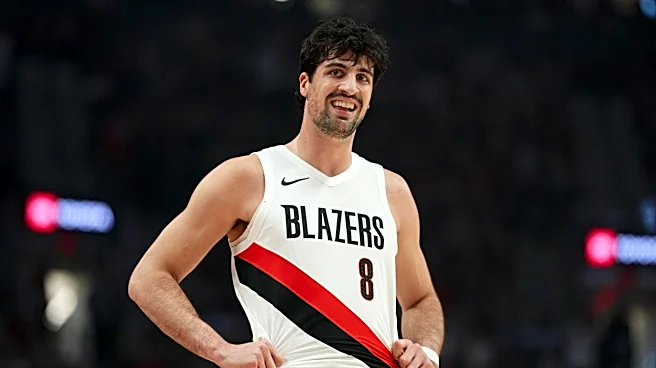




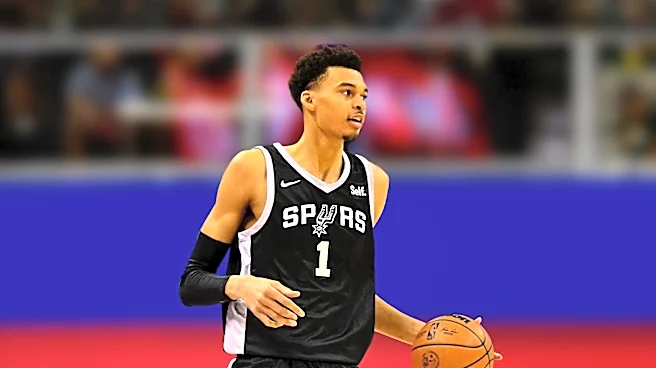
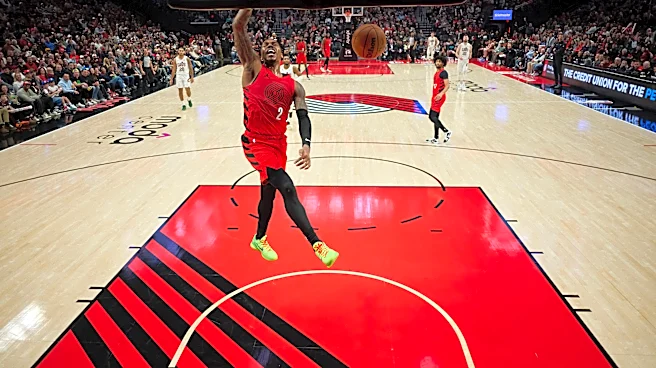
Blazer fans have two years to brace themselves, but the news is unavoidable: on his current trajectory, Deni Avdija will become an unrestricted free agent when his contract runs out after the 2027-28 season. Speculation is already starting to swirl, so let’s detail the specifics of Avdija’s contract situation to separate fact from fiction.
Extension Not Likely
Avdija is on one of the most team-friendly contracts in the entire NBA. And that might be understating it. Getting All-Star production out of a player who makes
less than the mid-level exception provides flexibility to surround him with high-level talent. It feels like a cheat code in the era of the second apron.
That affordable contract is a sword that cuts two ways though. It impedes the Blazers from offering Deni a contract extension at his market rate. By rule, extensions start at 140% of the current contract in its final year (which in this case is $11.875 million). The alternative offered is 140% of the estimated average player salary. Either way, that’s far below Avdija’s value.
Renegotiating Takes Cap Space
There is a path for the Blazers to renegotiate and extend Deni’s contract. It isn’t viable because it requires tens of millions of dollars in cap space and the Blazers are too far over the limit.
In order to extend Deni, the Blazers would have to clear cap room by trading their highest-paid players for players on expiring contracts. That would probably make the team less competitive and could cost future draft capital. Deni seems pretty competitive himself, so I’m not sure it would make sense for him, either. It would hinder the team from putting a winning product on the floor.
No Supermax Either
Even if Deni makes an All-NBA team, he will not be eligible for a supermax deal because he was traded during his second contract. Traded players are only eligible if the swap happened during their rookie-scale deals.
Supermax eligibility would give the Blazers a significant financial advantage over other teams, but the point is moot. As it stands, the only incentives the Blazers can offer over other teams are a fifth year and 8% yearly raises, whereas other teams are limited to offering four years and 5% raises. That’s something, but maybe not decisive.
Short Term Outlook Good for Deni, Not for Portland
As an eight-year veteran, the largest contract Deni would be able to sign in free agency is a max deal worth 30% of the cap. When he reaches the ten-year threshold, he will be eligible for a contract worth 35% of the cap.
If Deni’s goal is to maximize his earnings, a two-year deal that bridges him to free agency after his tenth season is the only thing that makes sense. This renders the five-year contract the Blazers can offer irrelevant and the 3% difference in yearly salary raises insignificant.
Hedging Against Loss
It isn’t certain that Avdija will be with the Blazers after his current contract runs out. The Blazers front office has prepared a reset in case he signs elsewhere. The only current contracts that are guaranteed to run past the 2027-28 season belong to Shaedon Sharpe, Toumani Camara, and Robert Williams, provided the latter hits his performance benchmarks.
Decisions need to be made after the rookie deals for Scoot Henderson and Donovan Clingan run their course. The Blazers also need to decide if they want to pick up the club options for Yang Hansen. Aside from those concerns, Portland’s cap sheet is largely blank for the 2028-29 campaign.
Old heads might remember a similar strategy when the end of LaMarcus Aldridge’s contract was looming back in 2015. The Blazers kept their cap sheet pretty clean after their star player’s contract ended in order to prepare themselves for an eventual reboot. Joe Cronin was in the front office during that time, too. Could this be their contingency plan once again?
The Waiting Game
Two years is a long time to suffer the anxiety-inducing uncertainty surrounding Deni Avdija’s future in Portland. Undoubtedly the tension will ramp up as the decision point gets closer. For now, the best path forward for the franchise is to maximize their competitive window during Deni’s current high-value contract while maintaining flexibility for 2028 and beyond.