
Before staff writer Zach Mason his most treasured southpaw, the acquisition of Gabe Speier was first the root of a beloved, now-prescient, joke from Jordan Schusterman, one half of the Cespedes Family
BBQ duo. Magicking relievers from the fringes of rosters into high-leverage dynamos is difficult work, but Seattle’s reputation has been well-earned.
The 2022 club had Andrés Muñoz, yes, but also less-sung arms like Penn Murfee, Paul Sewald, and Erik Swanson as key cogs. A year before, Drew Steckenrider and Casey Sadler had helped Sewald prop up a threadbare and COVID-limited rotation. 2023 saw Speier emerge, and both Matt Brash and Justin Topa made their presences known with authority. In many ways, the story of 2024 was the lack of any such continuity, as The Pile of relievers produced no gems, at best an overworked combo of Trent Thornton and Collin Snider that seemed to have ramifications for the duo’s efficacy in 2025.
Seattle’s methodology for roster-construction relies on this knack. Their payroll has been middle-of-the-pack or below in the 2020s. Just two relievers – Muñoz and Tommy John rehabber Ken Giles – have received multi-year guaranteed contracts from Seattle since the start of this decade. The money goes to the hitters and starters, leaving the bullpen’s burden on Seattle’s player development to identify what can unlock another Eduard Bazardo. In LHP Robinson Ortiz, they hope to have another.
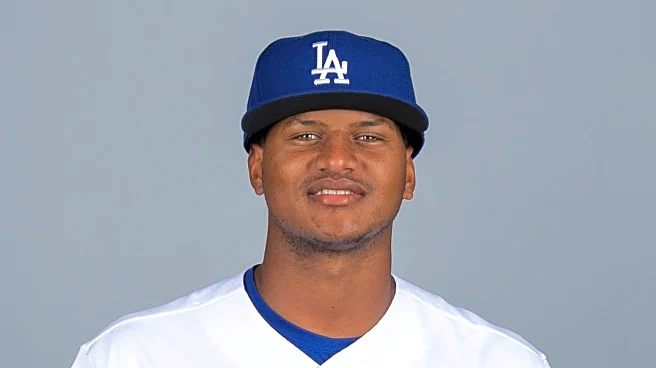
While there’s Speier echoes in Ortiz’s offerings, the first player to cross my mind in watching the 26 year old Dominican southpaw is Barry Zito. Signed as an “old” international amateur just prior to turning 18 for $60k, Ortiz lacks the veneer of the longtime Bay Area star who was the 9th overall pick in 1999. Already in a bullpen role, I don’t spy a Cy Young in the making. As an optionable third lefty, however, Ortiz brings a big-time breaking ball and an intriguing tunneling profile that pairs well.
Ortiz’s repertoire is familiar – a sinker in the 94-96 range and four-seamer 92-95, with a slider in the low to mid 80s and the occasional changeup slightly firmer that I couldn’t find much use of by the end of last year. Zito was known for his curveball, a realm Ortiz’s slider can drift into thanks to his stellar capacity for spinning the pitch.
The slurve-y breaking ball is the star of the show, and in a way can benefit from Ortiz’s greatest deficiency which is subpar command. In outings I reviewed, Ortiz consistently missed arm side with his heater, a tendency echoed in today’s prospect writeup from LL aLLum Brendan Gawlowski at FanGraphs. What was intriguing is how often Ortiz followed these drifting, semi-uncompetitive heaters off the plate with sliders that froze hitters on the outer half subsequently. Zito was known for an extreme variation on this theme.
Ortiz’s breaking ball is the bread and butter offering, and is likely to be upped in its usage in Seattle’s system, where sliders reign supreme. His potency against lefty hitters is significant, but the M’s have shown little patience for pitchers who cannot curtail free passes. His delivery doesn’t feature too much cruft, but the M’s may encourage a slight smoothing in the engagement of his lower half, as at full leg lift there’s a hint of a hitch that may impact the consistency of his execution. Otherwise, the final spot in the bullpen will be in Ortiz’s sights as he seeks a big league debut in 2026.