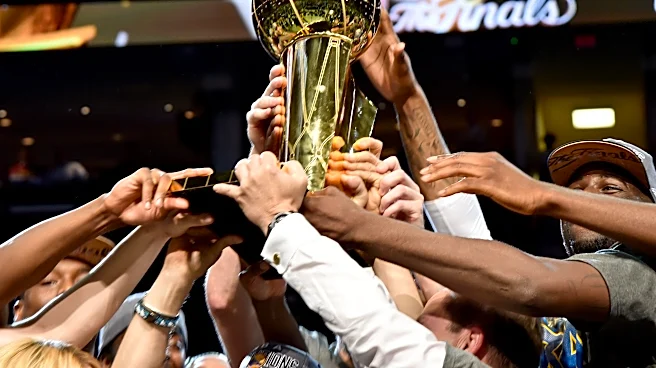




As soon as the NBA Finals are over — which could be as early as Wednesday at this rate — expect the Lakers to get to work.
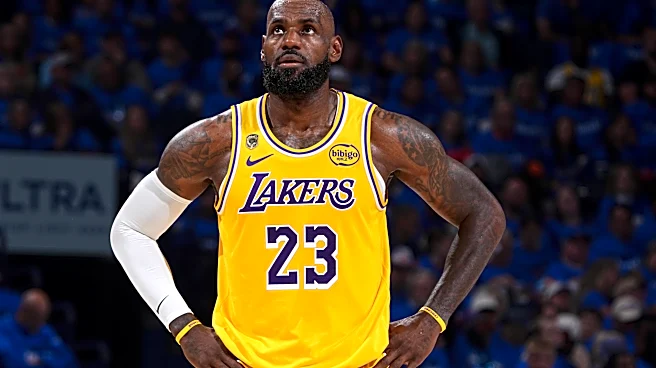
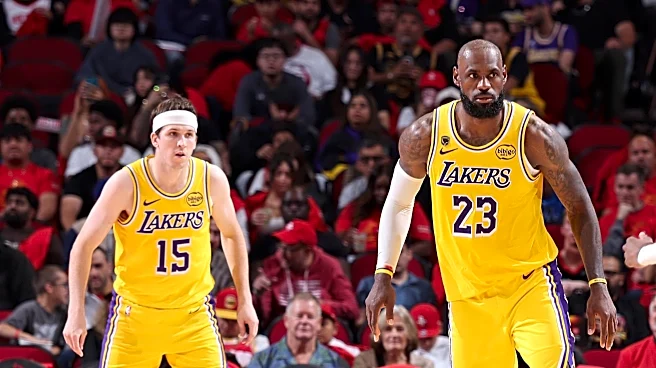
The day after the Finals end, teams are allowed to legally begin negotiating with their own free agents. No team would ever dare to tamper before that in Adam Silver’s NBA, so the last few weeks of June will be the Lakers’ best chance to lock down commitments from LeBron James, Austin Reaves, Rui Hachimura and the rest of their free agents.
If they don’t have a firm answer by 6
p.m. ET on June 30, the Lakers might have to pivot elsewhere.
That’s both the gift and the curse of being able to have upward of $50 million in cap space this offseason.
Getting to that number requires some significant sacrifices, though. The Lakers would have to renounce their free-agent rights to everyone other than Reaves, including LeBron and Hachimura.
Unless both players choose to sign elsewhere, that potential $50 million of cap space is a pipe dream. That’s because until they sign somewhere or the Lakers renounce them, they’re going to count against the Lakers’ books in some capacity.
Those two in particular will prevent the Lakers from having any cap space until they decide upon their fates one way or another.
Between LeBron, Hachimura and Reaves alone, there’s a clear order of operations in which the Lakers need to work this offseason to maximize their flexibility.
Their own free agents
By June 30, the Lakers need to have a firm-ish answer on James, Hachimura and the rest of their free agents other than Reaves. Otherwise, they won’t know how much money they can realistically spend in free agency.
LeBron will count as $57.75 million (his max salary) against the Lakers’ cap until he re-signs with them, signs elsewhere, retires or the Lakers renounce his rights. Hachimura will count as nearly $27.4 million. Those two alone put the Lakers well above the cap, and that’s not even counting Luke Kennard ($13.2 million cap hit), Jaxson Hayes ($6.6 million) or Deandre Ayton and/or Marcus Smart if they decline their respective player options.
The Lakers will have at least a week-and-a-half to legally negotiate with them before any of them can begin legally negotiating with other teams. (Because again, no one would dare to tamper in Adam Silver’s NBA.) That should give them plenty of time to suss out the likelihood of bringing each of them back, and the price tag it’d likely cost.
Perhaps LeBron says he’s willing to come back and take whatever’s left over after the Lakers go free-agent shopping. The Lakers could hash out agreements with the rest of their free-agent targets, but they’d have to re-sign LeBron first to get his massive cap hold off their books before they’d have to sign anyone else.
The same goes for Hachimura to a lesser extent. If he’s getting less than $27.4 million as the starting salary of his next contract, his cap hold would count as more than his next deal will. Once the Lakers signed Hachimura to that contract, they’d carve out additional financial flexibility with which to navigate the aprons.
If they don’t have a clear answer by June 30, though, they may face the difficult decision of whether to renounce either player (or both).
If the Lakers renounced either James or Hachimura, their cap holds would be removed from their books, but they would also forfeit their Bird rights. That means they’d only be able to re-sign them via cap space or with a salary-cap exception.
Once the Lakers finish the rest of their free-agent business, they can then turn their attention to Reaves.
Reaves’ cap-hold trick
Reaves has been the skeleton key to kickstarting the Luka Dončić era for a while now. He’s likely in line for a max or near-max deal this offseason, whether from the Lakers or another team, but he’ll count as only $20.9 million on the Lakers’ books until they re-sign him.
Brad Turner of the Los Angeles Times recently said that from what he understands, “Austin wants the max. Is he willing to give the Lakers a hometown deal? I’m not so sure about that. Maybe he does, but maybe his reps don’t want to.”
The $50 million of cap space figure above includes Reaves’ $20.9 million cap hold. A max contract for Reaves will start at $41.25 million next season, assuming a $165 million salary cap. Once he signs that deal, he’ll count as his new salary on the Lakers’ books. Until that time, he’ll count as only $20.9 million.
So, even if the Lakers announce early in free agency — or even during the legal negotiating period after the Finals — that they’ve reached an agreement with Reaves, that doesn’t mean they’re going to sign him as soon as the July Moratorium lifts on July 6. They’ll spend the rest of their cap space first and then re-sign him afterward to take advantage of his well-below-market cap hold.
The only thing Reaves’ next contract will affect is the Lakers’ proximity to the luxury tax and the aprons. He has zero impact on what they do in free agency aside from how his next contract fits into their larger financial picture.
Depending on which of their other free agents they bring back and how much it costs to do so, the Lakers might have a walkaway price for Reaves that’s below a full max. We’ll see what they have planned for LeBron, Rui and their other free agents, along with anything else they might have up their sleeves.
But no matter what order those decisions are announced in, there is a clear chain that the Lakers need to follow once they’re ready to make those deals official.
Unless otherwise noted, all stats via NBA.com, PBPStats, Cleaning the Glass or Basketball Reference. All salary information via Spotrac and salary-cap information via RealGM. All odds via FanDuel Sportsbook.
Follow Bryan on Bluesky.