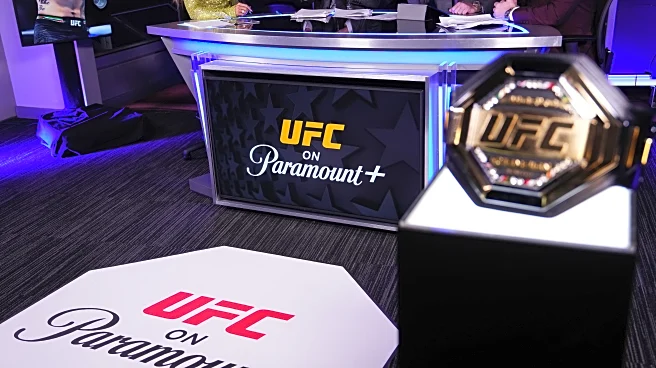

The UFC on Paramount+ era officially launched with UFC 324 from Las Vegas on Jan. 24 followed immediately by UFC 325 from Australia just seven days later.
While the UFC has effectively always controlled
production for its own shows, the new partnership with Paramount was sure to make some changes to the broadcast, especially after Paramount paid $7.7 billion for a seven-year deal that eliminated the old pay-per-view model.
Now every, single Paramount+ subscriber gets access to the UFC’s entire schedule — numbered events and Fight Night cards — along with the huge library of past events and fights. While the first UFC Fight Night card won’t take place until next Saturday night from the Meta APEX, the first two numbered events that just so happened to be a pair of marquee cards headlined by championship fights, so it only makes sense to talk about the good, the bad and the ugly from those shows — and the changes made from UFC 324 to UFC 325.
So far there’s a lot to like about this new partnership but let’s discuss how these first two shows have unfolded.
Earlier start times
As part of the UFC’s new deal, Paramount executives actually requested earlier start times for all of the events — in particular the former pay-per-view cards that traditionally started at 10 p.m. ET/ 7 p.m. PT. While those start times didn’t bother west coasts audiences much, many of the viewers on the east coast were often not done watching the main event until past 1 a.m.
Both UFC 324 and UFC 325 featured those earlier start times, but there was a dramatic difference between the two shows in terms of when the fights actually unfolded.
At UFC 324, there was a long preamble video that marked the beginning of the partnership with Paramount+. That should have been expected as Paramount celebrated its huge investment in the UFC while giving Paramount+ customers another reason to stick around after the NFL season was over.
The pre-fight chatter and video packages consumed about 30 minutes of the broadcast with the first fighters not making the walk until around 9:30 p.m. ET. That lengthy delay was acknowledged by the UFC’s production team and there was a promise that the pomp and circumstance that went along with that first show wouldn’t happen every single time.
Sure enough, UFC 325 was back on track with about 15 minutes of talking and previews for the show with the first fight between Quillan Salkilld and Jamie Mullarkey kicking off at approximately 9:20 p.m. ET, which was a marked improvement over the first show.
One can never predict results, but the UFC 324 main card was also plagued by decisions in four out of the five fights including the five-rounder between Justin Gaethje and Paddy Pimblett. The only finish came from the heavyweight fight where Waldo Cortes-Acosta knocked out Derrick Lewis, but even that came in the second round.
So UFC 324 fought an uphill battle in terms of an earlier end time for the show.
UFC 325 faced no such problems with finishes in three out of five main card fights, and the headliner between Alexander Volkanovski and Diego Lopes beginning at approximately 11:15 p.m. ET.
It’s impossible to predict pacing for the future, but obviously the UFC recognized how the first show dragged out much longer and changes were made and the second card of the Paramount era showed plenty of improvement.
Commercials
Perhaps the biggest complaint coming out of UFC 324 was viewers being inundated with a barrage of commercials — often happening before, during and after each fight. Fighter walkouts were eliminated for the sake of more commercials and only the final two fights actually showed the athletes making their way to the octagon.
In the corners between rounds, cameras zoomed in on coaches giving advice to the fighters, but fans couldn’t hear what was being said because the UFC and Paramount used a split screen that featured yet another commercial playing during the event.
After UFC 324 wrapped, UFC CEO Dana White downplayed the amount of commercials being shown during the event because, simply put, Paramount has to recoup its $7.7 billion investment and a big part of that comes from advertising. It was just a culture shock for fans who were previously paying $79.99 for each of those pay-per-view cards and the vast majority of the advertisements were read during the event by play-by-play man Jon Anik or just shown as the typical “this event is brought to you by”-type segments that didn’t interfere with the broadcast.
To eliminated that $79.99 per event cost, Paramount paid a hefty sum to land the entire UFC broadcast rights package, but that meant commercials were going to come with the territory. In reality, it’s no different than watching an NFL game where there are literally carved-out segments for TV timeouts to ensure all the necessary advertisements get shown during a broadcast.
The Super Bowl takes place next Sunday, and the commercials during that broadcast have almost become as popular as the game itself!
But once again, the UFC listened to the fans and made some remarkable changes between UFC 324 and UFC 325.
Fighter walkouts were back — a huge improvement from a fan perspective — and the commercials never felt like an interference to the actual pacing of the show. Sure, after the second fighter walkout, Anik would pause and say “we’ll be back in 30 seconds” while a commercial played, but that was far better than the first show.
Are commercials annoying? Sure, we all accept that, but this is the cost of doing business and if you purchased every single UFC pay-per-view during a year, you’d be spending around $1,000. If we all have to suffer through a few more Bud Light commercials and pay either $8.99 or $13.99 a month to see every single UFC event at no extra cost, we’ll learn to adapt.
Streaming quality
This is perhaps the biggest plus for Paramount+ over the UFC’s previous broadcast partners at ESPN.
There was rarely an event — big or small — that would go by without a huge number of viewers complaining about poor streaming quality, interruptions in the broadcast or many times the ESPN app just crashing and burning midway through a show. Because it’s my job, I watch every UFC event, and I could probably count on one hand the amount of times the ESPN app didn’t make me want to toss my remote across the room during a show.
From a streaming standpoint, UFC 324 was as flawless as you could possibly expect, an even more impressive feat given we now know the event broke a record for a Paramount+ original live stream with around 5 million viewers tuning into watch the show.
UFC 325 appeared to have a few more hiccups — there was some static and a feed problem early in the card — but the broadcast never crashed or failed even if it was almost like a cord came loose and everything got fuzzy at times. There were also viewers who complained about audio issues early in the broadcast as well.
Here’s where Paramount deserves credit — by the time the UFC 325 main card started, it appeared all those issues had been sorted out. The broadcast was once again flawless and the quality of the stream was amazing. Through seven years and hundreds of UFC events on ESPN, the same problems always persisted and never seemed to get much better.
Paramount+ seems to have figured out live streaming better than ESPN. Time will tell if that keeps up, but so far, so good.
Broadcast changes
Over the years, the UFC has been notoriously stingy when it comes to making sweeping changes to the broadcast — whether that means allowing for more elaborate walkouts or just producing new segments that add to the show. If you watched one UFC card in January and another in December, they were almost carbon copies of each other without much difference beyond the fights that took place.
Thus far, through two UFC events on Paramount+, perhaps the biggest difference in the broadcast has been the addition of backstage interviews with coaches. The UFC isn’t interviewing every coach for every fight — that would surely extend the broadcast by another hour — but the select backstage interviews have been a nice change of pace and offer more insight into a fight that’s about to take place. White has stated in the past he doesn’t like backstage fighter interviews and I wholeheartedly agree.
Fighters are focused on fighting and getting right mentally before walking to the cage is far more important than telling viewers one last time why he or she is going to win. Instead, the coaches are available to offer an extra insight into training, preparation, or maybe even game plan.
The segments haven’t been overly long and only certain coaches have contributed thus far, but overall it’s a welcome addition. One of the best parts of the actual broadcast is when Anik or Daniel Cormier or whoever is doing commentary makes reference to fighter meetings, which adds an extra layer to the information being dished out during an event.
The UFC broadcast team meets with all of the fighters prior to the event and it’s basically one giant interview to talk about everything the athletes are going through before setting foot in the cage. The commentators then pass along that information during the broadcast, which adds something to the show.
The coaches being interviewed is just one more piece to the puzzle to better understand the fighters and what actually unfolds when they go to battle.
What’s next?
This Saturday marks the first UFC Fight Night card on Paramount+, and it’s happening at the Meta APEX, which is usually where excitement goes to die. But the UFC has made some changes including tickets being sold for these events now — different from the VIP packages fans could previously purchase at prices that were akin to selling off a kidney to get through the door.
While tickets aren’t cheap — the first show ranged from $250 to $600 — it’s a far cry from the VIP prices previously in place. There’s little chance the Meta APEX rocks out like 18,000-plus fans did hearing Men at Work’s Australia-loving song Down Under get cranked up to 11 while Alexander Volkanovski made his way to the cage, but it’s definitely better than the alternative, which was almost the sound of silence (not the Simon and Garfunkel song).
Pacing with these shows is also going to be interesting considering the UFC Fight Night cards were oftentimes simulcast on network TV on ESPN or ESPN2, which effectively operated just like any other broadcast with timed commercial breaks. Paramount is sure to do the same even if these events are only airing on Paramount+, but we’ll have to wait and see how much that helps or hurts the broadcast.
But through two events, it’s impossible to say the UFC and Paramount aren’t listening because there were notable changes from UFC 324 to UFC 325 and it’s likely a few more twists and turns are going to happen as this seven-year partnership develops.