


In 2022, the “It’s Not My Money(ball)” series was created in response to the owners’ lockout, which disrupted that year’s Spring Training and arguably cost Clayton Kershaw a perfect game in Minneapolis (I had fun). As the season completes its first month, the World Baseball Classic now a memory, we must conclude the revival of this series as trouble looms in the distance, hanging in the air, exactly in the way a brick does not.
This trilogy in five parts (it’s yet another Hitchhiker’s Guide to the Galaxy
joke) was initially conceived from a single essay that ballooned in size to the point where a split was necessary. As I worked on Pandora’s Box and MLB’s Dirty Dozen, I realized there was a deeper story than skinflint owners and a perception problem that the Dodgers are more than happy to lean into. Before any new business, we take a well-deserved victory lap.
Called it!
Last time, in The Vulture of Private Equity, I called out the practices, in part, of both the San Francisco Giants and Boston Red Sox. The essay was published on April 23. On April 24, word broke that the Giants were selling a portion of the team to a private equity firm owned by Joshua Kusher.
Joshua Kushner, the brother of President Donald Trump’s son-in-law Jared, announced on [Twitter] on Friday that his firm Thrive Capital has agreed to acquire a stake in the San Francisco Giants. The news of Thrive’s purchase was first reported by the Wall Street Journal.
“Our first partnership is expected to be with the San Francisco Giants – an institution built on more than a century of shared identity and community, and among the most iconic sports franchises in America,” Kushner wrote. “We have reached an agreement, subject to league approval, to acquire an ownership stake. We feel privileged by the opportunity to be long-term partners to the Giants.”
Sometimes, a demonstration of the point requires no further explanation, apart from wondering what other landmarks the Giants will purchase, rather than properly spending on their mediocre baseball team.
And then, as if the gods were to decree, “Listen to this man, mortals!” on the next day, April 25, there was a wholesale Stalinesque purge of the managerial core in Boston. Alex Cora and most of his staff? Gone. Jason Varitek? Demoted. The vibes? Rancid.
I suppose the baseball equivalent of “shut up and dribble” is “pipe down and shag some flies.” The firings will continue until morale improves, eh? Joon Lee wrote about the ills of private equity’s involvement in Boston, which can be read in parallel with the last feature in our series, from the perspective of a Red Sox fan. It’s not pretty.
Ken Rosenthal of The Athletic (paywalled) had the following to add about the sad state of affairs in Boston:
Are the Sox better today than they were yesterday? Doubtful. Can they compete for a wild-card spot in a wide-open American League? Perhaps, if [interim manager Chad] Tracy somehow finds a way to get more out of the players than [former manager Alex] Cora did and the pitching starts to click.
Even with the offensive questions, Cora maintained the Sox would be competitive as long as their pitchers performed to expectations. They haven’t, at least to this point. It sure will be interesting Sunday to hear [Red Sox President Craig] Breslow explain why he left that part of the coaching staff largely untouched.
But enough about Breslow, who in the end is just another [owner John] Henry pawn, positioned to take the next fall. Under Henry, the Red Sox are incoherent, dysfunctional and forever poised to overreact. Yet, why should the owner operate any differently? The turnstiles at Fenway keep spinning. “Sweet Caroline” keeps playing.
Yo-played
For the record, the venerable, actual French yogurt company had nothing to do with this portion of this essay, but the pun was too delicious to pass up. Sam Blum of The Athletic wrote an investigative feature on a mostly fraudulent yogurt company, Cremily, which again has nothing to do with Yoplait, which needs to be read in full to be digested.
The story of Cremily features facts that would not be out of place in a screwball comedy that was an unholy mix of The Producers and Major League. In real life, though, the feature demonstrates a comical lapse in foresight, judgment, due diligence, and acumen one would expect of several major league franchises in dealing with a vendor who met the textbook definition of “overpromising and underdelivering.”
Cremily was a yogurt company that sold French frozen yogurt that was advertised as healthy, keto, and lactose-free, and claimed to donate 100 percent of its profits to “empower girls globally.” In retrospect, the company’s dubiousness probably should have been a little easier to spot.
Just in baseball alone, Cremily had partnerships with the Anaheim Angels, Boston Red Sox, New York Mets, and Arizona Diamondbacks. During the Diamondbacks’ sweep of the Dodgers in the 2023 National League Division Series, there are photographs of the Dbacks celebrating in their pool (…but when the Dodgers do it, it’s gauche apparently…) with the yogurt company’s materials in the background.

From Mr. Blum:
Multiple former employees said Cremily could not produce product to scale, leaving teams with “untenable delays” and subsequently providing the Angels and Diamondbacks with product that was not made by Cremily. The Angels argued in a court filing Cremily was “fraudulently passing (third-party) ice cream off as its own” and knew it didn’t have a viable ice cream formula. An ex-marketing employee even said he was asked to create Cremily labels for generic ice cream.
Ultimately, the Angels and the Diamondbacks separately sued Cremily for failing to pay the teams under their respective deals. Naturally, the organizations that worked with Cremily were taciturn about their dealings.
Who wants to admit to being bamboozled? For the regular person, it happens from time to time without shame whatsoever, because they do not have a legal team or anyone conducting due diligence. What were these teams’ excuses? Ultimately, with Cremily, we’re talking about contract sums that would be a rounding error on a baseball team’s ledger, but there are genuine real-world consequences for those caught in the middle.
Saying the quiet part out loud
There is only one Shohei Ohtani, one Mookie Betts, one Paul Skenes — singular talents that make baseball fans take notice. While Max Muncy and Will Smith are part of the Dodgers’ constellation of stars, their initial pedigree was anything but.
Accordingly, nothing is stopping teams from investing in their front offices, whether in scouts, analytics, or a combination of both, to develop their own players. Yes, we mocked the Milwaukee Brewers for their overreliance on this strategy, but it’s better than the firm masterly inactivity employed by other clubs.
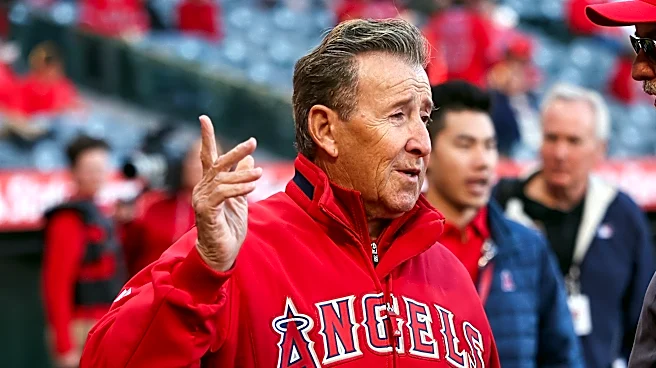
Instead of expanding, many teams are cutting back on scouting, including those that are spending on players, including the Anaheim Angels. Speaking of the Angels, Arte Moreno said the quiet part out loud for owners before the season started.
“The number one thing fans want is affordability,” Moreno said. “They want affordability. They want safety, and they want a good experience when they come to the ballpark. Believe it or not, winning is not in their top five.”
Moreno said that information comes from surveys they’ve done.
“The moms want to be able to afford to bring the kids,” Moreno said. “Moms make about 80% of the decisions. They want to be able to bring their kids and be affordable and they want safety and they want to have a good experience, so they get all the entertainment stuff or whatever. The purists, you know, it’s just straight winning.”
When asked what his top priority is, Moreno said: “For me, I’ve always wanted to win. It’s just what’s the cost of winning right now?”
(emphasis added.)
Naturally, everyone gravitated toward an owner’s statement alleging that fans do not care about winning, which is utterly ridiculous. Can you imagine having Ohtani for multiple years and not making the postseason, much less being a winning team? One need not imagine, but only watch what passes for Angels baseball.
Originally, the backhanded remark towards the Anaheim Angels spoke for itself, but owner Arte Moreno actually said the quiet part out loud and admitted what most Angels fans have known in the pit of their souls for years: winning is not a priority in Anaheim.
It went about as well as expected, as Moreno said the quiet part out loud: some of the more self-austere owners eschew scouting and analytics spending, which would not break the bank and would improve their respective clubs.
Clearly, this self-defeating penny-pinching also applies to the legal department, stadium pest control apparently, and the maintenance of the team’s locker room. Never forget that shortly after Yisei Kikuchi publicly complained about the lack of air conditioning in the Angels’ weight room, the team publicly denied it while putting up a want ad for a part-time HVAC technician.
The creeping death that is private equity in baseball is slow and methodical until it’s not. So if teams are cutting useful spending on things like due diligence and scouting, and spending all this time and effort acquiring commercial real estate, what is the league focusing its energy on?
Baseball forgets the lessons of the Black Sox Scandal
At a time when there is a literal epidemic of addiction to online sports betting, especially with young men, in the United States, baseball has been slowly wrapping its figurative mitts around gambling for years.
It’s a shocking development, because gambling interests nearly toppled the sport in 1919, leading to the creation of the Commissioner’s office in the aftermath of arguably the worst gambling scandal in sports history: the fixing of the 1919 World Series by the Chicago White Sox.
One would think that a fixed World Series would act as such a scar on the psyche of baseball that no one would dare touch gambling again. But 107 years later, what is old is new again. Now-dead and still-disgraced gambler Pete Rose has been reinstated for Hall of Fame eligibility (after presidential pressure, which really merits its own essay from a site that focuses on the Cincinnati Reds), so clearly, time is a flat circle.
The Clase Scenario Writ Large
Before dealing with the pervasiveness of actual gambling in baseball, with actual sportbooks being on stadium grounds, with advertising dollars from DraftKings and the like seemingly everywhere, it often feels like the horse is so far out of the barn at this point that it will die of old age before it returns.
Seeing betting odds on AppleTV telecasts, and in the margins of articles in both reputable publications and blogs, there is an entire industry trying to get you to spend money. One would be tempted to tune it out as background noise. But one cannot ignore this growing problem, not anymore, as recently covered in The Guardian:
Gambling addiction is spiraling “out of control” in the US, a leading campaigner for stricter guardrails has warned, as experts from around the world are set to gather in Boston to push for more regulation of the industry.
The rapid expansion of online gambling, prediction markets and sports betting platforms, “demands a public health response”, according to Harry Levant, director of gambling policy at the Public Health Advocacy Institute (PHAI), urging policymakers to intervene.
“You regulate the distribution, the speed, the type, the access to the product, because the product is what’s dangerous,” he said, calling for gambling to be treated like alcohol or tobacco. “The problem is the product, not the people,” said Levant. “We have a crisis here.”…
“We firmly believe gambling should be regulated like any other addictive product,” said Mark Gottlieb, executive director of PHAI.
Sports betting has been legalized in 39 states and Washington DC since the landmark 2018 supreme court ruling.
With such conditions, is it any wonder that players would eventually get drawn in? Most recently, Cleveland Guardians (and frequent hypothetical future Dodger) closer Emmanuel Clase and Luis Ortiz were indicted for fraud, conspiracy, and bribery stemming from an alleged scheme to rig individual pitches, resulting in gamblers winning hundreds of thousands of dollars.
Joseph Nocella, Jr., United States Attorney for the Eastern District of New York, and Christopher G. Raia, Assistant Director in Charge, Federal Bureau of Investigation, New York Field Office, announced the government’s allegations against the pair:
…The defendants agreed in advance with their co-conspirators on specific pitches that they would throw in MLB games. The co-conspirators then used that information to place hundreds of fraudulent bets on those pitches.
Beginning in or around May 2023, Clase, a relief pitcher for the Cleveland Guardians, agreed with corrupt sports bettors to rig proposition bets – or “prop” bets – on particular pitches he threw. The bettors wagered on the speed and type of Clase’s pitches, based on information they knew in advance by coordinating with Clase, sometimes even during MLB games. Clase often threw these rigged pitches on the first pitch of an at-bat. To ensure certain pitches were called as balls, Clase threw many of them in the dirt, well outside the strike zone. The bettors used the advanced, inside information that Clase provided about his future pitches to wager thousands of dollars at online sportsbooks.
Clase at times received bribes and kickbacks from the bettors in exchange for providing advanced, non-public information. He also sometimes provided money to the bettors in advance to fund the scheme. The indictment includes numerous examples of pitches that Clase rigged, including one in the Eastern District of New York in a game against the New York Mets. In total, by rigging pitches, Clase caused his co-conspirator bettors to win at least $400,000 in fraudulent wagers.
In or around June 2025, Ortiz, a starting pitcher for the Cleveland Guardians, joined the criminal scheme. Together with Clase, Ortiz agreed in advance to throw balls (instead of strikes) on pitches in two games in exchange for bribes and kickbacks. Before an MLB game on June 15, 2025, Ortiz agreed with his co-conspirators to throw a ball on a particular pitch in exchange for bribes. The bettors agreed to pay Ortiz a $5,000 bribe for throwing the rigged pitch and Clase a $5,000 bribe for arranging the rigged pitch.
Clase and Ortiz are innocent until proven guilty, and their trial is scheduled to start on May 4, 2026. One would think even this offramp of a story would be enough to get the league, or any league, to reconsider buddying up to gambling interests.
But like with a certain financial crisis 18 years ago, the money is apparently too good. Online sports betting is legal in 33 states as of February 2025. The sports betting industry hit a record revenue figure of $16.96 billion in 2025, an 11% percent increase from 2024, according to the American Gaming Association.
Remember how bad everyone felt after 2017, which was only compounded after it was revealed that the Houston Astros were blatantly cheating? It was like reliving the loss all over again, but worse.
Mark my words: the shoe that will eventually drop from this entirely foreseeable fiasco will make any scandal (including the Clase affair) look insignificant and quaint in comparison. It is knowingly setting up shop in Chornobyl after the nuclear accident, and acting surprised both that something bad happened and that the consequences were somehow unforeseen.
Either way, it’s a lesson that must apparently be relearned, but it’s not my money(ball)…
If the story ended there, I could sign off, but it gets even worse. Sites like FanDuel, Draft Kings, etc., are the devil you know and the devil you can avoid. But the league has embraced something far more nihilistic, which deserves your full attention: prediction markets.