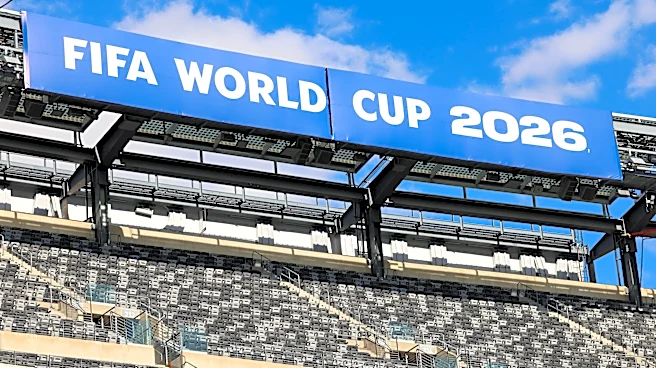



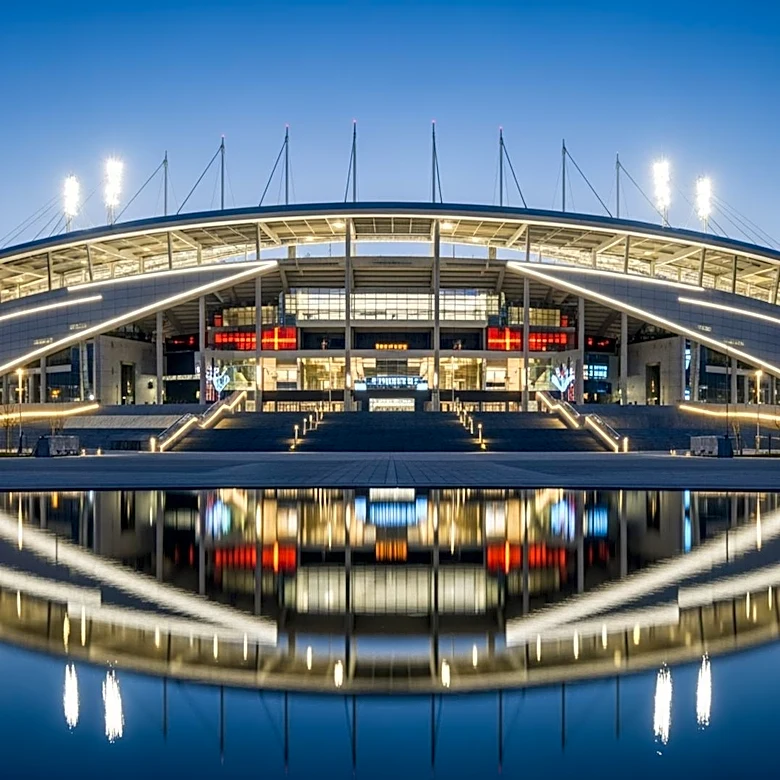



One month away. The sporting event that has been on the dawn of the horizon for four years is now almost here. The 2026 FIFA World Cup kicks off on June 11th from Estadio Azteca in Mexico City, and the pressure to perform is starting to reach its peak. It’s not just for the teams that are starting to assemble their final rosters in the coming weeks, but also for the tournament at large. For years, we have heard that this World Cup is going to be the biggest, the best, the most memorable. Now, the powers
that be must follow through on that promise.
But, are we ready for the World Cup to kick off in a month? Are the United States, Canada, and Mexico? Is FIFA? Is the World Cup committee? Are we as fans? All of those questions likely have different answers and the level of readiness will vary. But in short, as the time ticks dow to kickoff, there is still a lot that needs to be done for North America to put on the greatest sporting event ever.
It starts with the overall excitement for the tournament, and for a lot of soccer fanatics, that’s not a problem. Even if their team is not in the tournament, life around the world will slow to a snail’s pace when the ball is rolled out to be kicked and the matches begin. But, some of that excitement has been dulled by money and politics, two things that the World Cup was always supposed to set aside for the greater cause of uniting the world to celebrate its favorite game.
The biggest thing that has lowered excitement and deterred many fans of the game, particularly here in North America from being all in for the World Cup has been the incredibly high costs to attend a match: the tickets, the travel, the hotels and home rentals, the public transit. Everyone seems to want to take financial advantage of the World Cup coming here with astronomical pricing. Even fan festivals in some cities are charging for entry with premium add-ons and many won’t even be open for all the matches of the tournament. FIFA vastly overestimated the premium American fans especially would pay to see a tournament match just a few miles from their home.
FIFA president Gianni Infantino has been on record as saying that the 2026 World Cup would be like “104 Super Bowls in a month,” and recently said that they priced the game tickets accordingly because they felt American fans were used to paying a premium for sports. Infantino also went so far as to say, “You cannot go to watch in the U.S. a college game, not even speaking about a top professional game of a certain level, for less than $300. And this is the World Cup.” And that shows a fundamental lack of knowledge on what American sports fans routinely pay for games. Anecdotally, it’s much easier to pay less than $100 to get into almost any sporting event except for the Super Bowl than it is to exceed $300 to get into the same game unless you are opting for premium seat locations or amenities. With those statements, Infantino not only showed a lack of knowledge on what Americans will pay for a sporting event, but he also showed a wanton disrespect of how well educated the American soccer fan is on the game.
The United States has been the nation that leads all others outside of the home nation in tickets sold to every World Cup since we hosted for the first time in 1994. American fans routinely are relied upon to purchase tickets to big events that come to our shores. But because of this, American fans understand what World Cups usually cost. They immediately knew that an $1200 ticket for the USMNT’s opening match against Paraguay was over 3 times what people paid for the opening match 4 years ago in Qatar. They knew that a Cat 3 ticket to the USMNT match against Australia this year was twice as much as a Cat 1 ticket to see the USMNT play England in 2022. We’re the nation that has more access to soccer than any other, and because American fans travel for these games, they know what pricing is like everywhere. That was the biggest miss, and it’s costing them with all the reports of tickets going unsold because of the high prices. Hotels, flights, and public transit authorities jacking up the price of getting to and from the games in several cities has also put a damper on fan enthusiasm, and people are now just planning to wait and see if prices drop as inventory continues to remain unfilled.
So, what does FIFA and the World Cup committee need to do, besides consider drastically lower pricing? The biggest gap to fill is educating fans not familiar with attending World Cup on what to expect when the games begin. The education should have already begun months ago, but now is the second best time. Fans need to understand what it will be like attending the game, the security procedures, where people will access the stadium, how they can get there and the costs. There are many chances for people to get frustrated with the process, and lack of information should not be the reason for those chokepoints.
Let them know that the security perimeters are going to be vastly different from attending these stadiums for a NFL game or another soccer game. Let them know that they can’t bring in what they normally would for a routine sporting event at the same stadium. The last thing FIFA needs are entrances to be jammed by people who bring in items that normally are allowed in the stadium that are banned at the World Cup. Get them in the stadiums early by letting them know what will be there for entertainment prior to the match. Will they have screens to watch other games there? Other activations? Some of these stadiums are not close to anything else, so to not create a situation where tens of thousands of people try to enter the stadium at the last minute, bogging down security checkpoints, let them know the process and how long it can take so that people won’t miss the action on the field.
Finally, FIFA needs to get out of its own way. The World Cup is the uniter, the games on the field being the olive branches. The focus shouldn’t be on the revenue, but the action on the field. That’s what will carry in the minds of people long after the tournament is wrapped up. Lowering prices to get fans that generational moment inside the stadium is what’s necessary, but the focus shifted away from the game when the decision was made to price gouge at every turn. Get it back to the games, the teams, the players. We’ll do our part as fans, but as we tick down the days before kickoff on June 11th, soccer’s world governing body needs to do more. This is a pivotal moment in world sports history, and there’s a long way to go to ensure the moment is not fumbled.