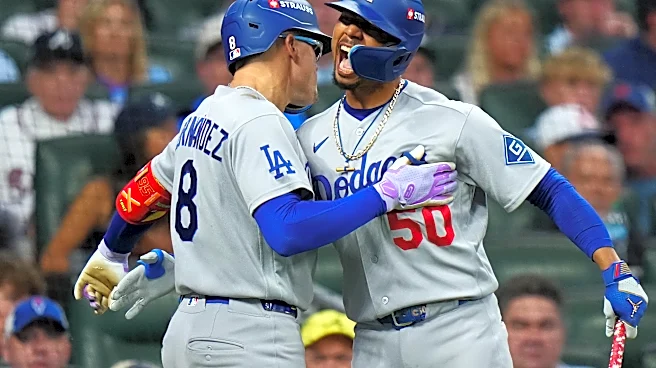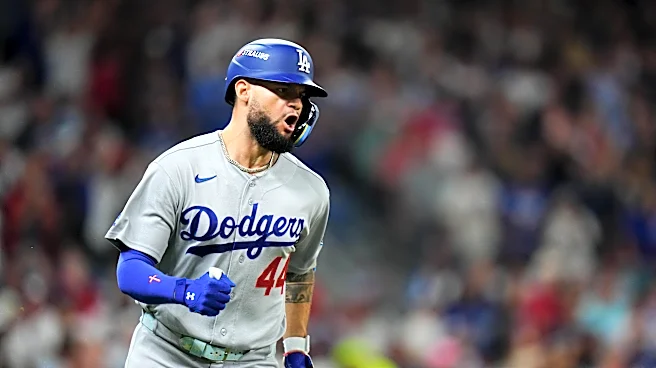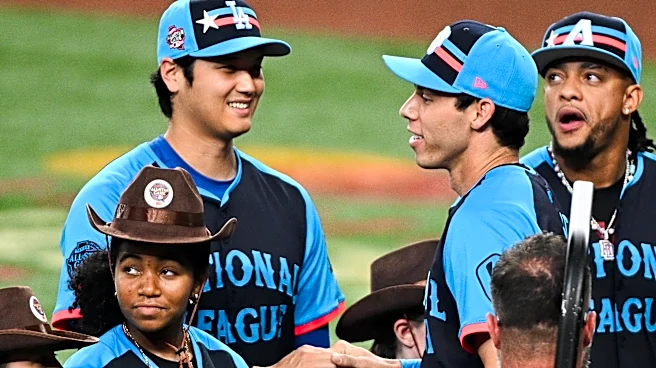


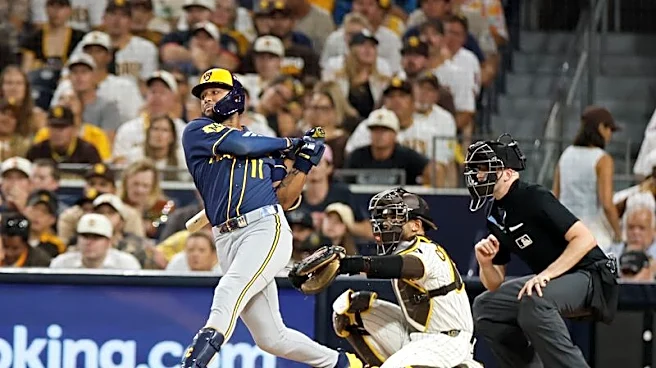
“Here we go again,” says the protagonist of Grand Theft Auto: San Andreas in what is now a popular meme. For the third time in nine years, the Milwaukee Brewers and Los Angeles Dodgers face off in the National League Championship Series, and Brewers fans are hoping that this time they can get past the well-funded boogeymen who reside in the LA hills.
On paper, this year’s version of the Dodgers do not seem to be in as strong a position as they have the past two years, in which they’ve won back-to-back
World Series titles. Yes, the starting rotation is formidable, as good as any we’ve seen in baseball in recent years. But Shohei Ohtani is banged up, key contributors in the lineup are a year older, and questions remain about the team’s bullpen.
Let’s take a position-by-position look at what each team has to offer, and determine who might have the edge in the series. I’ll list a few regular season stats with each players and give a quick breakdown, then determine who has the advantage.
Catcher
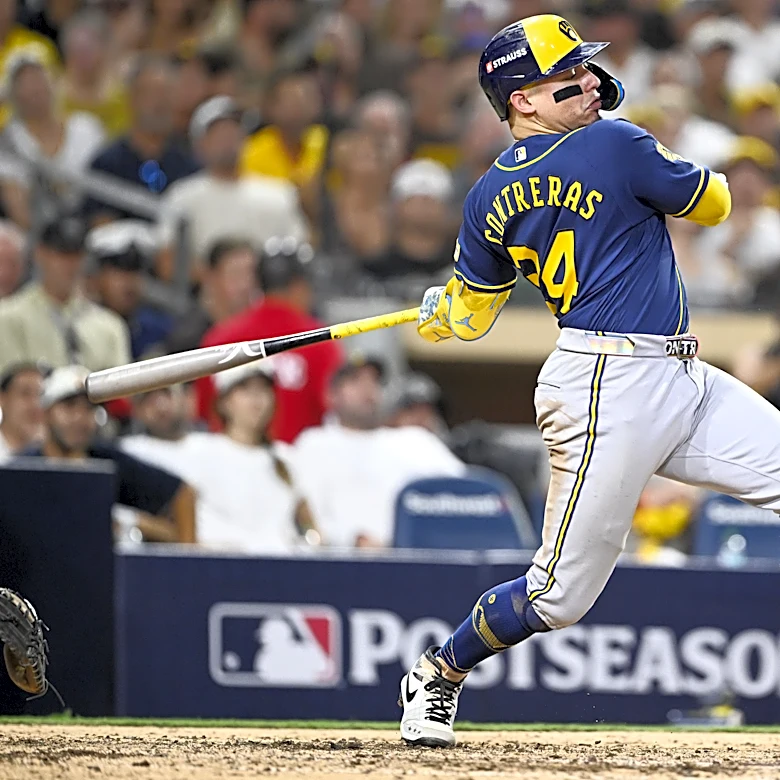
Brewers: William Contreras (2.9 bWAR, 108 OPS+, 18 HR), Gary Sánchez (0.6 bWAR, 112 OPS+, 12 HR)
Dodgers: Will Smith (1.7 bWAR, 115 OPS+, 10 HR), Hunter Feduccia (0.5 bWAR, 75 OPS+, 1 HR)
Contreras’s full-season numbers don’t look as good as they have in previous years — his 108 OPS+ was his worst in any of the five seasons in which he has played over 52 games. That doesn’t quite tell the whole story, though; Contreras was mired in a brutal slump that lasted most of July and August before he hit .292/.359/.562 over his last 23 games and then went 6-for-16 (.375) with two homers against the Padres in the Division Series. Sánchez is a capable backup who should get plenty of action as a pinch hitter in this series: by OPS+, Sánchez had his best season since 2019, and against left-handed pitching this season he hit .238/.366/.436. Sánchez also posted a career-best 16.7% walk rate, an elite mark, and showed the value of that patience during his at-bat against Mason Miller in the ninth inning of NLDS Game 2 on Sunday.
Smith has been one of the league’s premier catchers since his debut in 2019; from 2021-25, he had five straight seasons with at least 3.3 WAR and made three All-Star teams. But he struggled with health this season — an inflamed disc in his neck limited him to just 73 games, by far the fewest in any season since the pandemic-shortened 2020 season. Smith, who is now 31, still performed well when on the field, with a 115 OPS+ and 10 homers in those 73 games. After missing nearly three months with his neck injury, Smith returned to the lineup on September 1, and hit .290/.400/.548 over the final month, though he struggled in the NLDS, managing just a single in 16 at-bats.
Feduccia, acquired from the Rays at the trade deadline, was meant to be LA’s third-string catcher — a temporary backup to Dalton Rushing, who took over the starting job when Smith was injured. But Rushing is dealing with an elbow injury and cannot catch, and did not make the NLDS roster, so Feduccia is on the roster as a “break glass in case of emergency” backup.
Advantage: Brewers, but it’s slight. Contreras raked in the NLDS and Smith was awful, so this is mostly based on recency bias. I wouldn’t count on Smith staying down for long, though, as he was quite good for the entire month of September. Sánchez has way more value as a backup than Feduccia has; don’t be surprised if there are a couple of important Sánchez at-bats in the series.
First Base
Brewers: Jake Bauers (3.3 WAR, 140 OPS+, 26 HR), Andrew Vaughn (1.5 WAR, 130 OPS+, 6 HR)
Dodgers: Freddie Freeman (2.7 WAR, 118 OPS+, 16 HR)
Bauers and Vaughn combined for one of the more potent platoons in the majors this year. Bauers, in a surprising season, was amongst NL leaders in on-base percentage and OPS, finishing seventh among qualified NL hitters in OPS+. Vaughn was a capable complement, and after missing some time at the beginning of the season had what was, by rate stats, his best season, over 331 plate appearances. Vaughn has been used pretty strictly as a platoon player of late, and Pat Murphy chose to use him as a high-powered pinch-hitter against the Padres, so he got only two plate appearances in that series. With more lefties available for the Dodgers, Vaughn may get a start or two, but there is some logic to Murphy’s approach, giving him maximum flexibility to play defense and keeping a good defensive unit while keeping Bauers in the lineup.
Freeman is, of course, well on his way as a first-ballot Hall-of-Famer. He also recently turned 37 years old, and that age finally appears to be slowing down one of the best hitters of the 21st century. Freeman still had a good year — one of the iron men of modern baseball, Freeman played in 153 games (he’s played in at least 90% of his team’s games in every season since 2017) and was solid, with a .288/.362/.430 batting line, 32 doubles, and 16 homers. But that’s his worst season by OPS+ (118) since he was 22 years old way back in 2012, and his 2.7 WAR was his lowest total since that same 2012 season (even including 2020, when he played only 60 games but won the NL MVP). Freeman remains a dangerous hitter who has a ton of playoff experience, which showed in the NLDS, when he homered twice against his former team.
Advantage: Brewers, but again, it’s slight. Bauers and Vaughn’s combined performance was definitely better than Freeman’s over the course of the season, but I’m not about to doubt Freddie Freeman in the playoffs.
Second Base
Brewers: Brice Turang (7.3 WAR, 124 OPS+, 21 HR)
Dodgers: Tommy Edman (1.6 WAR, 97 OPS+, 8 HR), Miguel Rojas (0.8 WAR, 93 OPS+, 4 HR)
Turang was the league’s best second baseman in 2026, by a comfortable margin. He’s become a good offensive player with pop, he still runs the bases well, and he’s one of the league’s best defensive players. The only question here is whether Turang can shake whatever is bugging him in the postseason; since his offensive awakening during the summer of 2025, Turang has been unable to translate that success to the playoffs. In 55 plate appearances since the start of the 2025 postseason, Turang has just six hits (.118/.182/.196). He hit singles in each of the last two games of the Padres series and looked a little more comfortable at the plate in Game 4, so hopefully this is beginning to turn. The Brewers need him.
Edman is one of those guys who doesn’t seem threatening when he’s on almost any other team but then he joins the Dodgers for nothing and you can’t help but wonder how LA was allowed to get a guy like him. Edman is a versatile role player who, outside of his first couple of full seasons with the Cardinals in the early 2020s, hasn’t done a whole lot in the regular season. But he’s been a crucial part of the Dodgers’ World Series teams the last two years; he won NLCS MVP in 2024, and coming into this season was a .273/.303/.435 hitter in 32 playoff games with the Dodgers (in that same timespan, he hit .229/.280/.392 during the regular season). Edman went 0-for-7 against Atlanta, so hopefully the magic dust has worn off a bit.
Rojas is 37 and doesn’t figure to be a major part of this series, but he’s absolutely the kind of guy who you can’t believe just homered.
Advantage: Brewers. It’s not going to be an easy series for Turang, with Blake Snell and Tarik Skubal in LA’s rotation, but if he can find a way to break out offensively, it could be a key to the series.
Third Base
Brewers: Joey Ortiz (2.6 WAR, 101 OPS+, 9 HR), David Hamilton (1.8 WAR, 80 OPS+, 4 HR)
Dodgers: Max Muncy (4.1 WAR, 128 OPS+, 29 HR), Kiké Hernández (-0.1 WAR, 82 OPS+, 4 HR)
Ortiz had a roller-coaster season but hit .329/.379/.532 in 51 games after the All-Star break, a real sample. He also might be the Brewers’ best defensive player. Hamilton is one of this team’s more divisive players, but it certainly looks like Murphy prefers him in matchups versus right-handed pitching at the moment. Hamilton is not the defensive player that Ortiz is, and while he’s a better hitter against righties (.668 OPS), he still wasn’t as good statistically against them as Ortiz, the right-hander, was (.768 OPS, significantly better than against LHP). Ortiz mostly didn’t look good against the Padres — just one hit in 11 PA — but he did hit the ball hard into outs a couple times.
Muncy, who turned 36 at the end of August, somehow just had one of his best seasons. He graded as a solid defensive third baseman, hit for his highest batting average since 2018, and slugged 29 homers, the fifth time in his career he’s had at least that many. By WAR, it was the fourth-best season of Muncy’s 11-year career and his highest total since 2021. Qualitatively, he’s just one of those guys who it feels like he’s going to pop a homer every time he swings the bat. I hate it.
Speaking of things I hate: Hernández is 34, and over the last five seasons is a .225/.281/.360 hitter. In that same timespan, in the playoffs, he is a .271/.317/.411 hitter. He went just 1-for-6 in the NLDS, but his one hit was, of course, a homer. There’s a very good chance he does something extremely annoying during this series.
Advantage: Dodgers. Muncy is a dangerous hitter. Ortiz’s defense will help, but this is the most likely spot on the roster to be a complete offensive black hole.
Shortstop
Brewers: Cooper Pratt (1.7 WAR, 99 OPS+, 3 HR)
Dodgers: Mookie Betts (3.9 WAR, 113 OPS+, 23 HR), Hyesong Kim (0.5 WAR, 81 OPS+, 1 HR)
Pratt debuted in mid-June when Ortiz’s season had hit a low point. Most expected him to be a good defensive player who would struggle offensively. As it happened, Pratt held his own offensively — he was just about exactly a league average hitter in 74 games, and the defense was as advertised. At least until the NLDS, when Pratt committed as almost as many errors in four games — three — as he had in his 74 regular season contests (five). Pratt did pick up a few hits, including a ground-rule double, against San Diego, though, and looked like he belonged.
At shortstop we meet the Dodgers’ second future Hall-of-Famer, one of the best defensive right fielders of all time, Mookie Betts. Betts looked on his way to an underwhelming season at the plate, but he salvaged his season with a scorching-hot September; he hit .337/.438/.674 with seven homers and nine doubles in 23 games. Perhaps beneficial for the Brewers, that didn’t seem to carry over into the NLDS, where he was 3-for-14 with three singles and three walks.
Kim doesn’t matter much — if he’s not replaced on the NLCS roster, he’s probably just here as a pinch-runner and potential defensive substitute.
Advantage: Dodgers. Pratt is a nice player and Betts, who turned 34 on Wednesday, isn’t what he used to be. But if he’s anything like the hitter he was in September, he could carry the whole Dodger offense on his back.
Outfield
Brewers: Jackson Chourio (4.9 WAR, 129 OPS+, 25 HR), Garrett Mitchell (3.4 WAR, 112 OPS+, 11 HR), Sal Frelick (-0.5 WAR, 70 OPS+, 4 HR), Luis Lara (1.2 WAR, 77 OPS+, 1 HR)
Dodgers: Teoscar Hernández (1.0 WAR, 108 OPS+, 16 HR), Andy Pages (6.0 WAR, 122 OPS+, 23 HR), Kyle Tucker (0.7 WAR, 97 OPS+, 17 HR, $60 million), Josue De Paula (0.5 WAR, 198 OPS+, 1 HR)
Chourio’s batting line in the NLDS (3-for-16, a homer, six RBIs) belies the fact that he was on everything. Chourio looked like a star in the series, even if he only had three hits — all three of them major, clutch, run-scoring hits that either tied the game or gave the Brewers the lead — to show for it.
Mitchell should be coming into the NLCS feeling confident. After a tepid showing in the NLDS’s first three games (a couple of hits, but six strikeouts in 12 plate appearances), Mitchell was the star of the show in the clincher, where he hit a triple and an RBI single, scored a run, and robbed Manny Machado of the game-tying homer in the eighth. Frelick, battling a series of nagging injuries, had an awful season, but he looked like the vintage version of himself against the Padres, when he started three of four games, hit .333 with a couple RBI, a stolen base, and a couple runs scored, and threw out a runner at third base. Lara struggled to hit down the stretch (an abysmal .188/.243/.203 in September) but worked a walk and saw a lot of pitches in his one start in the Padres series and will always give you elite defense in right field.
Pages is the Dodgers’ best outfielder and their best position player under 30. Depending on your preferred defensive metric, he grades as one of the best defensive outfielders in the league (DRS has him even higher than Pete Crow-Armstrong) and he’s a good hitter. He started incredibly hot, though — he had an OPS over 1.000 after about a month — and hit a much more modest .259/.343/.414 from June 1 until the end of the season. He missed about a month toward the end of the season after fracturing a bone in his hand but hit well over the season’s last week after he returned. He had four singles and a couple RBIs against the Braves.
Hernández is slowing down — he turns 34 next week, and he’s seen a significant downturn offensively in the last two years from his peak seasons (2020-24). He remains a potent weapon versus lefties — .303/.392/.515 this season — so the Brewers will need to prioritize matchups in his case. Tucker is one of the bigger disappointments in recent years after signing an immense contract before the season; he looked like a shell of himself, and after five straight seasons with between 4.5 and 5.5 WAR, he looked lost at the plate for most of the season and, despite being healthy, finished with an OPS that was nearly 100 points lower than any other season of the last six years. His defense, a traditional strength (he won a Gold Glove in 2022) also graded out poorly. Tucker is only 29 — not sure what happened.
De Paula is a mega prospect who was promoted straight from Double-A to the big leagues when Ohtani went on the IL late in the season. He hit .323/.500/.581 in 42 plate appearances, and went 0-for-1 with a walk against the Braves.
Advantage: Brewers. Let’s call Chourio and Pages a wash (though I’d rather have Chourio); Mitchell was far better than anything the Dodgers got from Hernández or Tucker this season, and if Frelick looks like he did in the Padres series, he’s better than either of those guys, too. LA’s “other” guys have the ability to change a game with a homer, but are likely to be net negatives, especially over a longer series.
Designated Hitter
Brewers: Christian Yelich (0.1 WAR, 91 OPS+, 12 HR)
Dodgers: Shohei Ohtani (3.2 WAR as hitter, 143 OPS+, 26 HR)
Yelich struggled this season. We know it, he knows it. He turns 35 soon, and this is probably just how it’s going to be for him moving forward. But Yelich, who was better in the second half than the first and flashed some solid indicators for quite a while, was lively in the NLDS — he hit .357 (5-for-14) with a double and an RBI, he stole a couple of bases, he walked a couple times, and he had a couple of bad-luck hard-hit balls — a shot to deep center that looked like it was going to tie the game in Game 2 but was caught, and his 107-mph game-ending double play in Game 3.
Even whatever optimized version of 34-year-old Yelich is going to be at a disadvantage against the game’s biggest star, though. Ohtani is banged up — he’s been dealing with knee and biceps injuries, neither serious enough to threaten his season but bad enough that he had an IL stint late in the season to try to get healthy. He doesn’t look healthy. In early summer, it looked like he was on his way to a fourth straight MVP — he was hitting .296/.412/.542 at the end of June and pitching as well as we have ever seen from him. But the pitching went first — his last appearance as a pitcher came on July 3, and while he stayed in the lineup after that, there was a downturn in results that accelerated as we got closer to the end of the season. The former home run champ hasn’t hit one out since August 18, and in 18 games from then to the end of the season he hit just .157/.289/.214. He hit two singles and walked twice in 16 plate appearances against Atlanta, and batted fifth and fourth in the lineup in the series’ last two games, after batting first or second in literally every time he’d been in the Dodger lineup the last three years.
Advantage: Dodgers. I’m still giving it to Shohei, but it really doesn’t seem like he’s healthy, and there’s a real chance Yelich outperforms him.
Starting Pitching
Brewers: Jacob Misiorowski (6.5 bWAR, 1.80 ERA, 2.17 FIP), Logan Henderson (3.3 bWAR, 2.47 ERA, 3.32 FIP), Robert Gasser (1.3 bWAR, 3.87 ERA, 4.24 FIP), Dustin May (0.3 bWAR, 5.65 ERA and 5.06 FIP with Brewers)
Dodgers: Tarik Skubal (1.9 bWAR, 2.61 ERA, 2.36 FIP with Dodgers), Blake Snell (1.7 bWAR, 1.90 ERA, 1.72 FIP), Yoshinobu Yamamoto (5.9 bWAR, 2.53 ERA, 3.33 FIP), Tyler Glasnow (1.8 bWAR, 3.53 ERA, 2.74 FIP)
The Brewers might have the best pitcher in this series, but the Dodgers are boasting a gauntlet unlike we’ve seen in the majors in some time — who was the last No. 4 starter as good as Glasnow? I’ve ordered LA’s pitchers here in the order that they pitched against Atlanta. Skubal, who of course was heavily tied to the Brewers in trade rumors, mostly shut down the Braves for six innings in Game 1; he allowed two hits, two walks, and a run while striking out seven. Skubal has a long history of postseason performance, too; he has a 1.97 ERA and 2.18 FIP in 45 2/3 career postseason innings.
Snell wasn’t sharp against the Braves — he held them to one run but walked five guys in 3 2/3 innings. But during the regular season (which, aside from one rough outing in May, didn’t start for Snell until August 11), Snell was as sharp as he has ever been: over eight starts since permanently joining the rotation in August, Snell allowed only five runs — never more than a single run in one outing — in 39 2/3 innings (a 1.13 ERA). He struck out 50 and walked 14, looking every bit of the guy who’d won Cy Youngs in Tampa and San Diego. Those who haven’t blocked it out will also remember that Snell utterly dominated Milwaukee in last year’s NLCS, when he struck out 10, walked zero, and allowed only one hit in eight shutout innings in Game 1.
Yamamoto is the Dodgers’ No. 3, a guy who finished third in Cy Young voting and won the World Series MVP last season. He was just as good this year as he was last year and shut down the Braves in his one start in the NLDS. Glasnow, the fourth starter, had a 3.53 ERA and 2.74 FIP in 74 innings this season and held the Braves to one run in 4 2/3 innings in the series clincher on Wednesday.
On the Milwaukee side, Misiorowski will look to get past his shaky start versus the Padres — two runs in four innings, in which he needed 88 pitches despite just one walk. Miz handled the Dodgers in his only start against them this season, when he allowed one run in six innings with six strikeouts.
Henderson was a bit shaky as well at the beginning of his outing against San Diego but settled in nicely. He allowed two runs, but he had no help from his defense (only one of those was earned). Gasser pitched well against the Padres and on paper he’s got a better matchup against the Dodgers, who rely on more lefties than the Padres do — I’d definitely slot him in ahead of May in this series. Milwaukee will probably need a fourth starter — I’d be surprised if Misiorowski pitched on three days’ rest in game four — and that might be the longtime Dodger May, but they also might just do a bullpen game (or effectively do a bullpen game with May getting a shot once through the order, or something like that).
Advantage: Dodgers. This is one of the best four-man rotations I’ve ever seen. Misiorowski can beat any of them, but LA has three different guys who can match him on any given day. The Brewers will have their work cut out for them, and their best bet in this series is to grind out at-bats against the starters and try to get to the bullpen as quickly as possible.
Bullpen
Brewers: Trevor Megill (61.2 IP, 2.63 ERA, 1.85 FIP), Abner Uribe (59.1 IP, 1.97 ERA, 2.68 FIP), Aaron Ashby (89.1 IP, 3.12 ERA, 3.11 FIP), DL Hall (61.1 IP, 1.91 ERA, 3.88 FIP), Antonio Senzatela (21 IP, 5.14 ERA, 4.43 FIP with Brewers), JoJo Romero (13.1 IP, 3.38 ERA, 3.85 FIP with Brewers), Shane Drohan (124.2 IP, 4.19 ERA, 3.73 FIP), Kyle Harrison (115.2 IP, 4.20 ERA, 4.03 FIP), Chad Patrick (106 IP, 3.40 ERA, 4.17 FIP)
Dodgers: Edwin Díaz (18.2 IP, 8.68 ERA, 4.44 FIP), Tanner Scott (63.2 IP, 2.69 ERA, 2.10 FIP), Edgardo Henriquez (60 IP, 2.85 ERA, 2.50 FIP), Alex Vesia (58 IP, 2.64 ERA, 3.10 FIP), Evan Phillips (26 IP, 3.46 ERA, 3.87 FIP), Roki Sasaki (122.1 IP, 4.49 ERA, 4.73 FIP), Kirs Bubic (4.2 IP, 0.00 ERA, 1.60 FIP), Brock Stewart (26.2 IP, 2.70 ERA, 3.81 FIP)
In the NLDS, there was a lot of talk about the Padres and their league-best bullpen heading into the series. But the Brewers got to Adrián Morejon in Game 1 and Mason Miller in Game 2, while their own bullpen — which at this point might be flying under the radar a bit as a major strength — allowed just one earned run in 19 innings against San Diego. Both Trevor Megill and Abner Uribe may have gotten away with a couple of near homers, but Aaron Ashby looked as good as he’s ever looked in game four, and the Brewers got solid work from DL Hall, Antonio Senzatela, and JoJo Romero, as well. With the higher concentration of lefties that the Dodger lineup presents, expect Shane Drohan and Kyle Harrison to have roles in this series, as well. Chad Patrick may have fallen off the trust tree with his September control issues, but we’ll see.
The Dodgers aren’t in as bad of shape here as they have been at times in the past, but I wouldn’t call the bullpen a major strength. After a disaster of a season in 2025, lefty Tanner Scott fixed himself, and had an excellent season in which he saved 25 games.
It wasn’t Scott closing games in the NLDS, though: the Dodgers went with the right-handed Edwin Díaz, despite his 8.68 ERA during the regular season. Díaz is one of the best closers of his time — he’s got a solid argument as the best reliever in his league at least twice — and he was really good for the Mets in 2025. But after his big contract in LA, something has been wrong. He’s spent some time on the injured list but there doesn’t seem to be a major injury issue — he just started walking guys and giving up hard contact. The Dodgers gambled a bit by using Díaz to close back-to-back games in Atlanta after he pitched a scoreless inning in LA’s Game 2 loss, and he’s now riding three straight scoreless outings in which he hasn’t walked anyone into the NLCS. If Díaz is fixed, that’s bad news for the Brewers… but his strikeouts are also down (three strikeouts in three innings in the postseason, well below his typical numbers) and Ozzie Albies got him for a double off the wall on Tuesday, so who knows. It’s a major wildcard in this series.
Other notables here include the flamethrowing Henriquez, the reliable lefty Alex Vesia, and converted-ish starters Sasaki and Bubic. The Dodgers only carried eight relievers in the NLDS, and it’s very possible that they’ll replace either De Paula or Kim with another reliever (Jack Dreyer? Justin Wrobleski?) for the longer NLCS.
Advantage: Brewers. Milwaukee has more depth in their pen. Scott is really good and there are a few good pitchers here, but there are some questions about roles, and Díaz is a major question mark. The Brewers also match up well with all the left-handed hitters (Ohtani, Freeman, Muncy, Tucker) in the Dodgers’ lineup.
Wrapping up
I accidentally wrote 4,000 words, so I’ll keep this brief:
Catcher: Brewers
First Base: Brewers
Second Base: Brewers, big time
Third Base: Dodgers
Shortstop: Dodgers
Outfield: Brewers
Designated Hitter: Dodgers, maybe, unless Ohtani is as hurt as he looks
Starting Rotation: Dodgers, big time
Bullpen: Brewers
The Brewers are better at more places on the field, but the Dodgers’ rotation is a major equalizer. Overall, these are two pretty evenly matched teams. If the Brewers can be pesky against the Dodgers’ starters and force them to throw a lot of pitches, I like their chances. But if they can’t find a way to get through Skubal, Snell, and Yamamoto (they couldn’t last year, at least in the case of the latter two) and into the bullpen, it may not matter much.