
Happy New Year Astros fans! The Astros offseason has now officially started.
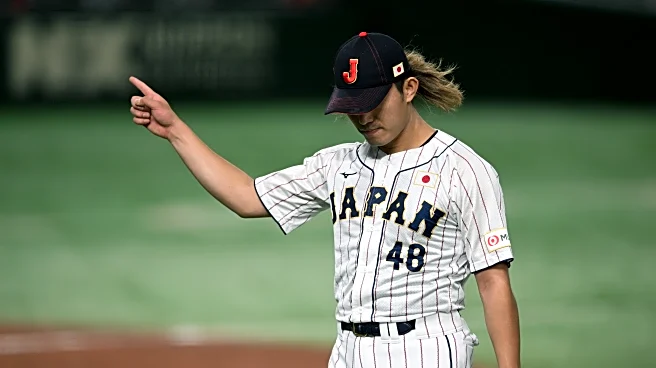
It was close to 11 a.m. CT when Jeff Passan reported that the Houston Astros were signing Japanese star pitcher Tatsuya Imai.
An offseason of bargain shopping and working margins in trades had just been set ablaze by Dana Brown (likely with Jim Crane’s input as well), who saw a depression in the market and jumped on it.
While the starting pitching market has shown to be quite expensive, there was certainly a development in the international market that showed the potential for discounts. It started with 3B Munetaka Murakami and the Chicago White Sox.
Murakami was originally projected to sign a deal anywhere from 5 years/$80M to 8 Years/$180M, and wound up signing for just 2 years/$34M. He signed very late in his window, taking a short term deal and betting on himself to perform well and go back on the market to strike big.
With Imai’s window set to expire January 2nd, and needing a physical to complete a deal, it seemed likely we would get a resolution today.
As I intimated in the December 31 Crawfish Boil (https://www.crawfishboxes.com/houston-astros-news/71558/news-rumors-the-crawfish-boil-12-31-2025), the Astros could be a stalking horse on Imai as they waited for his willingness to take a short term deal to increase. Imai was reportedly more interested in the AAV of a deal than the length of it, as the Cubs reportedly offered a longer term contract with lesser AAV.
When given the chance to match the offer, the Cubs chickened out, and Houston signed Imai for 3 years and potentially $63M, with opt outs after each season.
It is now the second time this offseason that a highly regarded Japanese player has had to take a short term, “prove it” type deal. Part of this has to do with the upcoming expected labor stoppage, part of it has to do with the uncertainty of how Murakami and Imai will perform in MLB and part of it has to do with the fact that the biggest spending teams have made decisions not to continue to push the payroll forward (I’m not using the C word here but I do wonder if “collusion” will be brought up by the union if a labor stoppage occurs).
The result is Dana Brown was able to spot a depression in the market and take advantage of it with a short term, higher AAV deal. This is exactly the kind of opportunistic move we have looked for the Astros to make, especially under Brown. Brown has shown astute at finding useful players in unexpected areas, and now finding a discount on a player who projects to be an impact player.
With Imai joining the Astros rotation as a lock along with Hunter Brown and Cristian Javier, it leaves three spots left (as I believe the Astros will employ a 6-man rotation for a significant portion of the season) and a lot of candidates for those roles.
Let’s start with who we will rule out:
Ronel Blanco, Hayden Wesneski, Brandon Walter – all are injured and it is unknown if they will pitch this season, and none would be expected to pitch before mid-July at the earliest.
Colton Gordon – Gordon is best used as minor league depth and a long man out of the pen. I expect he will not make the main roster.
J.P. France – Shoulder capsule surgery has likely derailed France’s MLB aspirations. He was terrible last season in Sugar Land, and while he is 100% the kind of player every fan should root for (didn’t get his first shot at MLB until he was 28, then suffered devastating injury) and I 100% do, his injury is the kind that is extremely difficult to return from. His options status also make it difficult for him, as he is on his final option year.
Guys with a lower chance to be in rotation:
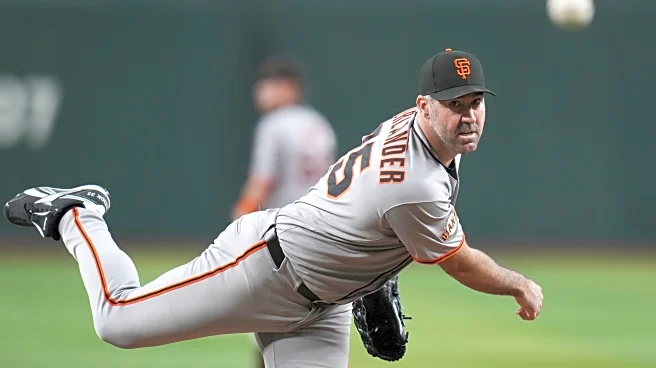
Jason Alexander: “Costanza” played an important role for the Astros last season after being claimed on waivers from the Athletics. He went 4-2 with 1 Save in 14 appearances (13 starts) with a 3.66 ERA and 1.248 WHIP.
Pitching in the majors for the first time in 3 seasons, Alexander gave the Astros a solid 71.1 innings they desperately needed. His FIP was nearly a full run higher (4.65) than his ERA, which may indicate some luck/benefit of excellent fielding, and his strikeout rate of 7.6K/9 is far lower than the Astros look for, but they were desperate for arms and Alexander delivered.
His stuff doesn’t translate to long-term starter success and doesn’t fit the Astros metrics, so it would seem his most likely destination would be in the bullpen as a long man/spot starter/multi-inning reliever.
Lance McCullers Jr.: Lance is all heart and wants desperately to be the kind of pitcher he once was, but his body may have finally betrayed him past the point of salvage.
Last season, McCullers fastball averaged 91.5 M.P.H, or 1 M.P.H. higher than his average exit velocity allowed. He didn’t get guys to chase (bottom 1%) and walked far too many batters (again bottom 1%). He no longer has a major league fastball, and his next three best pitches (curve, slider, change) are not designed to get any quick outs, they are all swing-and-miss pitches. This is why his pitch counts are always high in every inning.
So many people over the last couple of seasons have wanted McCullers to be moved to the bullpen, but the truth is there is no track record or history of his arm being able to withstand the rigors of bullpen life. Also, one of the most important parts of the job in the pen is not walking people. Lance walked 6.3 batters per 9 innings last season over 55.1 innings. That is unsustainable at any level.
Barring a miracle return of velocity, and considering he is in the final year of his contract, I think it is very possible that by the end of Spring Training Lance retires. If he is unable to pitch at the high level he is accustomed to, he will have no role on this team. Dana Brown has already shown a willingness to rid himself of high priced players who cannot perform anymore (Jose Abreu, Rafael Montero), and I believe they will give him the chance to retire an Astro before sending him through waivers.
Nate Pearson: The Astros took a flier on Pearson, a 29-year-old former first round pick with a career 5.17 ERA.
Pearson did not pitch much in the majors last season, logging 14.2 terrible innings on the north side of Chicago. He did pitch to a 2.22 ERA at Triple-A in 44.2 innings at Iowa, almost all out of the pen. Houston signed him with the agreement they would give him a chance to start.
I believe they will give him the chance to compete for a starting role, but that ultimately he will not win that battle and will find himself in the bullpen in a similar role to Alexander should he make the roster.
Guys with good chances to make the rotation:
Ryan Weiss: Weiss is one of the latest examples of a pitcher who went overseas after struggling in the U.S., found success, and is now back in MLB. He is coming off a tremendous year in the KBO (read about him here: https://www.crawfishboxes.com/general/71067/astros-close-to-signing-american-kbo-pitcher).
Weiss’ newfound high velocity and swing-and-miss stuff makes him a prime candidate to get a solid bump up from spending time in the Astros Lab. He is a strong candidate to be at the back of the rotation as a 29-year-old coming off 30 starts and nearly 180IP.
Mike Burrows: Houston surrendered two of their better prospects to acquire Burrows, whom Adam Spolane did a deep dive on here: (https://www.crawfishboxes.com/general/71446/who-is-mike-burrows).
Burrows is another young pitcher with big-league stuff but inconsistent results, and another one of those top candidates to get a lot of help from the Astros Lab. With a 3.94 ERA and 1.24 WHIP last season, Burrows seems likely to be the kind of pitcher that would take a step forward in Houston in the Astros pitching system. He seems probable for a rotation spot at the back end.
A.J. Blubaugh: Long an Astros top prospect, Blubaugh finally got his crack at the majors and excelled late in the season, particularly in relief.
Blubaugh went 3-1 with a 1.69 ERA and 0.875 WHIP over 11 appearances (3 starts) for Houston, striking out 35 in 32 IP. While his overall numbers at Triple-A Sugar Land were not impressive, that was primarily due to a poor first half of the season, which he rectified and then took off in the second half.
If Blubaugh can cut down the walks and the homers, he can be a very important arm for the Astros whether as a starter or a leverage reliever. The team should prefer he start, as he’s 25, under team control for a very long time, and has big time stuff.
Blubaugh being able to start also gives the Astros a legitimate surplus of major-league caliber arms, something in extreme demand across baseball.
Spencer Arrighetti: Arrighetti should have the most inside track of the group because he has the most time in the team’s rotation.
He also has some numbers at the MLB level that aren’t so pretty. There is definitely a case here of “Will the real Arrighetti please stand up?”
Arrighetti struggled in 2024 in the first half of the season, called up before he was ready and forced to develop at the major league level due to a plethora of injuries in the rotation. Spencer seemed to figure it out in the second half and pitched very well, giving hope that he could be a representative member of the rotation in 2025.
However, he would be one of the Astros walking wounded last season, missing a large chunk of the year with a fractured thumb on his pitching hand in a freak accident in Seattle when a batted ball struck his hand in the outfield.
Arrighetti made just 7 starts last season, and the numbers weren’t pretty: 1-5, 5.35 ERA, 1.415 WHIP. His walk rate increased from 4.0 to 5.1, his K rate decreased from 10.6 to 7.9. He wasn’t able to escape the jams he put himself in with strikeouts and the extra walks buried him.
Arrighetti now owns a career 4.69 ERA and 1.409 WHIP across 180.1 major league innings. He needs to show that his second half in 2024 was real and not just a flash in the pan, or he could find himself ticketed back to Triple-A or on the trade block.
Having four legit options and a handful of potential options for 3 rotation spots means the Astros could potentially make a deal for an OF power bat with their MLB level SP depth.
Right now the team has a need for a backup catcher, another bullpen arm (ideally a setup/7th inning type who can bump to the 8th inning should either Hader or Abreu be injured/unavailable), and a reliable OF power bat that can play LF and not look like he’s never worn a glove (looking at you, Jesus Sanchez).
It’s possible that Sanchez could wind up on the team as the Astros could look to his progressing to the mean and overcoming his poor two months last season, but of more concern should be how poor a defensive player he showed to be.
If the team can move Sanchez in part of a deal with a player such as Arrighetti, and get a legitimate LF power bat, it would make carrying two very young OFs in Cam Smith and Zach Cole a whole lot easier on the lineup.
According to Spotrac, the Astros are slightly less than $10M under the tax line right now, as it is based on Imai’s $18M salary and does not include the $3M in performance incentives he is likely to obtain. Those incentives bring the more applicable number to about $6.8M under the first tax line.
The Astros, should they be taxpayers this season, will be 3rd time payers and subject to a 50% tax on money spent above the tax line. It stands to reason that more trades may be coming, and perhaps a push to move Christian Walker or Isaac Paredes.
Paredes is expected to command approximately $10M in arbitration this season, and Walker earns $20M per season the next two years. The Astros would likely need to pay down as much as half of Walker’s salary to move him, but both player trades represent a potential $10M minimum payroll savings.
The Imai deal is likely the Astros’ big free agent move of the offseason, and now they will work the trade market for any other significant piece outside of perhaps backup catcher.
One thing is for certain, business is about to pick up at Daikin Park. The Astros are now 100% in the offseason.