
“I know the fans want to know, and so does UNLV.”
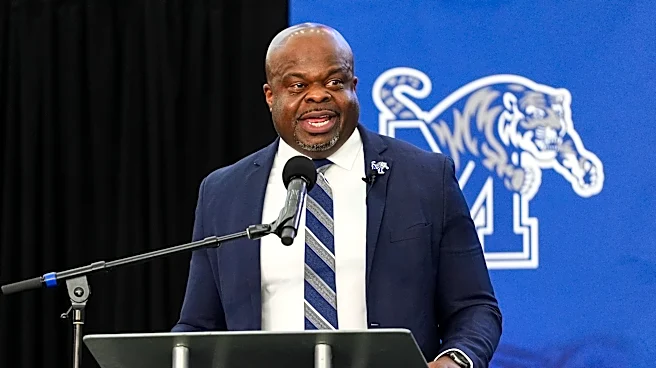
Memphis head coach Charles Huff laid out this sentence to the media when asked about announcing a starting quarterback for the 2026 season earlier this week.
The quick one-liner response generated some small chuckles and laughs from the press gaggle, but the situation in reality is not a laughing matter. At least, for Huff and the rest of the modern day college football coaches.
“Theres more to this now than there was 10 years ago,” Huff said. “If I announce
that “Johnny” is the starter, his agent is gonna call. The backup’s agent will call and say ‘Hey, I can get out out of there.’”
Social media, transfer portal frenzies, NIL amounts and even the court of law make this college football landscape the hardest to navigate in the history of the sport, making it even tougher to monitor the response to one of the oldest foundations of the sport: announcing a starter.
“We’re dealing with a different demographic, we’re dealing with a different age group.” Huff said. “We’re dealing with 71 new players. Thursday, we’re going to have to tell some guys they aren’t traveling. It’s a different conversation.”
Memphis takes on UNLV this Saturday in Las Vegas. Seems like an advantage for the Rebs based on Huff’s words, no?
Not exactly, as Dan Mullen finds himself in the same position. Neither Jackson Arnold nor Alex Orji has been announced the starter for UNLV. When will Mullen come to a decision? (Editor’s note: Mullen announced on Thursday afternoon that Arnold will start)
After the first drive.
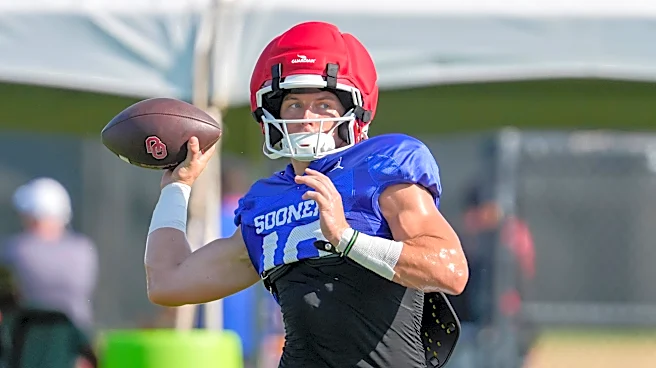
Both quarterbacks will see the field either way. As we make our homemade depth charts for Saturday’s non-conference matchup, leaving the QB1 line blank, it raises the question: How drastically has announcing a starting quarterback changed in the last decade?
No Phones, Please
There is nothing new about not showing your hand at the football poker table. Not giving anything away to the opponent is a tale as old as time.
That being said, it is harder than ever to keep your cards up your sleeve. Cell phone and internet leaks, issues that even predate the transfer portal and NIL chaos, present security problems that will potentially only get worse as technology advances.
This has led to coaches and teams going as far as to blur windows near the facility (Lincoln Riley at Oklahoma) and even stop using iPads to film practices (The Connor Stalions-Michigan Fiasco).
Blur your windows and turn over your screens all you want; the internet always finds a way.
Former New Mexico quarterback Devon Dampier found out the hard way last winter, regarding his plans to return to the University of Utah for the 2026 season.
“We’re trying to do something special, but it got a little leaked out before we can get to it,” Dampier told the media at the 2025 Las Vegas Bowl “But it’s coming. It’s coming.”
Dampier’s run-in is just the tip of the iceberg. Would you want to reveal your starter in early August, just for other teams to get every piece of film and dirt on him before Week 0 even begins? I wouldn’t either.
Couples Therapy
The relationship between coach and player in the modern age of college football has evolved (or devolved) from players being honored to play in prestigious programs and under respected coaches, such as the days of Bear Bryant, Tom Osborne, and Nick Saban.
In 2026, it feels more like a messy breakup. You don’t do what I want? I will pack my bags and find a new suitor.
Situations like when Boston College’s Thomas Castellanos left the program midseason after being benched in November 2024, or when Clemson’s Kelly Bryant called it quits after losing the starting job, leaving in September 2018 as he viewed the demotion as a “slap in the face.”
It is likely not long before we see fall camp sayonaras. It was just this week that all eyes were on Florida’s Tramell Jones Jr. after losing the starting job battle. Jones Jr. is staying with the Gators, invoking a sigh of relief over something that used to be so common.
Will Oregon transfer Luke Moga throw a fit instead of a football if he loses the job with the Lobos? Will UCLA transfer Luke Duncan have second thoughts in Nevada after losing the Wolfpack job to Carter Jones? What if Wyoming’s Tyler Hughes gets benched midseason? Will he leave?
Around 20 years ago, you could easily predict a teams depth chart after spring practices. Depth charts were in sharpie after fall camp wrapped. Today, spring and summer is about obtaining new talent, and the fall is about making sure they don’t walk out the door.
The Numbers
To back up Huff’s claim of the 10-year span of changes, let’s take a look at college football in 2016. Specifically, the Mountain West QB situation in 2016.
2016:
Air Force: No quarterback battle. Coming off injury, senior Nate Romine safely had the position throughout the spring, summer and into the fall.
Hawai’i: Aug. 18 (Eight Days Before First Game) Ikaika Woolsey earned the starting job on the island in a crowded quarterback battle.
Nevada: No quarterback battle. Tyler Stewart went through the offseason scoff-free after leading the Pack to a bowl game the season prior.
New Mexico: No quarterback battle. Instead of competing for the top spot, the Lobos made the most of both Lamar Jordan and Austin Apodaca throughout the season to help the pass and run game from the QB position.
North Dakota State: No quarterback battle. After the departure of Carson Wentz to the NFL, redshirt sophomore Easton Stick stepped right into the FCS starting job seamlessly. No transfers in to steal the gig. No battles. Just the next man up.
Northern Illinois: No quarterback battle. Fifth-year senior Drew Hare retained the starting gig for 2016, despite a crew of quarterbacks on the roster. (They would all come into play later in the season, due to injuries).
San Jose State: No quarterback battle. Kenny Potter was once again the guy after leading SJSU to a bowl game in 2015.
UNLV: Aug. 28 (Four Days Before First Game) Johnny Stanton won the Rebs job after transferring in from Nebraska, back before it was cool (a reverse Anthony Colandrea?). Why so late? Probably because it wasn’t a full answer.
“I’ll be honest with you … both guys are going to play in Game 1,” UNLV head coach Tony Sanchez said after the team’s final scrimmage of 2016 fall camp. “I think one guy’s going to be named the starter, and he’ll start to get the majority of the reps. But you’re going to see whoever the No. 2 is at some point in the first half.”
This one earns a half a point.
UTEP: Aug. 22 (12 Days Before First Game)
Almost two full weeks before the opener? That’s how UTEP went in 2016, announcing Zack Greenlee, a Fresno State transfer, as the starter.
Wyoming: No quarterback battle. After spring practices, the depth chart was set by then-head coach Craig Bohl. You may have heard of him: Josh Allen.
Now, in 2026 currently…
Air Force: NO QB BATTLE
Hawai’i: NO QB BATTLE
Nevada: Quarterback Battle, Carter Jones Announced Aug. 25 (11 Days til Opener)
New Mexico: Quarterback Battle, No Starter Yet (10 Days til Opener and counting)
NDSU: NO QB BATTLE (Announced in Spring)
Northern Illinois: Quarterback Battle, No Starter Yet (10 Days til Opener and counting)
San Jose State: Quarterback Battle, Carter Jones Announced Aug. 19 (10 Days til Opener)
UNLV: Quarterback Battle, No Starter Yet (TWO Days til Opener and counting)
UTEP: NO QB BATTLE (Announced in Spring)
Wyoming: Quarterback Battle, Tyler Hughes Announced Aug. 24 (12 Days til Opener)
Your final tally: 2016: two and a half true quarterback battles. 2026: seven quarterback battles.
Perhaps just a coincidence, or a sign of the times of college coaches having too many incoming toys entering the sandbox and not enough recess time to choose a favorite.
Is There Any Good Out of This? …
To put whipped cream and a cherry on top of what seems like a bad situation, there may be a bright side to this offseason and fall camp fiasco.
What’s the pitch? Let’s go back to Coach Huff and ask:
“Theres some guys in that locker room that are really fighting to be the starter,” Huff said. “And they’re not at the position from a preparation standpoint to be told they’re not the starter. As soon as you tell them they aren’t the starter, their preparation changes.”
As the old saying goes, competition brings the best out of people (or the worst, depending on the outcome). Either way, it revs the engine of the football machine.
This goes back to even before this modern era. If a player hasn’t earned the right to start, why make a decision? Why put out that fire of competitive drive?
What is best for the fans and the media usually isn’t the best for the actual team, and that may reflect why these starting announcements aren’t on the forefront of some coach’s minds.
“Everyone gets so caught up in who starts,” UNLV head coach Dan Mullen told the media on Monday, when asked about the starting gigs. “If I start in a five wide receiver set, (UNLV receiver) Jet Thomas doesn’t start. Is that going to blow everyone’s minds? ‘Jet Thomas is not a starter, Jet Thomas is not a starter for us’. He’ll play.”
At the end of the day, the label of “starter” is exactly that. Just a label. And for college head coaches, the days of labeling may be exchanged for the ability to just keep their players happy, and, in their program.
“Is that (players calling their agents) going to happen Saturday? Yeah,” Huff said. “But let’s at least get to Saturday.”
Dan Allison is a freelance high school and college sports writer. You can reach him at @danlallison on X.