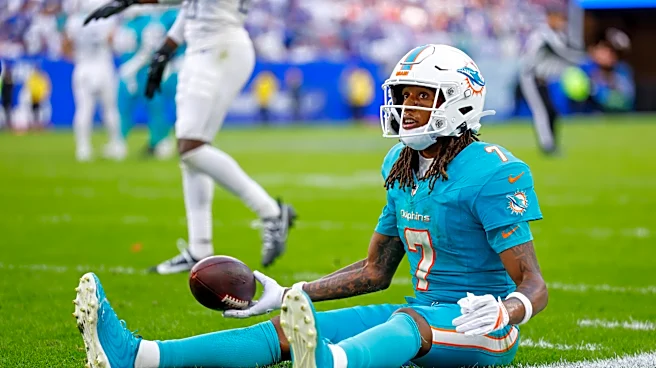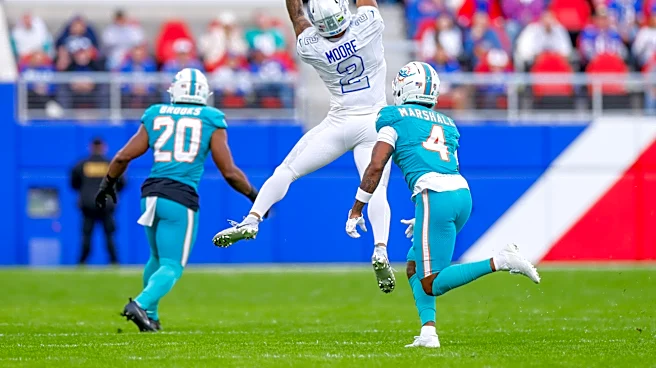


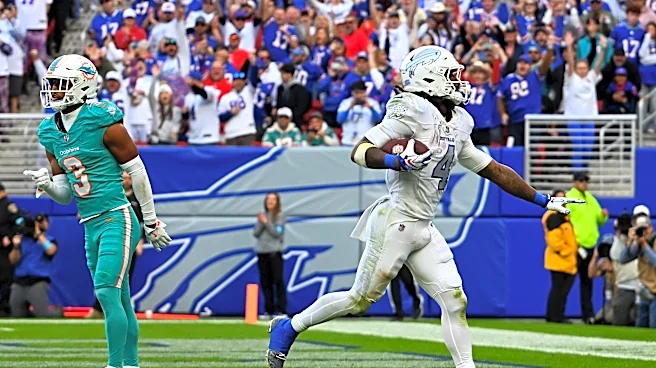
The Buffalo Bills defeated the Miami Dolphins 26-9 at Highmark Stadium in Week 11, putting together a dominant defensive performance just four days before they’re scheduled to host the Kansas City Chiefs on Thanksgiving night.
Buffalo’s offense accumulated 405 total yards compared to Miami’s 185, while the Bills controlled the time of possession by a margin of 13 minutes and 30 seconds.
Let’s take a look at Buffalo’s Week 11 snap counts and some of the more notable personnel decisions.
Buffalo Bills
offensive snap counts (78 snaps)

The Bills ran 21 more offensive snaps than the Dolphins, holding possession of the football for 36:45. Buffalo controlled the clock for nearly 20 minutes in the first half alone, accumulating 254 total yards and 16 first downs while limiting Miami to just 38 yards and two first downs.
Despite Buffalo’s ability to sustain drives, the offense converted just two of five red zone opportunities into touchdowns. The Bills didn’t punt once, although punter Tommy Doman contributed to the offensive production with a 30 yard completion to tight end Keleki Latu on a successful fake punt in the first quarter.
Offensive line
Left tackle Dion Dawkins and left guard Alec Anderson were the only two offensive players to play 100% of Buffalo’s offensive snaps. Center Connor McGovern, right guard O’Cyrus Torrence and right tackle Spencer Brown each played 77 snaps (99%), as did quarterback Josh Allen.
Austin Corbett and Tylan Grable each logged three offensive snaps (4%), while Lloyd Cushenberry played one.
Wide receivers
Keon Coleman and Khalil Shakir led Buffalo’s wide receivers with 63 snaps (81%) apiece, followed by DJ Moore with 58 snaps (74%).
While Coleman and Shakir played an identical number of snaps, their production was considerably different. Shakir hauled in five of nine targets for 101 receiving yards, while Coleman caught two of four targets for 17 yards.
Moore continued to be heavily involved in Buffalo’s passing attack, leading the team in both targets (10) and receptions (eight) while finishing with 91 receiving yards and a touchdown.
Tyrell Shavers, fresh off of the PUP list, logged 29 offensive snaps (37%), while Greg Dortch played just four (5%). Dortch’s biggest contributions came on special teams.
Running backs
James Cook played just 41 offensive snaps (53%) but handled 22 of Buffalo’s 27 rushing attempts, finishing with 89 rushing yards and a touchdown.
The distribution of snaps between Cook and Ty Johnson is particularly interesting when looking at how Buffalo utilized the two running backs.
Johnson played 28 offensive snaps (36%), hauling in seven of eight targets for 55 receiving yards. Johnson’s ability to contribute in the passing game gives Buffalo another reliable option when attempting to sustain drives.
Ray Davis rounded out the running back rotation with nine offensive snaps (12%).
Tight ends
Dawson Knox led Buffalo’s tight ends with 47 snaps (60%), followed by Latu with 28 (36%) and Jackson Hawes with 16 (21%).
Knox finished with two receptions for 31 yards, while Latu was on the receiving end of Doman’s 30-yard completion on the fake punt.
Buffalo Bills defensive snap counts (57 snaps)

Buffalo’s defense held the Dolphins to 185 total yards, 10 first downs and three field goals. Miami quarterback Kyle McCord completed just 12 of 33 pass attempts for 102 yards and an interception, finishing with a passer rating of 32.6.
The Bills accomplished all of that while distributing playing time among 24 defensive players.
Defensive line and outside linebackers
Greg Rousseau and Bradley Chubb led Buffalo’s edge rushers with 34 snaps (60%) apiece, with Rousseau accounting for both of Buffalo’s sacks.
T.J. Parker played 30 snaps (53%), while Javon Solomon and Michael Hoecht played 11 (19%) and eight (14%), respectively.
The interior defensive line featured a nicely balanced rotation, with Deone Walker playing 31 snaps (54%), DeWayne Carter playing 30 (53%), Greg Gaines playing 27 (47%) and Ed Oliver playing 24 (42%).
Inside linebackers
Shaq Thompson and Kaleb Elarms-Orr each played 31 defensive snaps (54%), while Terrel Bernard logged 29 (51%).
Buffalo’s distribution of snaps at linebacker was relatively even among its three primary contributors, with just two snaps separating Thompson, Elarms-Orr and Bernard.
Defensive backs
Maxwell Hairston, Cole Bishop and Amani Hooker each played 46 snaps (81%), tying for the team lead. Davison Igbinosun wasn’t far behind with 44 snaps (77%).
Jordan Hancock logged 26 defensive snaps (46%), while veteran cornerback Tre White played 24 (42%) and Dee Alford played 13 (23%).
Sam Franklin Jr. and Jalon Kilgore contributed 12 (21%) and 11 (19%) defensive snaps, respectively, in addition to their significant special teams responsibilities.
Damar Hamlin played just six defensive snaps (11%) but made the most of his limited opportunities, intercepting McCord just before halftime.
Buffalo’s defensive backs helped limit Miami to just 102 passing yards. The Dolphins’ inability to sustain drives through the air was a significant factor in Buffalo’s ability to control the game.
Buffalo Bills special teams snap counts (26 snaps)
Sam Franklin Jr., Joe Andreessen and Javon Solomon led Buffalo’s special teams units with 19 snaps (73%) apiece, followed by Jalon Kilgore with 17 (65%) and Tyrell Shavers with 16 (62%).
Michael Hoecht and Tommy Doman each logged 15 special teams snaps (58%), while Damar Hamlin played 14 (54%).
Despite not recording a single punt, Doman remained heavily involved on special teams, handling kickoff and holding responsibilities in addition to executing the successful fake punt.
Tyler Bass accounted for 14 of Buffalo’s 26 points, connecting on four of five field-goal attempts and both extra-point attempts.
Greg Dortch and Ray Davis also contributed to Buffalo’s favorable field position in the return game. Dortch returned two kickoffs for 73 yards, while Davis added a 36-yard return. Buffalo averaged 36.3 yards per kickoff return.
What’s next
Buffalo’s ability to control the time of possession was a product of both the offense’s ability to sustain drives and the defense’s ability to get off the field.
With just three full days between games, the ability to distribute defensive workloads without sacrificing production could prove particularly beneficial against Kansas City.
If there’s one area Buffalo needs to clean up offensively before Thursday night, it’s finishing drives. The Bills generated 405 yards of offense, recorded 25 first downs and never punted, yet scored just two touchdowns.
Settling for field goals against the Chiefs could prove considerably more costly than it did against the Dolphins.