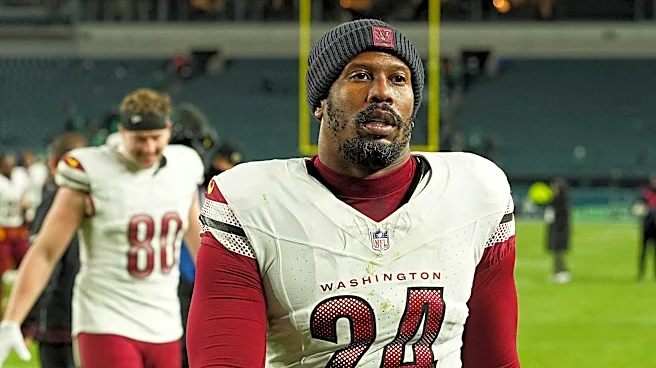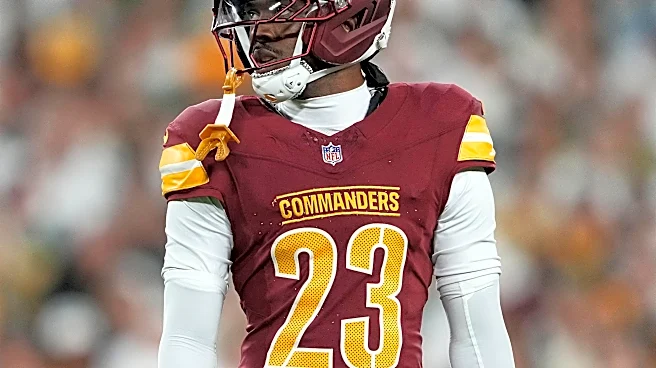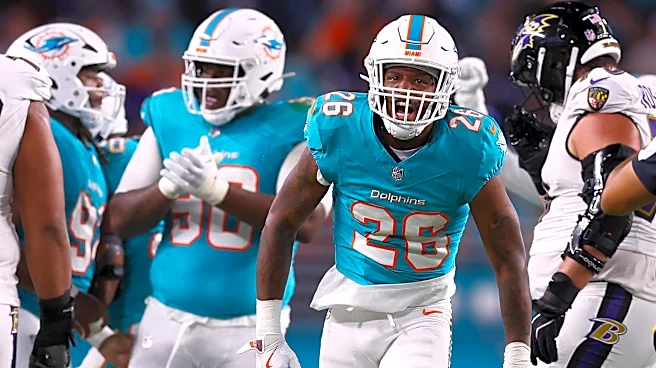

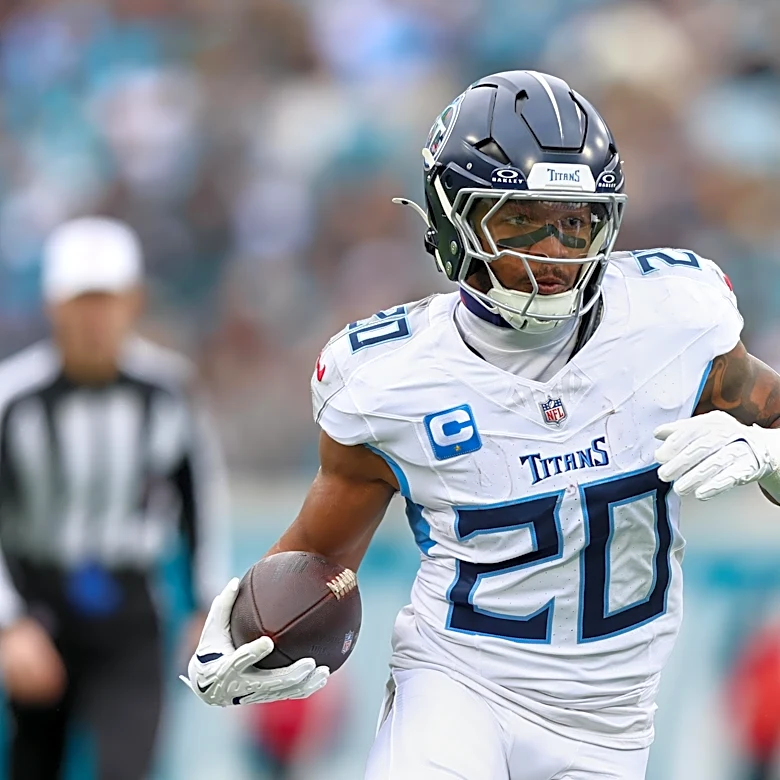

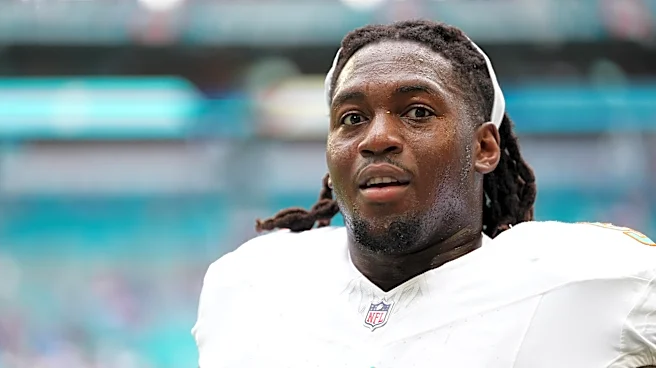
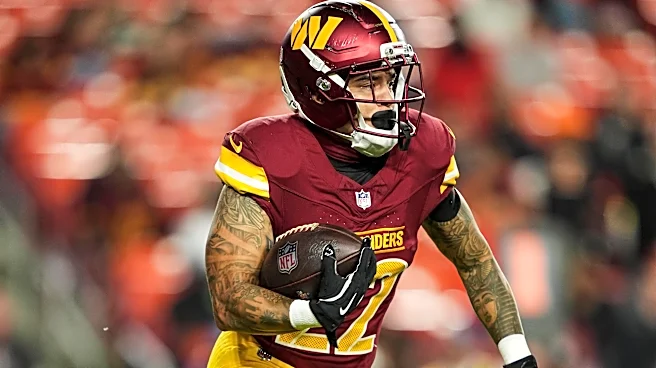


The strength of the secondary for the Washington Commanders has been under discussion all offseason, with some expecting the team to stand pat at the position, while others have been calling for reinforcements since before free agency. The signings of Amik Robertson and Ahkello Witherspoon helped backfill the secondary following the departure of cornerbacks Marshon Lattimore, Noah Igbinoghene, and Jonathan Jones, but many also expected Adam Peters to add additional help in the draft. The Commanders GM
stuck with his best player available strategy, and much like the edge position last offseason, the 2026 NFL draft ended without a player drafted at the position of need.
Still a free agent, Rasul Douglas was often linked to the Commanders following the draft and into the start of organized team activities. Adam Peters finally worked out a deal to bring Douglas into the fold this week. The majority of fans were happy to bring added talent to a secondary that ranked 28th in pass defense last season. The big question remaining is what role will Rasul play in Daronte Jones’ secondary this season? In order to answer, we need to know more about how Douglas fits within the Commanders proposed scheme.
A third-round selection of the Philadelphia Eagles in the 2017 NFL draft, Douglas has plus size at 6’2”, 209 pounds, and good athleticism with a 6.94 RAS. His lack of speed and stiffness in his lower body prevents him from being a true cover corner. Douglas struggled to find a starting role in Philadelphia, and the team eventually released him at final roster cuts in 2020, which would start a carousel of appearances on NFL rosters. He was claimed off waivers by the Carolina Panthers and then spent time with the Raiders, Texans, and Arizona Cardinals between 2019 and 2021. He would eventually be signed off the Cardinals practice squad by the Green Bay Packers, where he would find a starting role. Green Bay ultimately traded him to Buffalo, where he was once again named a starter. Douglas played through multiple injuries in 2023-2024 before being allowed to leave in free agency. Rasul would wait for the right opportunity, ultimately signing with the Miami Dolphins in the aftermath of injuries to Artie Burns and Kader Kohou. It proved to be a wise decision for the career journeyman.
Per Sharp Football Analysis, Miami relied heavily on zone coverage in 2025, utilizing it on 71.7% of the team’s total defensive snaps. In a zone scheme, Douglas shows good route awareness, with the ability to close quickly when he is allowed to play with his eyes on the quarterback. The Dolphins defensive coordinator last season was Anthony Weaver, who, like Daronte Jones, loves to play zone, disguise coverages, and utilize versatile defensive fronts. In this All-22 film breakdown from Ryan McConville, you can see just exactly how Rasul Douglas fits within the Dolphins scheme, and by extension, the one expected to be utilized by Daronte Jones.
Douglas excels in Cover 2, Quarters, and Palms coverage and diagnoses routes quickly with good ball skills. Over his career, Douglas has 21 career interceptions. He also has some inside-outside versatility. At the 7:20 mark, you can see how he subs in as a hybrid linebacker. Further into the tape, you can also see how Douglas is physical in run support, and while he won’t blow anybody up, he has the ability to get past blockers and bring rushers to the ground.
How good was Douglas’s 2025 season? For answers, let’s go to Hogs Haven writer MattInBrisVegas’ free agent profile.
Market Value (AAV): Spotrac $4.0M, OTC $13.7M
2025 Stats: 13 Starts | 2 INT | 13 PD | 62 Comb Tkl | 22 Stops
Y/Cov Snp: 0.82 – 0.87 (Rank 31 – 24)
Interception Rate: 2.67 – 2.60% (Rank 35 – 34)
TD Rate: 0.60% (Rank 47 – 48)
Run Stop Rate: 2.4% (Rank 31)
Douglas is one of two players in this roundup who will be over 28 when the season starts, and he has already passed the dreaded 30-year mark. I wouldn’t expect Peters to sign him to a long-term deal. But he might make sense on a one-year contract, if they can keep it under OTC’s valuation.
Douglas is a big, physically imposing CB. Even at his advanced age, he was a little better at containing receivers than Lattimore in 2025. He is also good in run support and, like Ya-Sin, provides some flexibility to cover the slot, if needed. He would have competed for a starting job, if he had been on Washington’s roster last season, and might still be in the running to do so this season.
The line “a little better at containing receivers than Lattimore in 2025” helps keep expectations in perspective for Commanders fans, as does Douglas’ category rankings. Still, Rasul’s performance last season was better than most of Washington’s secondary during the same time period.
If Douglas is such a good fit, why has it taken until now to sign him? According to John Keim, he has been on Adam Peters’ radar for a while, but most likely both sides were waiting for the conclusion of OTAs and minicamp before finalizing an offer.
While fans may have concerns about Trey Amos’ return and there are rumblings Ahkello Witherspoon struggled in offseason activities, the fact is that Douglas is a proven option that elevates the roster with or without them, and he should be effective wherever Daronte Jones chooses to deploy him. The question is, where will that be?
Right now it is impossible to know exactly how he will be utilized, but Douglas should be a valuable addition for the Commanders in 2026, most likely in a rotational role. A logical spot may be as a third corner where Rasul would be responsible for covering one boundary with another versatile defensive back shifting inside. In 2025, with safety Theo Jackson struggling for the Vikings, Flores went with more three-corner looks, first with Jeff Okudah, then followed by former Redskins corner Fabian Moreau and safety Jay Ward playing more in the slot. Those three players accounted for a total of 51% of the Vikings defensive snaps last season.
That number could very well be a good baseline for how much Douglas will see the field. In fact, Douglas has never logged less than 50% of a team’s defensive snaps since his rookie season (48%). One of the three safeties would most likely end up seeing reduced snaps in this scenario which would be a departure from the Vikings model, but with the addition of Douglas, the cornerback room may now be the stronger of the two position groups. If injuries or poor play were to strike the Commanders secondary, Douglas could easily see his role and importance to the Commanders defense increase.