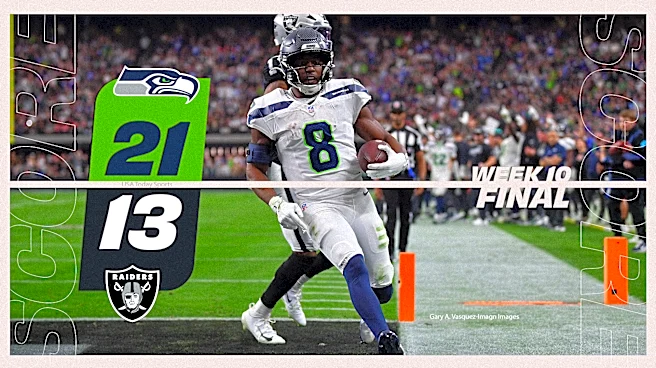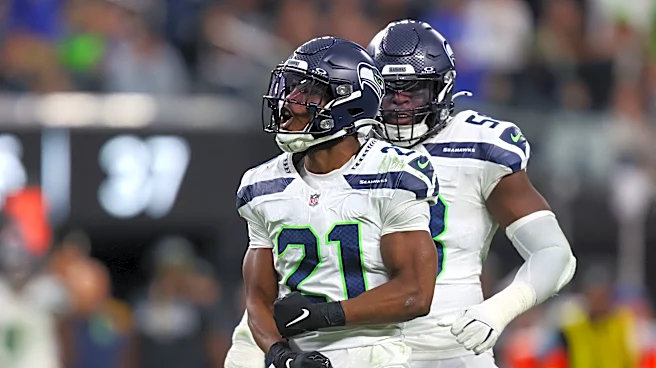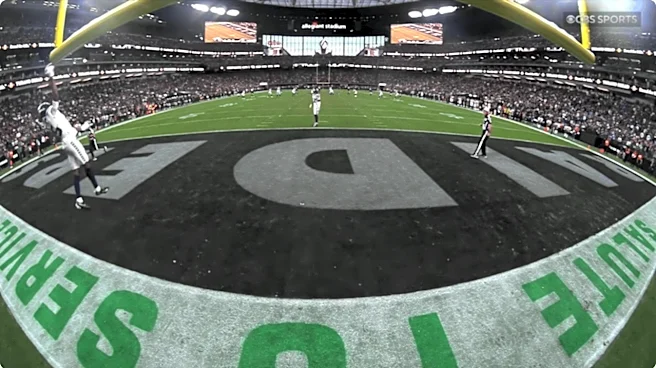





When the Las Vegas Raiders kicked the ball off to the Seattle Seahawks with a tick over two minutes left in the fourth quarter, the idea was to kick the ball through the back of the end zone so that they could preserve the two-minute warning and effectively have three timeouts remaining.
Tory Horton had other plans.
After a long conversation with Klint Kubiak and head referee Bill Vinovich, an announcement was made after the two-minute warning that the Raiders had declined the penalty. What penalty, you may ask? Illegal bat, which the Seahawks know a thing or two about from way back in the day…
Rules analyst Gene Steratore said on the CBS broadcast that “I don’t think it’s a foul. It’s a kick that never hits the ground. I believe you can bat a kick in the air provided that it has never hit the ground yet […] it’s a first for me though, fellas.”
Well if the veteran official can’t commit to a ruling, maybe the rulebook provides some clarity.
What constitutes an illegal bat?
Based on Rule 12, Section 5, Article 1 of the current NFL rulebook, Horton illegally batted the ball. What I’ve highlighted is the most important part of the rule:

No doubt that Horton “batted” the ball to keep it in play and it was in the direction of the Raiders end zone. And for those wondering about the “loose ball” rule… a kickoff in the air is still considered a loose ball.

So that’s an open-and-shut case to me. Horton batted the ball forward and it didn’t matter that the ball hadn’t hit the ground yet. However, I want to shout out this comment we received from Leonson1 that made me think a little bit more.
The “field of play” distinction
Notice that the rule that Horton (presumably) violated was “loose ball in the field of play.” By the NFL’s definition, the “field of play” is only from goal line to goal line. The end zone is NOT part of the field of play, which is why certain plays are governed differently in the end zone than anywhere else on the field.

Horton batted the ball in his own end zone aka not the “field of play.” So does the bat occurring in the end zone therefore negate the illegality? Is a loose ball in flight technically in the “field of play” because it never hit the ground? It can easily be interpreted that Horton batting the ball is legal because it occurred outside the field of play. Perhaps a loose ball in flight is officiated differently in terms of “field of play,” in which case maybe it was a penalty.
This is such a rare, perhaps never before seen play that it’s actually understandable that this is not something that can be so quickly and accurately adjudicated. I suspect the competition committee may look at some clarifying language next offseason.
The penalty didn’t matter because the Seahawks achieved their goal
The Raiders were never getting the time back on the clock because of the penalty, which is why it was declined. The Sahawks accomplished their mission of taking away the two-minute stoppage. Seattle was backed up by five yards but it didn’t matter one bit. If you can fault the Raiders for anything, it’s not booting the ball out of bounds along the sidelines, because it’s not like starting at the 40 vs. 35 is all that big a deal.
Ultimately, what Horton did was fantastic and making sure that Rashid Shaheed picked the ball up and got out of the end zone (which is when the clock is supposed to start) was also great thinking. No one else on the field is allowed to move until the ball is touched, so I doubt the Raiders would’ve hauled ass from the Seattle 40 to somehow get to the loose ball before Shaheed did. It was not as a risky as it was made out to be, and the Seahawks were able to get to victory formation in part because of Horton’s heroic heads-up moment.