
Special teams has been a major area of concern the last two seasons for Mizzou, and a vocal point of frustration among the fanbase.
After consecutive years of inconsistent play that cost the team in some
close games, the Tigers took major steps to fix the problem by allowing Erik Link’s contract to expire and bringing in John Papuchis, who will likely replace Link, from Florida State.
While it seemed like all of MU’s special teams units committed key miscues throughout last season, one position on special teams has consistently been mediocre or subpar throughout most of Eli Drinkwitz’s tenure in Columbia: punter.
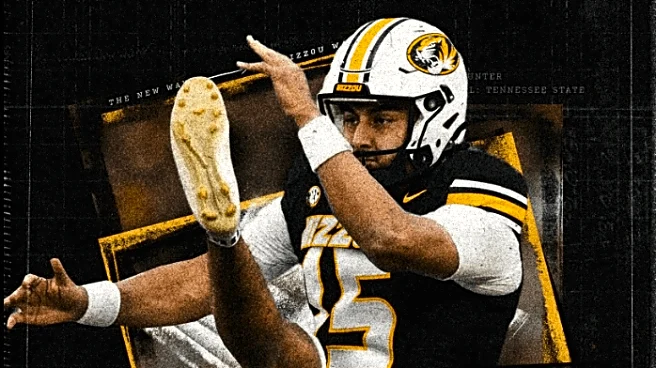
Mizzou began rebuilding the position with Brunno Reus from the aforementioned Seminoles. A few days later, they brought another punter into the picture in Tennessee State’s Mark Shenouda, who started for TSU the past two seasons.
Shenouda averaged 42.9 yards per punt in 2025 with a long of 82 and 12 punts of 50 or more yards. His yards per punt this season were more than any MU starter at punter since 2020, when Grant Mckinnis averaged 43.1 yards.
No Tigers punter has averaged more than 42 yards per punt since 2022, when Jack Stonehouse recorded 42.3 yards per punt before transferring to Syracuse — where he was named All-ACC in all three of his seasons with the Orange.
Where He Fits
Unlike Reus, who can both kick and punt, Shenouda is more of the traditional punting prototype: he punts, and ocassionally serves as a holder for kicks.
The Mt. Juliet, Tennessee, native should immediately serve as an upgrade from the oft-maligned Connor Weselman, who averaged 41.8 yards per punt but had some bad shanks during conference play. He also has two years of eligibility remaining, which (theoretically) gives Papuchis two offseasons to develop him at the high major level.
Shenouda already took a major step from his redshirt freshman to sophomore seasons, increasing his average by more than three yards per punt. He also developed his ability to pin opponents deep in their own territory, recording 16 punts that landed inside the 20-yard line compared to six as a redshirt freshman.
The Tennessee State transfer’s tape shows a punter who can check off boxes for both distance and hang time, with many of the returners shown in the highlights barely having time to move before getting wrapped up or simply deciding to make a fair catch. Shenouda’s ability to flip the field and pin down the opposing team is crucial for a team like Mizzou, which often plays games decided by one score — making the field position battle and turnover margin key elements of the outcome.
When He Plays
Shenouda is a strong addition and fit for the Tigers. But he may enter spring football as the underdog to Reus, who was the second-ranked punter in the Class of 2025 per Kohl’s Kicking (Blake Craig was the second-ranked kicker in the Class of 2023, for reference).
Reus also has an established connection with Papuchis, who brought him to Tallahassee when he was Florida State’s special teams coordinator — and has now brought him to Columbia, too. The former Seminole likely has the higher ceiling among the two, but Shenouda has an established track record at the Division I level that makes him a name to watch in the starting battle.
What It Means
Mizzou’s options at the punting position look a lot more appealing than they did just a year ago.
Reus was a five-star punting prospect who competed at the Under Armour All-American game and will be the favorite to start. If he does, he might be the Tigers’ starting punter for the foreseeable future and MU’s most promising young punter since Stonehouse back in 2022.
For all the potential Reus has, Shenouda is the reason Mizzou’s group of punters might be the best it’s ever been during Eli Drinkwitz’s tenure. He provides the Tigers with flexibility at punter that has been missing the past few seasons and also gives the team someone it knows can immediately be a solid starter at the SEC level.
There should also be some meat left on the bone in terms of Shenouda’s development. It’s unlikely to see him increase his average by three yards per punt again, but an increase of 1.5 to 2 yards would place him firmly among the top group of punters in the SEC.
Over the last few seasons, MU’s punters were rarely an asset — and sometimes became a liability. With the additions of Shenouda and Reus, Mizzou could see its punt unit become a valuable arrow in its quiver during the team’s many tight SEC matchups.