
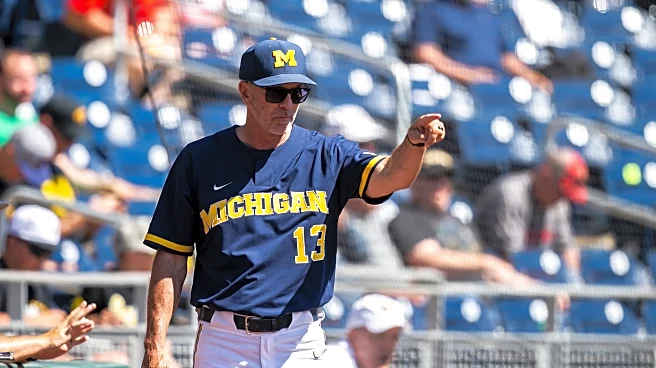
If the first weekend of the Chris Pollard era was supposed to be a slow, cautious feel-out period, someone forgot to tell the offense.
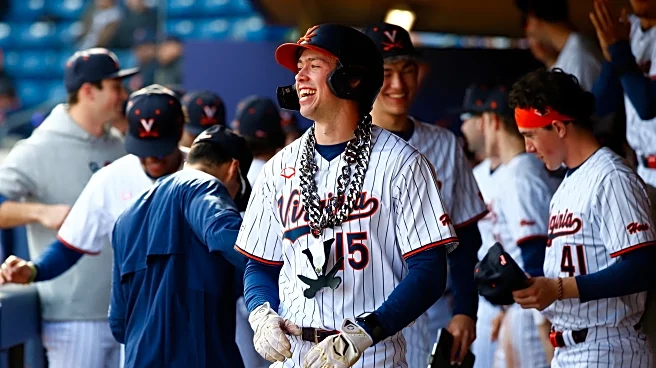
Virginia opened 2026 by sweeping Wagner at the Dish — 13-7 on Friday, then a Saturday doubleheader that turned into a run-scoring festival: 25-10 in game one and 31-8 in the finale. The 31-run outburst was a program record.
Here is what we are taking away from the weekend:
The Virginia offense showcased its potential immediately
Virginia scored 69 runs in three games.
The headliner was the 31-8 finale in the second game of the doubleheader, which broke the program’s previous single-game record (29, set in 2007).
But what made the weekend feel different wasn’t just one impressive box score. It was the constant pressure the Virginia lineup put on the Wagner pitching staff. They had traffic on the bases almost every inning which led to both consistent scoring and massive innings alike.
Wagner isn’t the measuring stick Virginia will be judged against in May. Still, when you hang 56 runs in one day, and do it without having to rely on the home run ball (only four home runs between the two Saturday games), you’ve shown what this lineup can look like when it’s firing.
The lineup has teeth top-to-bottom
The stars did their things.
Eric Becker went 2-for-4 with two walks on Friday, then finished the weekend with a 3-for-3, four-RBI line in the finale.
Sam Harris piled up hits (4-for-6 Friday) and kept driving the ball in the doubleheader.
A.J. Gracia’s impact wasn’t just loud contact, it was the constant on-base presence he provided with five walks between the three games (three walks Friday, then another one in each game of the doubleheader).
But the best part of Opening Weekend was that Virginia didn’t need to rely on their “top bats” to carry the whole thing.
On Friday, the eighth and ninth hitters, Aiden Harris and Zach Jackson, both went deep in the sixth inning when the game was still hanging around. That helped to turn a 6-6 ball game into a 13-7 win.
On Saturday afternoon, grad transfer catcher Noah Jouras was a wrecking ball: 3-for-3 with a home run, two walks, three runs, and two RBI in the 25-10 win.
On Saturday night, it was everyone. Harrison Didawick had two hits and drove in three. Aiden Harris drew three walks and scored four times. Zach Jackson drew three walks. Noah Murray scored five times and went deep. Thomas O’Connell had multiple hits and drove in two.
That’s the early promise of Pollard’s roster build showing up in real time: not just a few dudes, but a lineup that can catch fire at any moment and just keep pouring on the gas.
The weekend’s most repeatable skill was patience
Virginia didn’t just score a lot — it made Wagner live in the stretch.
Walk totals by game:
• Friday: 12
• Saturday (game one): 12
• Saturday (game two): 14
That’s 38 free passes in three games, before you even get into hit-by-pitches (there were plenty of those too, seven just in the final 31-8 win).
It also paired with Wagner’s fielding issues (multiple-error games in the doubleheader) to create innings when Virginia didn’t need three hits to score three runs.
Early-season blowouts can be misleading when built upon an approach that isn’t repeatable. This wasn’t that. This was an offense that didn’t expand the zone, took what it was given, and kept forcing the next pitch.
The flip side: there’s a reason you don’t “fix” everything in Week 1
For all the fireworks, this was not a clean weekend.
Virginia committed errors in the first and third games, and Wagner made them pay in spots, including a first-inning grand slam in the finale that made it feel like things might go sideways early.
On the mound, the Cavaliers gave up 25 runs across the sweep (7, 10, and 8). In the opener, Henry Zatkowski labored through a five-run second; in Saturday’s nightcap, Michael Yeager’s first trip through the lineup got bumpy.
None of that is panic-worthy in mid-February, especially in a weekend that included a doubleheader and a ton of early-season experimenting.
But it is a reminder: once the schedule turns towards the ACC gauntlet, the margin shrinks. If Virginia wants this offense to matter in ACC play, the defense and strike-throwing must tighten. (The good news: you’d rather be cleaning up details at 3-0 than explaining losses.)
The pitching bright spots were exactly where you hoped to find them: Depth and options
Even with the runs allowed, Virginia showed why the preseason conversation around this staff centered on depth.
On Friday, Lucas Hartman stabilized the game with three innings of relief, allowing two runs (both unearned) and earning the win.
On Saturday afternoon, Max Stammel’s line was the cleanest pitching performance of the weekend: three scoreless innings with five strikeouts.
And in the finale, after Yeager’s early trouble, the bullpen provided inning-eaters and strikeout arms — Drew Koenen, Christian Lucarelli, Nate Bassett, Ryan Prior, and Dean Kampschror all got work in.
It’s February. The staff doesn’t need to be a finished product right now. What it needs is a clear path: identify who are bullpen arms that Pollard can trust in high-leverage innings and who can carry innings when the starter’s pitch count hits the wall.
This weekend didn’t answer every question. It did reinforce the most important one: Virginia has enough arms to keep asking.
Next up: The Cavaliers are back at the Dish on Tuesday (Feb. 17) against VMI, then they head to DeLand, Fla. for a weekend that includes Monmouth (Feb. 20), Stetson (Feb. 21), and North Dakota State (Feb. 22). This next stretch should tell us a lot about how Pollard wants to piece the pitching staff together when the games get closer.