
There is no sugar coating it: The Atlanta Braves largely underperformed last season. There were unforeseen circumstances like injuries and a suspension, but pure underperformance played a role for some
players on the roster.
There are some players on the roster that also fell victim to some bad luck with the bat. What is meant by that is based on the underlying metrics if they were to continue to swing the bat the exact same way, their numbers would have positive regression to the mean over time.
You could spend hours digging deep into a player’s profile and identifying reasons why they have good fortune or bad fortune, but in this article, we are going to look at a high-level view of three players. There are few areas you can look right off the bat on to help determine if a player has had bad fortune at the plate. First you can look at a player’s weighted on base average (wOBA) versus their expected wOBA (xwOBA). In a nutshell wOBA is a better version of OPS because it values each method of reaching base rather than just reaching base. A good example is that it recognizes that a walk is not worth quite as much as a single in terms of run creation.
If there is a noticeable gap where a player’s xwOBA is higher than their wOBA then that is a good indicator to look deeper into their metrics because they are likely a good candidate for a bounce back.
Another number to look at is a player’s batting average of balls in play (BABIP). The key here is to look at a player’s history, not compare them to other players across the league. For example, if a player has a five-year career and they average a BABIP of .302, but last year they had a .260, odds are it was poor luck in terms of having balls drop for hits.
These stats alone do not mean a player will have a breakout but they are tools in a toolbox to dig deeper into their numbers and see what is going on.
It just so happens that the Atlanta Braves have three players that stand out as hitters who have a good chance of having a positive regression to the mean. This exercise won’t be perfect, but it will highlight players to keep an eye on.
Mike Yastrzemski
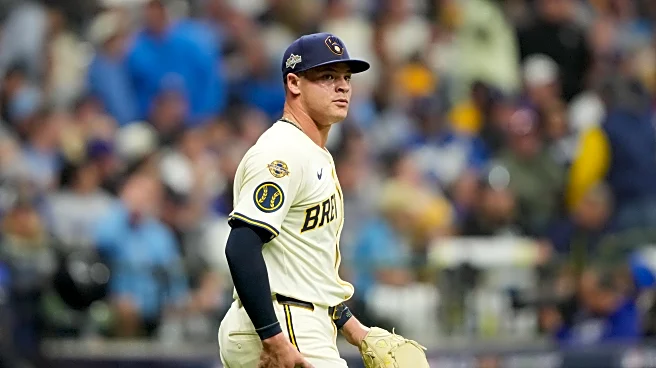
The Braves made a splash when they brought in Yastrzemski. He had a solid year last season by his standards with a wRC+ of 106, which was slightly lower than his career average of 111.
One of the reasons the front office may have signed him is because he shows some signs of positive regression to the mean. Last season he had a wOBA of .321, but his xwOBA was a .329. Not a massive gap, but it is notable. His biggest gap was among fastballs. His wOBA on fastballs in 2025 was .322, but his xwOBA was much higher at .344.
If you combine that with the fact that he had terrible luck in the BABIP department, it points even more to a leap forward. Last season his BABIP luck was poor with a measly .263 against his career average of .282. We can make an educated guess that he will have better luck with balls dropping for hits in 2026. His walk rate of 12.9 percent was his best in a season since the COVID shortened 2020. It should be noted that his walk rate was in the top ten percent of qualified hitters.
This grandson of HOFer Carl Yastrzemski has many signs to a better year offensively than last.
Sean Murphy
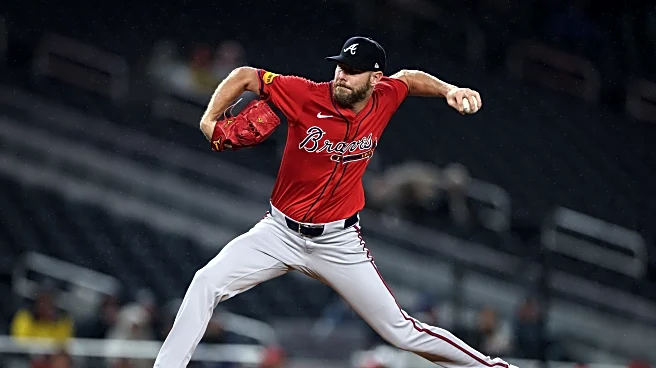
Murphy is injured and won’t start the season playing, so there is always the chance of a lingering injury, but to be fair his offensive drop-off last year could have been from a lingering injury too.
That being said, he had some terrible luck with BABIP. He has never had a BABIP that is close to league average and is a good example of why you should not use the league average as a measuring tool for trying to predict the future when looking at a single player. Depending on the season, the league average BABIP hovers around .302, Murphy has a career .268. 2025 was much lower than that with a .243. His walk rate has stayed steady. His 10.4 percent last season is right on track with his career 10.3, showing that an increase in BABIP could result in a considerable jump in wRC+.
From a high level view we can also look and see his wOBA of .309 was lower than his xwOBA of .314. Not a massive difference, but it is absolutely a variable to consider. He only saw off speed 10.0 percent of the time, but he had terrible luck. He had a wOBA of .282, but an xwOBA of .378. against fastballs, his most seen pitch, the difference was minimal but was .341 wOBA to .346 xwOBA.
A lot will depend on how his injury plays into his performance, but from a pure numbers perspective, look for an offensive jump forward in Murphy.
Michael Harris II
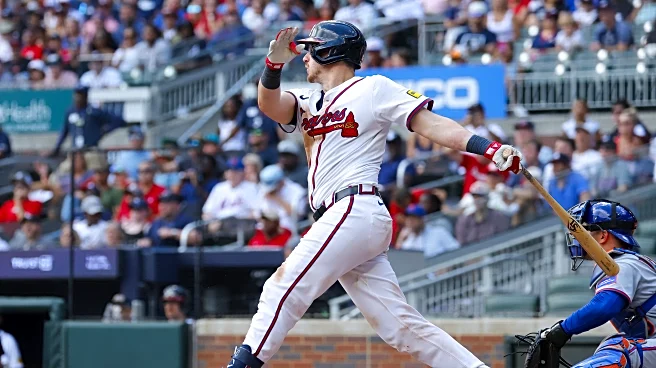
Saving the most obvious for last, Harris easily is primed for better numbers this season. Beyond hearing his teammates talk about his raw talent, the numbers paint a picture too. Harris struggled last year, and he had to make adjustments to his swing midway through the season. Harris underperformed by his standards, but he also had poor luck. When looking at all the players on the roster, he stuck out as easily the unluckiest.
Harris had the largest gap of all starting players for the Braves between his wOBA and xwOBA. To put it in perspective Ozzie Albies and Eli White both had lower wOBA than xwOBA, yet Harris’ wOBA of .289 was lower than both of theirs yet his xwOBA of .315 was higher than both of theirs. In other words, a massive gap. Harris had terrible BABIP luck. He has a career BABIP of .315, but last season he had a .281.
We can see by his expected batting average (xBA) further evidence that his BABIP will likely go up next season even if he swings the bat the exact same way as he did in 2025. When we look at fastballs he had an xBA of .289, but his actual average was a much lower .252. Considering he saw fastballs 54.9 percent of the time, this is notable. It is a similar story with off speed. He had an xBA of .249, but actual batting average of .227. Odds favor some serious positive to regression to the mean on these pitch types.
In Summary
Just looking at wOBA, xwOBA, and BABIP does not tell the whole story of a player’s fortune, but it does give a good thirty-thousand-foot view. With our binoculars we can see some good signs that Michael Harris, Sean Murphy, and Mike Yastrzemski will have better seasons with the bat than they did in 2025.