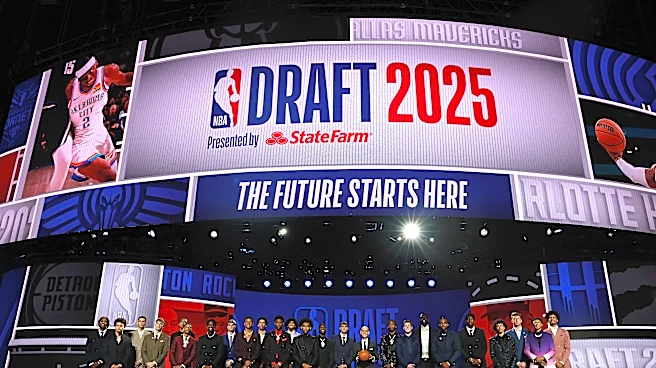







Yesterday news broke that the NBA is considering a semi-radical change to the Draft Lottery system to reduce the incentive for teams to “tank” in order to receive better lottery odds. You can read about the details of the proposal here. Basically the new rules would expand the lottery to 16 teams (including some Play-In Tournament participants), draw for all 16 positions instead of only the Top 4, give worse odds to the teams with the very best and very worst records than the teams in the middle
of the lottery order, and prevent high-level repeat winners from developing an insta-dynasty based on sheer luck.
In the wake of this news, a couple questions have come to the Blazer’s Edge Mailbag. Let’s look.
Dear Dave,
How would [the new lottery proposal] affect our upcoming picks? I hear people saying it’s a bad thing for Portland. Is that true?
Becca
It could be good or bad, depending on what happens.
First, let’s look at Portland’s own picks. The Blazers have control of their first-round draft picks from 2027 to infinity at this point. If the team improves, it’ll be a moot point. They won’t participate in the lottery at all. But if the Blazers stay in the Play-In zone, or even slightly worse, this will give them a big boost.
Teams just missing the playoffs have a miniscule chance of being promoted in the current system: 0.5-1.5%. In the new, 3-2-1 system, teams with three balls have about an 8% chance of getting selected (on the first draw, better after because opponents get selected and thus eliminated from the next draw). Teams with two balls in the hopper are around 5.5%, teams with one ball at 2.7%.
Even with just one ball in the drawing, our borderline lottery/playoffs teams already have between 2-5 times the chance of being promoted than they do in the current system. It’s good to be one of those teams.
But wait. That doesn’t even begin to cover it. Since the league decided to draw for all 16 spots instead of just 4, those borderline team now have 14-15 separate chances to move up in the order. That’s a huge advantage compared to the current system!
Let’s say you’re a Bottom-3 team. In the new proposal you’d get two balls in the hopper, a 5.5% chance of being selected. In the current system you’d have a 14% chance. The new proposal cuts your odds by 1/3 already.
But even if you didn’t get a Top 4 pick, there’s only so far you can fall in the current system. You can’t go below 7th, and that only happens if all the top spots get occupied by worse teams with very little chance of being promoted…a statistical unlikelihood. You can get demoted, but not too far and it’s not too likely. By drawing for all 16 picks, the NBA has now made it so you can get demoted really far…as far as 12th, even with safeguards in place. But that’s only half the point.
Realistically, for a team with a terrible record, any selection outside of the Top 3 is a demotion. Guess what? Most of the 16 picks they’re drawing for in the new system are outside of the Top 3! If you’re a terrible team, chances are very, very good that you’re going to end up in a worse position with the new system than the current one.
The inverse is also true. If you’re the 13th-16th team in the lottery, every result above those spots is a promotion. In the current system, you only have a 0.5%-1.5% chance of promotion and they only draw four times. With the new proposal, you have almost as good of a chance of being promoted as anybody and there are far more drawing opportunities. This is fantastic for you, comparatively.
Summarizing: The worst teams in the league have 8-10 chances to get demoted in this proposal. The best-record teams have 10-12 chances to get promoted significantly. There’s no doubt who this new system favors.
The difference is so stark that this might be one of the things the league wants to reconsider about this system. With a really legitimate chance of getting a great pick, teams with the higher-end records now have a choice to make about getting into the lower regions of the playoffs or the higher end of the lottery. That doesn’t eliminate the intentional losing, it just shifts the focus from tanking for the worst records in the league to tanking at the playoffs/Play-In border line.
Limiting the number drawn picks would help. If they only drew for the top 4-6 spots, a borderline team would only have a 10%-30% chance of going up the order. Drawing for all 16, those same teams have a 27%-55% chance of getting a Top 10 selection. 55% is a pretty big incentive to avoid the playoffs get in the lottery instead.
In any case, if the Blazers become one of those middle-class, borderline teams, this new system has a good chance of being a bonanza for them.
We also have to look at the Milwaukee Bucks picks and pick swaps the Blazers will inherit between 2028-2030. A similar thing applies.
If the Bucks truly stink, Portland would benefit far more with the old system in place. But if the Bucks are middling-bad, the new system will be better for Portland because middling-bad teams have a far better chance of being promoted in this new proposal. In essence, the Blazers would be sacrificing a guarantee of being in the middle of the lottery order in order to get a chance to get super-promoted to the top, with a corresponding chance of slipping to the bottom.
If both the Blazers and the Bucks are in the lottery during these years, Portland basically doubles their chances of getting super-promoted, getting to take the best of the two random results. That’s like rolling with advantage in new-style D&D: not a bad thing at all.
One aspect of the new system might bother the Blazers with these Bucks picks and swaps. If we forecast Milwaukee being bad, those assets would be very valuable on the trade market under the current system. In the new proposal, Milwaukee’s bad-record picks are no more valuable than anybody else’s. Those assets may, in fact, be less valuable if the Bucks finish with one of the worst three records in the league. They’d still carry some trade weight, but it’s less. It takes away some of the ability to trade them outright for a star player right now.
This probably incentivizes Portland to keep the picks and swaps, at least until they see where in the order the picks fall. Once the drawing is done, odds don’t matter anymore. The actual value of the pick will tell. A chance of a Top 3 pick doesn’t hold a candle to the actuality of having a Top 3 pick in hand. If the Blazers want to take a big swing with those Milwaukee assets, they may have to wait until they actually develop.
In short, Portland might actually benefit from the effect of the new proposal on their native picks. The chances of the same happening with the incoming Bucks assets are strong, but remain to be seen. The current value of Milwaukee’s future picks will go down for sure if this system passes. The future value may rise greatly or remain middling. It all depends where in the order those picks actually fall.
Thanks for the question! You can send yours to blazersub@gmail.com and we’ll try to answer as many as possible!