


As we near the conclusion of the 2026 major league baseball season, the powers that run the game and the players who play it are gearing up for another major confrontation this offseason. The new collective bargaining agreement is going to be an ugly and probably a painfully long process before the parties come to an agreement.
The league and owners are already doing a great job focusing the competitive balance issues in the game as an argument for a salary cap. The framing has taken advantage of
the Los Angeles Dodgers recent dominance specifically. The league has been using the Dodgers argument to push for a salary cap for a year already. They’re doing everything possible to define this in the public consciousness as a problem at the top of the sport, rather than one with the host of cheap, ineffective owners around the league who can’t compete the way the Milwaukee Brewers, Tampa Bay Rays, and Cleveland Guardians can. Don’t be suckered in. If there’s a competitive balance problem, it has a lot more to do with cheap, incompetent owners stuffing their pockets for years without making the slightest effort to try and win something.
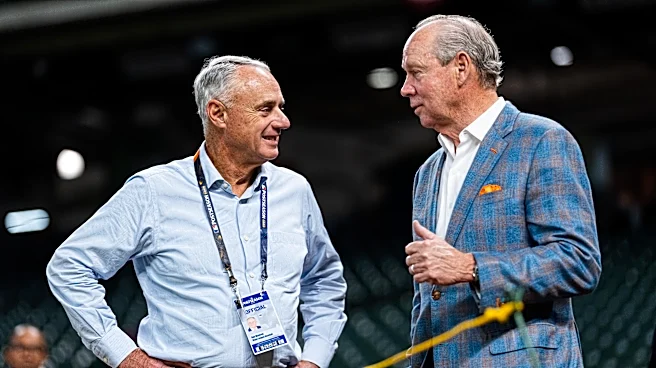
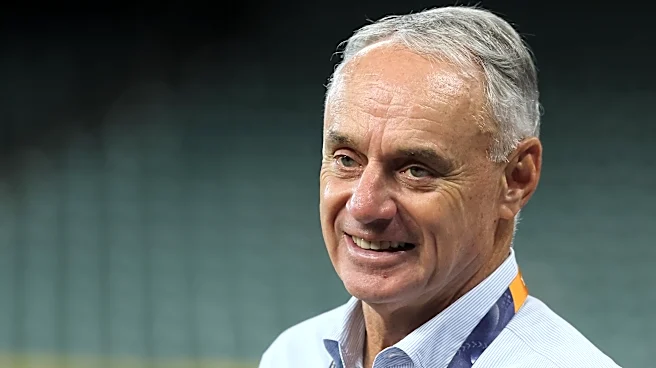
Obviously this is shaping up to be a public relations war as always. The league very much wants to paint the Dodgers back-to-back World Series titles as an existential crisis for the sport. They don’t want you to think about the fact that they created this monster themselves and are now asking the players to solve it for them. They don’t want you to think about this from the other side, which is that cheap owners are the real problem. And, rather insultingly, Commissioner Rob Manfred, the league and the owners are busy pretending that the fans are overwhelmingly calling for a salary cap, while they have no trouble ignoring fan complaints about ticket costs, concession prices, and the fact that you have to subscribe to numerous different streaming services just to watch the postseason.
The first thing we need to understand here is that much of the league fundamentally has never actually wanted real competitive balance. The league and owners want to make money. The same owners and league executives complaining about the Dodgers and how this is all so unfair turn right around late in the season and start rooting for a Dodgers-Yankees World Series. They want those ratings. They want that revenue. There’s a divide among owners there that is going to be a major stumbling block to any major changes. Everyone thinks competitive balance until a Rays-Brewers World Series produces the lowest ratings of all time. Of course, to hardcore baseball fans, that matchup sounds awesome, but that is never the league’s primary concern.
Second, the league and the owners created the Dodgers problem, if it really is one in the first place. They want the players to agree to solve it. The framing makes it pretty hard to trust that competitive balance is their motivation. The lack of balance comes much more from the fact that a lot of teams are poorly run by meddling owners, and others just don’t want to risk their profits to actually try and win in the postseason. The lack of balance comes because most of the lowest payroll teams in the league could spend 50 percent more on payroll than they normally do for a season or two and try and win. They just refuse to do it. Sure, there are some markets that are always going to be difficult, but those are exceptions rather than the rule, and one of those tough markets is in Tampa Bay, which continues to produce competitive teams despite their revenue/payroll issues.
The Tigers are probably a middle tier baseball market, and Chris Ilitch was able to spend $220M this year. Sure they can’t do that year in and year out without losing a fair amount of money, but any of these teams routinely spending around $90-110M a year could push in and take their shots when a window opens. They just don’t want to. Instead, they pocket their revenue sharing dollars and complain about the Dodgers.
The Dolans, owners of the Cleveland Guardians, are a perfect example. They have a great organization built up that is consistently competitive. They aren’t incompetent at all. Any time in the past five years, they could’ve tried to take advantage and spend bigger on some short term deals to actually do something in the postseason. They just refuse to risk any of their profits to do so. In their case, the dilution of the regular season and expansion of the postseason has allowed them to regularly compete and maintain a relevant team without ever really spending in free agency.
Major League Baseball has already made massive changes to the game over the last 50 years to give more teams a shot. They added the league championship series, then the divisional round with the addition of the wild card game, and eventually that kept expanding into two Wild Card series per league. Six teams per league now make the postseason, compared to one from each league originally. If that’s not enough opportunity added, I’m going to suggest that some teams and owners are just really bad at this and are using the Dodgers as an excuse. A salary cap would just be a reward for their mediocrity. The Brewers, the Rays, and the Guardians are all glaring examples that say you don’t need to spend like the Blue Jays or the Yankees or Dodgers in order to put a top team on the field. You just have to be really good at the job.
Third, the entire argument from the league basically comes down to the complaint that the Dodgers are gobbling up all the top players in free agency and on the trade market. That’s certainly true, but this is a specific problem created by the league itself. It was the league, in agreement with bankruptcy proceedings, that handed the Dodgers an exemption that saves them from a significant chunk of the revenue sharing payments other top payroll teams in major markets have to pay into the league’s revenue sharing system.
That exemption was granted to the Dodgers when the franchise went through bankruptcy proceedings back in 2012. The arrangement between MLB and the bankruptcy court capped their local TV revenue that would be included in the revenue sharing calculation at $85M originally, and now it’s $135M. Their yearly local television revenue is estimated at well over $300M, and all but that $135 million is exempt from revenue sharing. While other major market, revenue paying teams put 48 percent of their local tv revenue into the revenue sharing system, the Dodgers have a lot of that money protected by the bankruptcy arrangement 14 years ago. This saves them around $60M compared to the amount the Dodgers, Red Sox, and other major market teams have to pay into revenue sharing.
Between that exemption, and the Dodgers being allowed to defer a billion dollars in salary as of this writing, the league had a big hand in creating this monster. And the league’s bottom line loves the Dodgers dynasty. Now they say they want the players to agree to a salary cap, which the players union has always resisted, and bail the league out of its own mess.
There’s also a pretty good argument that the recent Dodgers run is a bit of an anomaly. Sure, they’ve won back-to-back World Series titles and three of the last seven, but now much of their money is tied up in players who are already past their prime and getting worse. Owner Mark Walter is currently accused of a widespread insurance fraud scheme, though not charged criminally with anything yet, and is being sued left and right.
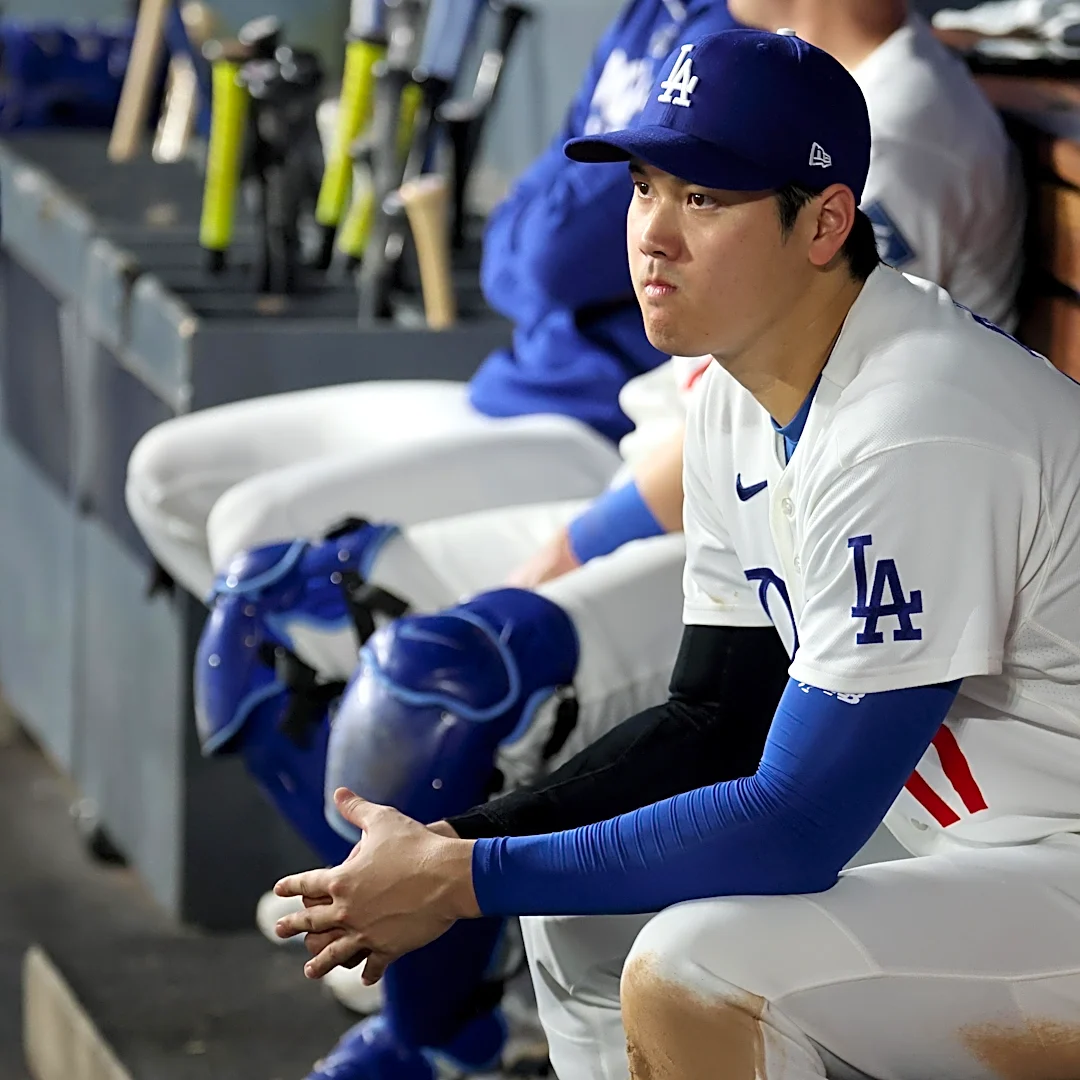
That billion in deferred dollars is also owed to players who are moving into their mid-30’s. Should Shohei Ohtani never fully return to form, that roster suddenly looks like an extremely bloated 85-90 win team. They’re currently getting torched by a Brewers team with a $146M payroll in the NLCS, and it’s worth remembering that they only won the 2025 World Series by a half inch as Isaiah Kiner-Falefa was thrown out at the plate as the potential game winning run in the bottom of the ninth of Game 7. They haven’t exactly just shredded the competition in the postseason. Baseball has ways of balancing things out on its own.
The league would also like to avoid full responsibility here by convincing everyone that this is all at the fans’ request. Manfred continues to spin the yarn that the league has conducted expansive polling as to whether fans want a salary cap or not. As far as any reporting out there can find, no such surveys have ever been conducted by the league. Instead they point to a small poll conducted by MLB Trade Rumors at one point to pretend this is all the fans’ idea. This is all entirely self-serving lip service, and it’s setting a pretty poor tone for negotiations this offseason. The fans do want better competitive balance. That’s not a reach, but in pinning it on the fans, Manfred is avoiding conversations about how the league let things get this far in the first place and trying to position himself as a third party arbitor who just wants to give the fans what they want.
Of course, leaving aside the self serving comments from the Commissioner, there is still the actual problem to contend with. Why should fans care how much the players are making? If a salary cap curtails some of the top shelf salaries, so what?
That’s a fair point. We don’t even really have that much of a dog in this fight. If the owners get a salary cap in place, they aren’t going to do nice things for us like lower prices or make the game more accessible. The players aren’t hurting for money while the rest of the economy continues to sputter and the average fan is under significant economic pressure. Few want to hear the players’ arguments for protecting their profits either. We just want baseball without all this drama.
The problem is that it’s the league and the owners risking the 2027 season here, and Rob Manfred and the owners clearly want and need your support. This is why they’re everywhere trying to set the parameters of the debate as being about the Dodgers and a salary cap, rather than cheap owners and a strong salary floor. The players would probably sign essentially a renewal of the current CBA and go about their business. There’s just no way they’re going to agree to changes that potentially cut further into their share of revenue just to help rich owners make more under the guise of competitive balance.
Players have seen their share of the pie decrease little by little, year by year for two decades now. Sure, the top players can still go get their big contract in their late 20’s and early 30’s, but the number of teams willing to pay those contracts to older players continues to decline. The vast majority of major league players will spend a few years in the league, and never make more than the league minimum. That’s a really good wage at $780,000 for a full season. Even after taxes and agent fees, anyone playing full time is going to take home a half million dollars. But most players are not coming anywhere close to accruing generational wealth here either. There’s just no good argument that they should give up more of their share to the owners.
Ultimately, the league and owners probably know they’re going to fail here. They’re pushing the same narrative they’ve been selling for a quarter century now, and the players have always completely rebuffed any kind of hard salary cap. They gave in on the luxury tax threshold, which is essentially a soft cap that hasn’t worked very well, and they learned the lesson as the number of free agent destinations who can and will pay out a big contract declined as most owners refuse to go anywhere near the luxury tax threshold. Tony Clark isn’t leading the MLBPA anymore. Instead they have a veteran labor lawyer and negotiator at the helm again for the first time since Michael Weiner died in 2013.
Personally, I don’t see any pressing need for things to change at this point either, except with regard to the deferred money. The problem with the Dodgers has much more to do with their special exemption and the amounts of money that are allowed to be deferred, and as that roster ages, some of the problem may just solve itself. If there’s a hard salary cap, then the Dodgers ownership group is just going to take home a lot more money, and it won’t be accessible to the current revenue sharing protocols. They’re still going to be a good team for the foreseeable future because they draft, develop, and trade players as well as anyone in the league.
The other side of the equation is far more important, and it’s part of why pushing the Dodgers/salary cap narrative has been such a focus for the league and the other owners. The real push should be for a salary floor, whereby cheap owners can no longer just pocket revenue sharing funds and continue to spend minimally on their team’s success. Chris Ilitch, despite his flaws, put $220M into the Detroit Tigers’ Opening Day payroll this season. The Tigers are hardly a big market team, and while they can’t spend like that every year without losing a significant amount of money, it does illustrate that teams at this level of market size can take their shot for a year or two before shedding payroll and getting back to yearly profitability.
The ultimate compromise, in theory, that is always floated heading into CBA negotiations is to institute a hard cap and floor system like other major sports have in place. The idea has been floated plenty of times, but to make it work there has to be trust, and a good faith effort on either side. The individual team owners have to be willing to fully open their books to the union, and all revenues current and future, accounted for. If they were willing? Sure, then the players’ share of yearly revenue is fixed at a certain percentage of league earnings, and that number is divided by the 30 teams to reach the general parameters of a reasonable salary cap and floor system. Within that structure, teams then spend as they will.
In the NFL, the current cap is $301.2 million per team, with the floor set at 89 percent of that cap, roughly $268 million, evaluated over multiple seasons to add some flexibility to the process.
The issue for getting to something like that, is that the wealthiest big market teams have to be willing to contribute more of their revenue to the system to make it work for all the small market teams. They also have to continue to spend right up to the cap. So far, most vague early proposals for an MLB cap/floor system contain a far wider disparity between the cap and floor than the NFL has, and it’s just impossible for the players to ever agree to a system with more than enough wiggle room to allow owners to simply cut the players share of the pie.
The league’s initial proposal for a salary cap and floor system beginning in 2027, sets a cap at $245.3 million, while a salary floor would be set at $171.2 million. The eight teams currently over the cap would be required to cut about $578 million in combined salary to comply, while the 12 teams under the floor would have to spend $617 million in additional salary to comply.
That sounds alright on the surface. Overall team payrolls would increase by $39 million, which would be good for the players. The problem is that you need those eight teams to continue spending the maximum amount. If over time they choose not to do so and all these teams are spending closer to the floor than the cap, then the players share of revenue actually declines. Moving those cap and floor levels much closer together is probably a must for something like this to ever work out.
That point is key, because it reflects the split desires of Manfred and the owners. They still want the big spenders to exist and for the major markets to have that competitive advantage. At the same time, they want to bring the range closer together at least. And they want the players to buy into this idea and trust that they’re not going to end up hurting their own earnings in the process. They want a lot, and some of those desires remain at odds with others.
For now, it just feels like there are too many moving pieces to make this happen. We’ll have to see how much will actually exists behind the PR push. Do the big market ownership groups, who have a lot of sway in the room as it were, want to have to compete on a level playing ground? Are they willing to sacrifice more of their hugely outsized revenue streams compared to other teams to help pay even more of other teams’ payrolls and bring real parity to baseball? It’s hard to believe they wouldn’t put up a fight, splitting the owners.
Does the league even really want to go far enough for this to work? For all the fuss about competitive balance, the league knows that revenues in the postseason are far better when the big market teams with tons of history and star caliber players are in the mix.
There’s a ton to deal with just on the league and ownership side, before we even get to convincing the players union to go along with any of this and addressing all their concerns as well.
Is Rob Manfred the guy to pull this all together and leave this mark on the history of the game, as seems to be his goal? It’s hard to buy the idea that he is, and the fact that he continues to frame this as a problem of the big spenders and the Dodgers in particular, rather than all the ownership groups that simply pocket the cash and never try to win, isn’t a very good start in my opinion.
Perhaps the salary cap/floor isn’t even the goal this time around. It’s entirely possible that Manfred and the owners are pushing this so hard in a public relations campaign just to set up some other set of proposals that are the real goal here.
All we as baseball fans know for sure, is that this is going to be a pretty miserable offseason, and there’s nothing to do but try to read the tea leaves and see how it all shakes out in the end.