




One of the things that made the Detroit Lions’ defense unique—but not necessarily good—was the amount of base defense they played in 2025. Their base defense personnel, featuring four defensive linemen and three linebackers, was utilized 60 percent of the time, which not only ranked first in the NFL, but was way above the league average of 12.8 percent (per The Athletic).
But that tendency appears to be headed for a change in 2026. Twice now, Lions defensive coordinator Kelvin Sheppard has told the
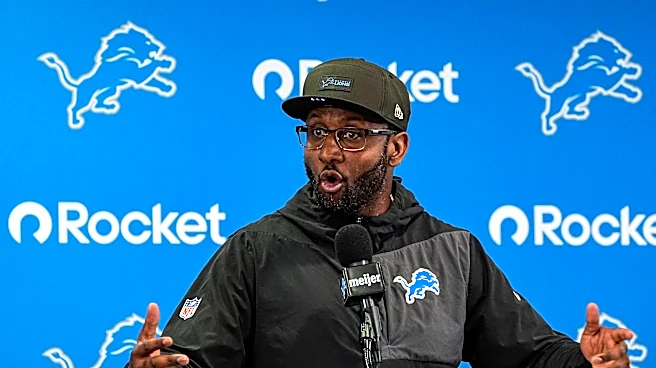
media he plans to utilize nickel formation—taking out a linebacker for a slot corner—more often this upcoming season. He first dropped the news on Fox 2 Detroit, and reiterated the point during his press conference prior to the Lions’ final OTA practice last week.
“We are planning to utilize the nickel position more,” Sheppard said outright on Thursday.
Part of that decision may be an adjustment to how the league operates, but it’s also likely guided by some tough personnel decisions the Lions had to make this offseason. They clearly weren’t willing to pay Alex Anzalone, their best coverage linebacker, what he wanted and let him go in free agency. They also lost last year’s starting nickel corner Amik Robertson—who often had to sub in on the outside when injuries happened.
Detroit didn’t find a replacement for Anzalone in free agency and fourth-round pick Jimmy Rolder is likely at least a year away from becoming a big-time contributor on defense. However, the Lions were active in adding to their secondary, signing Roger McCreary, currently the projected starting nickel, drafting nickel candidate Keith Abney, and adding a few safeties who could potentially drop down into the nickel position in free agency (Christian Izien, Chuck Clark).
Sheppard is welcoming this challenge with open arms.
“It is a lot of questions marks right now that we are starting to go through as we go,” Sheppard said. “Like you come last year, ‘Alright Alex (Anzalone) is going to guard the tight end, Amik is going to be in the slot.’ We do not have that right now, which in my opinion is a good thing because this is an opportunity for growth, for us a defense and a team. Like to get a little uncomfortable to go into training camp and not knowing who the starting safeties might be if we do not have the two All-Pro, not knowing. To me, I bask in that moment because the opportunity for us as coaches to develop somebody and make sure they are ready to go when Week 1 kicks off.”
That kind of forced change could be exactly what the Lions defense needs. While impressive at times throughout 2025, injuries and inconsistencies left the Lions defense in a worse place than when they started the season. Detroit finished the year 22nd in points allowed and 18th in yards allowed per play—both significant steps down from the previous season.
With an overturned roster and Sheppard entering his second season as the team’s defensive coordinator, things should certainly look different in 2026. The question is whether it will be better.
“You asked what I learned and why am I more comfortable,” Sheppard said. “The adaptability, the adaptability that you have as a coach and player in this league is vital because things are going to change.”