
Sunday night gives Gonzaga one final nonconference game before the holidays and the slow grind of WCC play begins. The No. 7 Zags head to Portland to face Oregon at the Moda Center, a rare regional matchup
tipping at 6:00 p.m. PST on Peacock. Gonzaga arrives 11-1, third in KenPom and third in the NET, coming off a 28-point win over Campbell that looked sloppy and lethargic for long stretches despite the final score.
Outside of Braden Huff’s absurd night —37 points, a 13-for-13 start, 16-of-18 overall — Gonzaga drifted between fine and flat, with enough good to secure a home win and enough sloppiness to inject some high drama into this particular road trip. UCLA tested the Bulldogs’ edge last week, Campbell exposed a few seams, and Oregon now enters as both opponent and measuring stick. The Ducks sit 79th in KenPom and 112th in the NET, numbers that undersell a team finally nearing full health after weeks of injuries and fresh off a 94–69 dismantling of Portland.
If the Zags repeat the uneven stretches that surfaced against Campbell and Oregon plays as well as it did against Portland, this starts to resemble last season’s late-December loss to UCLA, an ugly 65–62 game that slipped away at the worst possible time and caused some irreparable damage to Gonzaga’s tournament résumé. Neither team has looked like itself in recent weeks, a fact that unfortunately favors the Ducks far more than the Bulldogs.
Meet the Ducks
The Ducks run deep, play fast, and ask everyone on the floor to make reads on the fly, which produces a steady diet of scoring from every position as well as a high turnover count (13.2 per game). They share the ball, they attack gaps, and they accept the mess that comes with that approach. When it clicks, the offense hums. When it sputters, the game gets loose on both sides of the floor.
Everything still runs through junior guard Jackson Shelstad. He leads Oregon in scoring at 16.2 points per game despite shooting under 40% from the field. Shelstad plays heavy minutes, handles the ball constantly, and acts as the primary release valve when possessions start to wobble. He can score it, he can pass it, and he has a habit of bailing the Ducks out late in the clock, which helps explain both their shot quality and their turnover totals. Oregon shoots it well across the lineup but turns it over at a rate that reflects how much risk is baked into the system, a vulnerability aggressive perimeter defenses have repeatedly exploited this season, including 12 steals in the loss to Auburn and eight more against UCLA.
Alongside Shelstad, big man Nate Bittle gives Oregon a real interior anchor in the low post, averaging 13.7 points while leading the team with 1.9 blocks. Kwame Evans Jr. does the dirty work and then some, pacing the Ducks at 7.7 rebounds per game while adding 13.6 points and living in the space between power forward and downhill attack specialist from the wing. Takai Simpkins, Sean Stewart, and a rotating bench group fill in the gaps, which is very much the point. Altman wants five guys involved, five guys moving, five guys capable of scoring and fresh legs rotated in constantly.
Keys to Victory
1. Disrupt Jackson Shelstad
He leads the Ducks in scoring and assists, takes a ton of shots (he leads the team in field goal attempts by a margin of 40+ on the season), and this season has been distributing and playmaking at a higher clip than at any other point in his career. Some of those looks are questionable, some are flat-out bad, and Oregon lives with all of them because Shelstad keeps the ball moving and the tempo high. Gonzaga’s job is to make sure he keeps living with the bad shots and has trouble getting the ball into the post.
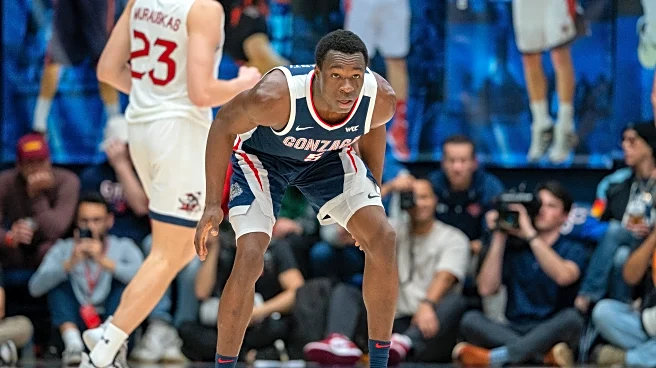
That responsibility likely falls to Mario Saint-Supery and Braeden Smith, but if things get out of hand it will likely expand from there. Mark Few has already shown a willingness to slide Emmanuel Innocenti or Jalen Warley onto whichever backcourt player needs to be slowed, and this feels like a night where that flexibility will come in very handy. If Gonzaga can crowd him as soon as he crosses halfcourt, force early decisions, and turn those possessions into stalled dribbles or rushed pull-ups, the rest of Oregon’s offense loses its connective tissue. Fail to do that, and the margin for error shrinks in a hurry.
2. Control the pace
Dana Altman teams want speed, gambles, and broken possessions that tilt the floor before the defense can organize. Gonzaga’s path to a win runs in the opposite direction. Value the ball, and make the Ducks guard the full shot clock. This lines up as a strong night for Graham Ike to once again lead the team in assists, pulling help toward the paint and kicking the ball back out to open shooters. Let the ball swing. Let the Ducks rotate. The longer a possession lasts, the more Oregon’s defensive shape starts to fray.
This game also has all the makings of a Braeden Smith game. C, precision, and pace. Smith, Steele Venters, and Adam Miller thrive when possessions stay intact and reads stay obvious, when movement creates space rather than urgency. That rhythm tends to mute some of Oregon’s volatility and keeps Gonzaga from drifting into the kind of early-clock choices that fuel Altman’s teams. This is the kind of game that asks for steadiness over spark, structure over improvisation, and a willingness to keep pressing the same advantage until the defense finally gives something back.
3. Control the paint without giving away free points
This matchup squeezes Gonzaga’s margin for error inside harder than any they’ve played this season. Ismaila Diagne remains more theoretical than functional for the time being, which leaves Gonzaga with an uncomfortably thin frontcourt rotation. That usually means Jalen Warley soaking up minutes at the four, a workable setup that becomes real precarious depending on how quickly fouls stack up. Oregon, meanwhile, brings real size and depth inside. Nate Bittle sits at a true seven feet and plays with unusually clean footwork and vertical discipline for a big, averaging barely over a foul per game. Kwame Evans Jr. checks in at 6’10 and 220 pounds, moves well laterally, and stays out of foul trouble just as effectively. Sean Stewart and Ege Demir follow behind them, one rangy and athletic, the other enormous and immovable, which allows Oregon to keep bodies fresh without sacrificing physicality.
Oregon can contest shots, absorb contact, and rotate bigs without watching giving up anyone to foul trouble. Gonzaga lacks that luxury. The Zags have to defend the paint with positioning and timing rather than reach-ins or late contests, because foul trouble shifts the math quickly. Keep Bittel off his spots in the low post and make Evans finish through bodies without sending him to the line. Keep rotations sharp enough that help arrives early and intentionally instead of desperately. The Ducks want to turn size into pressure and pressure into fouls. Gonzaga needs the opposite. Solid walls, clean contests, and the discipline to trust that contested twos beat free throws every time.
Final Thoughts
Gonzaga enters Sunday’s matchup with its résumé mostly intact and the metrics gleaming, but they still seem to be searching for that same edge and cohesion they showed earlier in the season. Oregon arrives with losses already banked, health finally on its side, and a clear sense of what it does well and how it can minimize risk. For the Zags, this functions as a stress test before conference play and comes at a historically ugly part of the season. For the Ducks, it offers a chance to secure their first meaningful win of the season, with the added incentive of doing it in front of a packed house in Portland.
The path forward stays fairly clear for the Zags. Disrupt Jackson Shelstad and force him to live with tough shots and bad passes. Win possessions through patience and ball security. Control the paint without fouling despite a thin frontcourt rotation. If Gonzaga executes and controls the tempo the talent advantage should show itself over 40 minutes. But if the Zags struggle to defend without fouling, rush shots, or let Oregon’s size and pace dictate terms, this becomes the kind of December game that lingers for the wrong reasons. Sunday offers the Bulldogs a chance to sharpen habits, steady the rhythm, and head into the break with clarity instead of questions.