

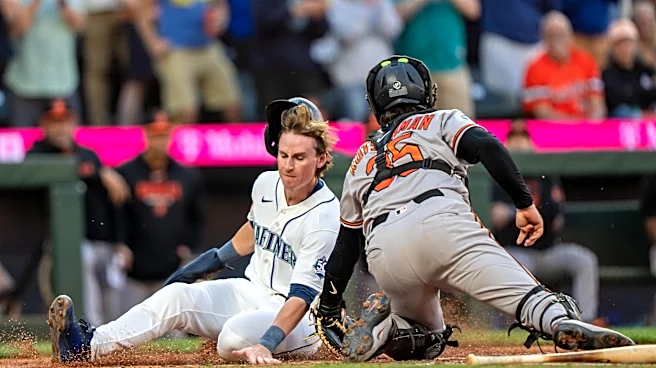


I shouldn’t mislead you: the Orioles are not hovering at .500 right now, because they’re actually sitting at 35-41 (.461), fourth in the AL East, staring up at the Yankees, Rays, and even the Blue Jays. I can’t even analytics our way out of here: their Pythagorean record, the model that predicts wins based on runs scored versus runs allowed, comes out to exactly 34-41. No BABIP mirage here.
No, this team is behaving in all ways like a mediocre team; it may, in fact, be one. But why, exactly? A few
thoughts.
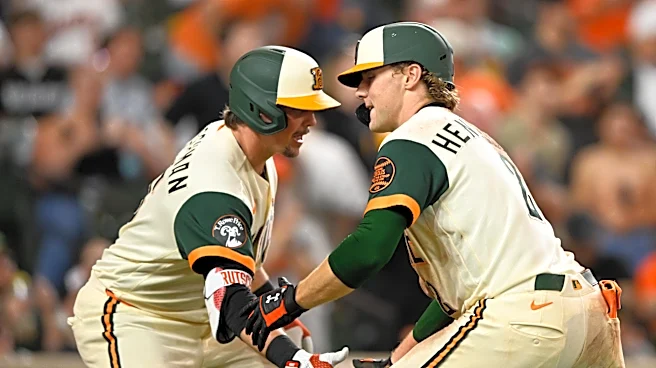
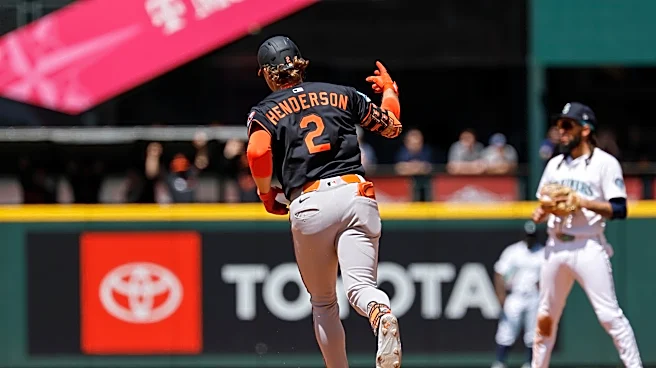
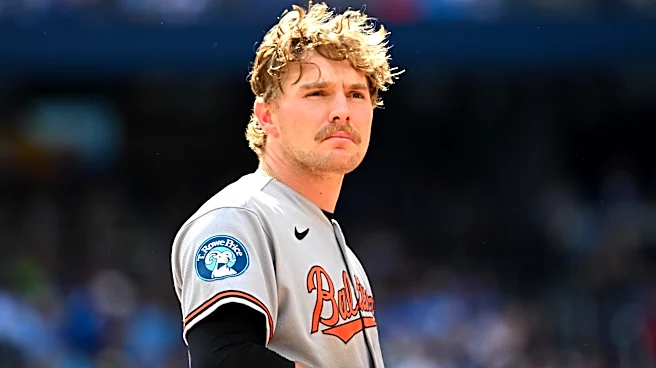
The lineup is a frequent source of disappointment: case in point, Tuesday and Thursday’s one- and zero-run offensive no-shows in Seattle. But that doesn’t quite work. Astonishingly (look, I was surprised, at least), only two AL teams have scored more runs than the Orioles, New York and Minnesota. The team has seven lineup players with an OPS above .711: in descending order, Pete Alonso, Adley Rutschman, Samuel Basallo, Blaze Alexander, Taylor Ward, Gunnar Henderson and Leody Taveras.
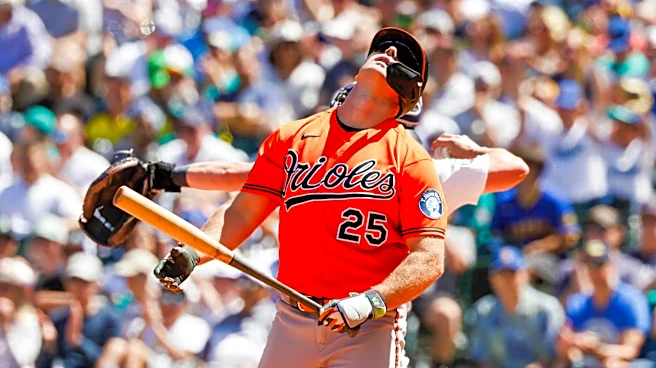
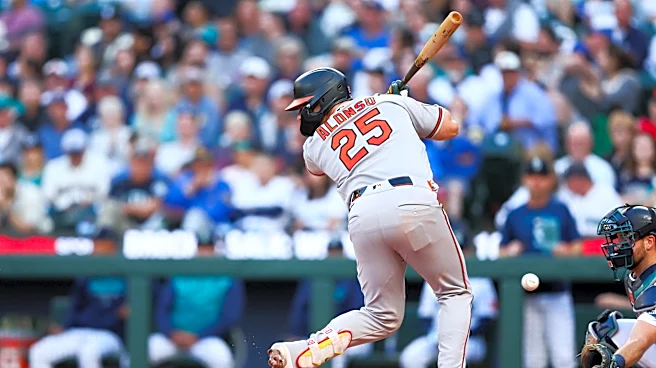
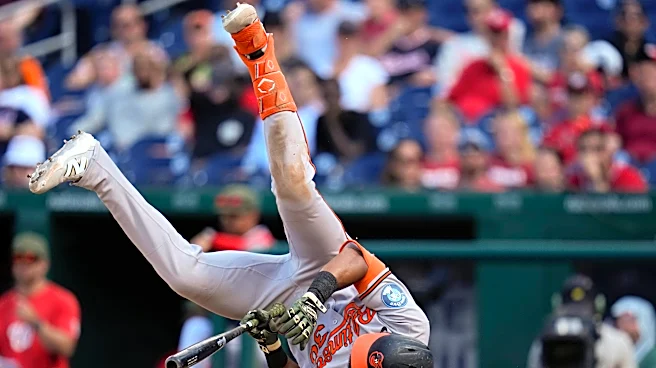
The lineup may lack consistency on the daily, but we can agree on some good individual performances already. Kudos in particular to Adley, in the middle of arguably his best power season yet; Samuel Basallo, already looking like the prospect the system promised; and Pete Alonso, who’s started to resemble the hitter Mets fans once fell in love with. Less predictable was the sudden excellence of guys like Taylor Ward, acquired as a depth/buy-low piece; Blaze Alexander, with a .310 batting average in 63 games, way outstripping his career high with Arizona (a .247 line in 74); and seven-year veteran Leody Taveras, delivering unexpectedly stable production.
It could be noted that, while the Orioles’ approach at the plate was meant this year to turn on patience—and they are walking at an AL second-best rate—the strikeouts are still unacceptable, the fourth-highest in the game. This might still be contributing to unproductive AB’s with runners aboard.
Anyway, a Top 5 offense in the AL isn’t explaining the mediocre product we’re seeing on the daily. The deeper problem seems to lie on the other side of the ball. In terms of ERA, this is one of the worst pitching staffs in the game: only Minnesota and Houston are doing it worse in the American League, and Houston is down practically a whole stable of pitchers. The team ERA sits at 4.57, and the staff is one of the five worst at striking batters out. The bullpen, to my surprise, is not much better, with a nearly equal 4.58 mark.
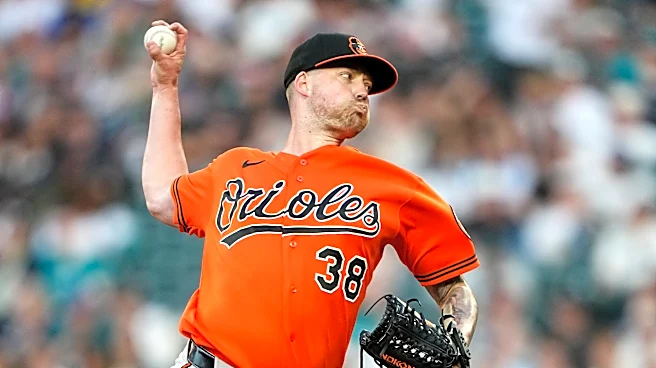
But it’s worth noting that stats do suggest a real upturn, pitching-wise, over the last few weeks and it’s not just a mirage. Since May 20, the Orioles have a 3.48 starter ERA, sixth-best in all MLB. Shane Baz is looking sharper, with a 2.05 ERA in that period. Brandon Young a 2.20 mark in that time. Kyle Bradish, for his part, 3.77, and that’s marred by a few stinkers. Trevor Rogers clocks in at 4.50, however, nothing special.
The bullpen, for its part, is not experiencing a miraculous renaissance; it’s just kind of average, 19th in ERA in that stretch.
So could this run of starting-pitching brilliance continue? Baz and Young will not likely carry a 2.00-ish mark though the season, but Bradish might sustain this path, while Trevor Rogers could continue to improve on what’s been a terrible start.
It’s fair to say, too, that the defense, much talked about, is another source of mediocrity. By Statcast measures, Baltimore’s fielding run value sits around -2 (18th in MLB), their outs above average around -10 (22nd), and their 41 errors are the 10th-most in the league, with a .984 fielding percentage that ranks 21st. While this could be more disastrous, it’s true, it helps to explain a .461 win percentage, especially when the pitching was bad for the first two months of the season. The outfield in particular has been a sore spot, with defensive runs saved there near the bottom of the league. Some of that traces to lineup construction: Dylan Beavers has been out, Tyler O’Neill disappointing, Colton Cowser ice-cold until recently. That explains Jeremiah Jackson and Blaze Alexander wearing outfielders’ gloves: it plugs one hole, but another leak springs open.
One more angle on the O’s collective mediocrity: the league’s collective mediocrity. The AL is unusually flat outside its two or three genuine top-tier clubs. The Yankees and Rays have pulled away at the top of the East, but below them is a long, mushy middle. Toronto sits at .493, Texas is at .473, the Athletics at .486, Minnesota at .474, Houston is at .461 (the same winning percentage as Baltimore). Nine of the league’s fifteen AL teams are within a handful of percentage points of .500 in either direction. So parity is real, although it fails to explain the Orioles, specifically, are on the wrong side of that pack. Houston, for instance, has been gutted by injuries and performed just the same.
So, is there finger-pointing to do? It’s true that building a rotation that could, not just hold up over 162 games, but compete deep into the playoffs has been the organization’s Achilles’ heel for years. But this year, it felt fair to expect that Trevor Rogers, Zach Eflin, Shane Baz and Kyle Bradish would attain a greater level of competence than they have so far. The hitters’ approach could be questioned, but the run production has not been that bad. The defense, yes, maybe a casualty of too much platooning and creative substitutions.
The Orioles’ mediocrity thus far: bad luck? Bad roster construction? Bad coaching decisions? All could be true at once, I suppose. Deciding whether the team becomes deadline sellers or buyers is the first question; after that, self-examination.