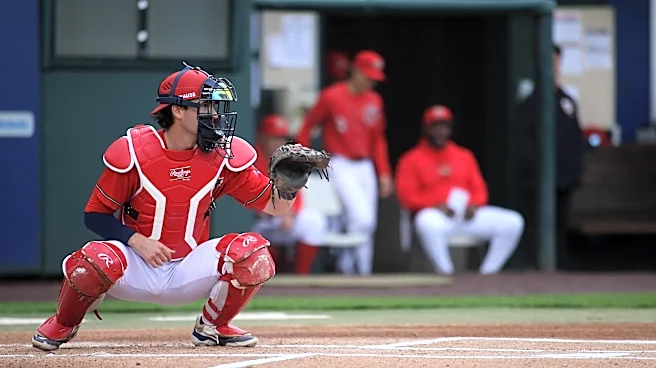


After six seasons in the minor league system of the Kansas City Royals, catcher Kyle Hayes was released at the end of Spring Training earlier this year.
He could not have found a better landing spot – his hometown Washington Nationals.
“It has been awesome; I grew up a Nats’ fan,” Hayes said in a recent interview. “It is a dream come true. I am so grateful to be here, on the team I grew up rooting for.”
Hayes, 28, was a standout at James Madison High in Vienna, less than 30 miles west of Nationals Park.
The baseball program has produced six Major Leaguers – the most of any high school in the state.
The two most recent alums to make The Show are Bryce Eldridge, a first baseman who broke in with the San Francisco Giants in September, and infielder James Triantos, who got a hit in his first at-bat in the majors in late July for the Chicago Cubs against the Pittsburgh Pirates.
Hayes, a backup catcher, began this season with Double-A Harrisburg and he hit .238 in eight games with 21 at-bats. He was then sent to Triple-A Rochester in late June to play for veteran skipper Matt LeCroy, a former catcher for Washington.
“The experience of meeting news guys, that is the most rewarding thing,” Hayes said. “I enjoy being in the clubhouse with those guys. I am fortunate to be in this position. Matt is fun to play for. He is a riot; he is a funny guy and he has our backs.”
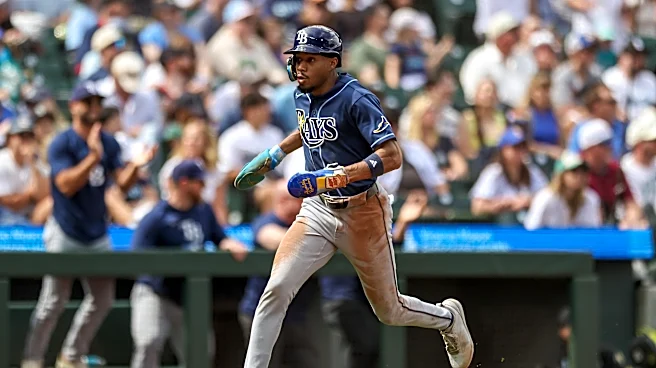
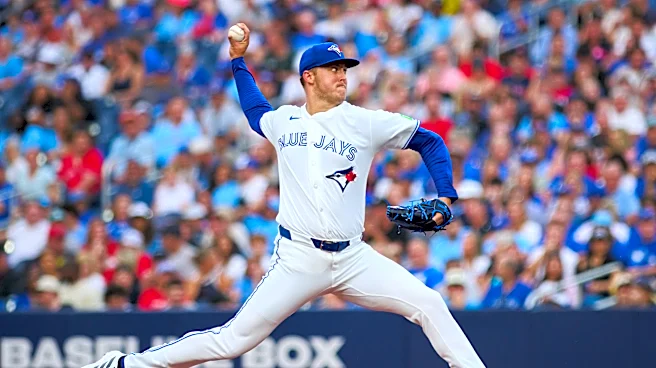
A strong defensive catcher, Hayes played at JMU in Harrisonburg, Virginia from 2017-20. Among the pitchers he caught with the Dukes were Northern Virginia native Kevin Kelly, now a reliever with Tampa Bay, and Nick Robertson, who broke into the majors with the Los Angeles Dodgers and also pitched for Boston, St. Louis and Toronto. Kelly has pitched against the Nationals five times.
Hayes ended his college career at George Mason in Fairfax in 2021, when the top pitcher for the Patriots was Jared Lyons.
The right-hander from West Springfield High in Northern Virginia won six of the team’s 14 games that season and had an ERA of 3.73 – while the Mason team ERA was better than 6.00.
“I knew when I caught Jared that he was going to be very good,” Hayes said of Lyons, who has pitched at Triple-A this year in the Reds’ farm system. “His fastball had some life and his secondary pitches were strong.”
Hayes, now with the Nationals, has renewed some JMU ties.
The roving catching and game play coordinator in the Washington system is Jake Lowery, who was the Johnny Bench Award winner as a catcher at JMU and played in the minors with Washington and Cleveland.
“I had met him a couple of times before,” Hayes said of Lowery, from the Richmond area. “And I have gotten to know him here. It is fun to have that JMU connection. When I was at JMU, I remember meeting him at camps.”
Hayes still wants to play but may go into coaching at some point – and he has plenty of mentors.
His coach at Madison High was Pudge Gjormand, who is in the National High School Baseball Coaches Association Hall of Fame.
At JMU, he played for veteran coach Marlin Ikenberry and the pitching coach at the time was Jimmy Jackson, a former minor leaguer who is now the pitching coach at the University of Maryland.
Hayes played at Mason for Bill Brown, who has since retired and is the Virginia Baseball Coaches Association Hall of Fame. The pitching coach at Mason when Hayes was there was Shawn Camp, a reliever in the majors for 10 years and now the head coach at Mason.
“I would take what I learned from all of them,” said Hayes, who was not drafted out of college. “I felt like I was overlooked and all of them helped me.”
Hayes knows his role.
“I don’t play a lot. I am in the bullpen a lot. I help with the pitching staff and other catchers on the roster,” Hayes said. “I help them out and can be a service to them and I still believe in myself and trying to develop even though I am on the older side. If the chips fall, I will be prepared. Between Harrisburg and here, it has been a great experience.”
He was without a job for about a month near the end of Spring Training.
“They reached out to me,” Hayes said of the Nationals. “It was a not a great time to be looking. I got a call from John Wulf of the Nationals and they told me what my role would be.”
Hayes knows being in the high minors is a phone call away from the majors.
“They know if you can play at Double-A you are ready for the majors,” Hayes said. “At Triple-A, any given moment you could be a call away.”