





Plenty of eyes will be on second-year center Khaman Maluach throughout this season as he looks to receive his first real opportunity to play consistent minutes in the NBA following the injury to Mark Williams.
You could essentially call last season a redshirt year for Maluach, considering how little he played. Sure, he appeared in 46 games, but he averaged only 8.9 minutes per contest. It’s difficult to draw many meaningful conclusions from a sample size like that, especially when you’re talking about
a young player still learning the nuances of the NBA game. Add in the fact that he’s entering his second season following a full summer of what we hope was growth and development, and projecting what to expect from the 20-year-old big man becomes even more challenging.
That said, I came across an interesting statistic that could serve as the foundation for a weekly update tracking his progress throughout the season. A “Malu-Watch”, if you will. It’s certainly a flawed metric, but one that could serve as a useful reference point for evaluating his impact on the defensive end. Because at the end of the day, that’s where I’m hoping Maluach makes his greatest contribution.
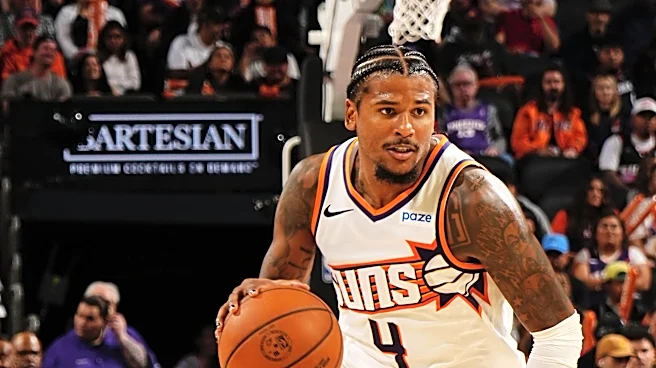
Whoever starts at center for the Phoenix Suns isn’t going to be somebody the team relies upon to score 20 points every night. Perhaps there will be occasional performances where that happens, but with Devin Booker, Jalen Green, Dillon Brooks, and Miles Bridges occupying the other four starting positions, the expectation is that those players will dominate the shot diet. The center position will primarily serve a complementary role offensively. But defensively? That’s where the opportunity truly lies, and it’s where I’m hoping Maluach can establish his value.
So what’s the statistic I’m referring to? Rebounds + blocks + steals per 36 minutes.
It’s not a perfect representation of defensive impact, and there are certainly limitations to evaluating a player through those three categories alone. But I came across an interesting little nugget that caught my attention. Based on that measurement from last season, Maluach ranked among the top five centers in the NBA. And considering how limited his opportunities were a season ago, that’s an intriguing starting point as we prepare to evaluate what he can become with a more consistent role.
Again, I recognize how flawed this statistic is. Maluach played only 8.9 minutes per game last season, and per 36 numbers are much like single-game plus-minus. They tell part of the story, not the entire story. When you’re extrapolating production across 36 minutes, you’re assuming a player can maintain the same level of effectiveness and energy over that extended period. That’s not necessarily realistic, especially for a young center still developing his conditioning and understanding of the game.
But the advantage of using per-36 is that it provides a consistent baseline for comparison. Rather than relying solely on counting stats from game to game, where minutes can fluctuate due to rotations, injuries, and foul trouble, it provides a standardized metric for evaluating a player’s production relative to his time on the floor. And I think that could be an interesting way to monitor Maluach throughout the season, tracking his defensive production as his role evolves and his minutes potentially increase. It won’t tell us everything about his impact, but it could provide another layer of context as we evaluate his development.
What does that look like through the first three preseason games?

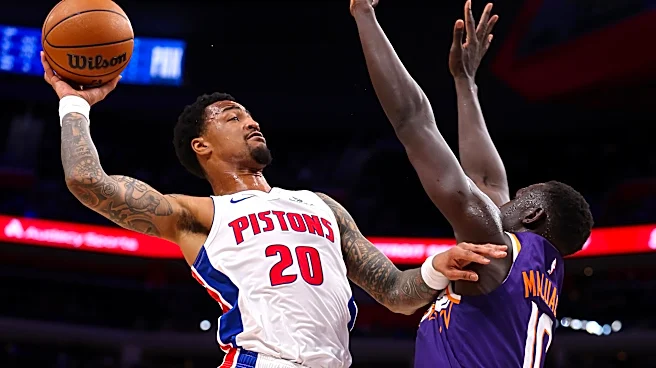
When you look at his performances through the first two preseason games against the Pistons and Bulls, I think the numbers reflect much of what we witnessed. Defensively, Maluach looked out of sorts. From a rebounding perspective, he wasn’t consistently securing the basketball, often tipping rebounds around rather than grabbing them with authority. His positioning seemed off, and he didn’t appear entirely comfortable with what was happening around him. It almost felt like he was thinking too much rather than reacting instinctively.
But one thing I’ve noticed about Maluach throughout his young career, whether it’s been in Summer League, the G League, or playing against NBA competition, is his ability to adjust. Whether those adjustments happen within a game or from one game to the next, he’s consistently demonstrated an ability to process what went wrong and execute more effectively following difficult performances.
And we saw that in his third preseason appearance. His positioning on the glass was noticeably better, and he attacked rebounds with much more conviction. He looked more comfortable, more decisive, and more confident in where he needed to be defensively. Perhaps my favorite play of the game came when he picked Jordan McLaughlin’s pocket, showcasing the kind of defensive instincts that make his development so intriguing.
Last season, Maluach’s per-36-minute numbers in rebounds + blocks + steals came in at 15.0. Thus far this preseason, considering he’s played 21.8 minutes with 8.0 rebounds, 0.7 blocks, and 0.3 steals, he finds himself at 14.9. Initial analysis says the trend he set last season, albeit in a very limited role, is continuing.
As the season progresses, feel free to check in with Bright Side each week as we track Maluach’s development, how his defensive impact manifests itself statistically, and whether those numbers align with what we’re seeing on the court.