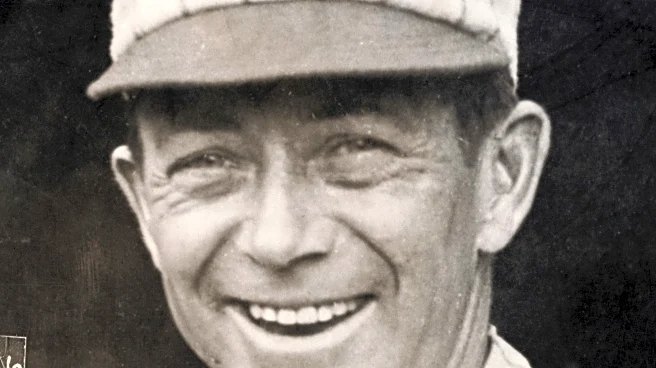

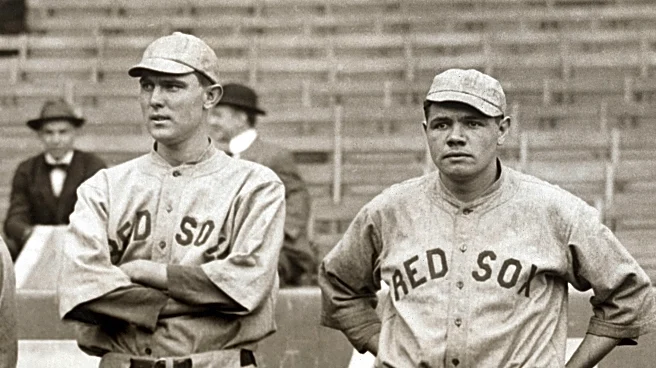
What comes to mind when you hear Miller Huggins’ name? The 1920s Yankees, surely. He is remembered primarily as the man who managed that legendary core of Babe Ruth, Lou Gehrig, Tony Lazzeri, Herb Pennock and company, capturing six AL pennants and three World Series titles during his twelve-year tenure.
Some might point to the sheer amount of talent on those squads and claim that Huggins was simply along for the ride. However, nothing could be further from the truth. Huggins played an instrumental
role in shaping those juggernaut Yankees. He deserves to be remembered not as a manager of great teams, but a great manager.
Miller James Huggins
Born: March 27, 1878 (Cincinnati, OH)
Died: September 25, 1929 (New York City, NY)
Yankees Tenure: (as manager) 1918-1929
Even before he became the manager of the New York Yankees, Huggins had already established a name for himself in the world of baseball, first and foremost as a fine second baseman. He broke into the major leagues with his hometown Reds in 1904 at the age of 26, immediately posting a 3.1 WAR season on the back of a .377 OBP and a reliable glove. Though he was quite a small man, even for his time — Baseball Reference lists him at 5-f00t-6 and 140 pounds — he used patience at the plate, speed on the bases, and guile on the field to outplay his opponents, earning him nicknames like “Mighty Mite” and “Little Everywhere”. Over a 13-year career, the first six of which he spent with the Reds and the rest with the St. Louis Cardinals, Huggins hit .265/.382/.314 over 1586 games and 6800 plate appearances, good for a 111 wRC+, and accumulated 39 WAR.
Huggins’ managerial career began while he was still a player, when Cardinals team owner Helene Hathaway Britton named him as player-manager in the 1912-13 offseason. His first season at the helm was quite inauspicious, as the Redbirds struggled to a 51-99 finish, last place in the National League by 12.5 games. However, Huggins was able to right the ship very quickly, leading the Cards to a third-place finish just the following year with a 81-72 record.
During Huggins’ St. Louis tenure, the team experienced significant financial difficulties. Britton sold the team over the 1916-17 offseason to a new ownership group, who hired some guy called Branch Rickey to be the president of the club. While Huggins remained at the helm in 1917, the last year of his contract, the Cardinals did not offer him a new one at season’s end. Yankees owner Jacob Ruppert seized this opportunity to sign Huggins to a two-year deal, and the rest, as they say, is history.
Or not. The start of Huggins’ 12-year Yankees tenure was far from smooth sailing, as he failed to lead the still-building team to a pennant in each of his first two seasons. Even after a certain Babe Ruth came over from Boston and proceeded to revolutionize baseball, it would take until 1921 for Huggins to capture his first pennant, and 1923 to win his, and the franchise’s, first World Series.

Huggins faced myriad difficulties as the Yankees’ manager. Not only was he faced with a hostile New York press, he had to handle a team that had no shortage of big personalities. And no personality was bigger than the biggest man in the game, both figuratively and literally — George Herman Ruth. Initially, Huggins took a laissez-faire approach, turning a blind eye to the slugger’s drinking and partying. However, this understandably had a negative impact on both Huggins’ leadership and team morale. Moreover, even when Huggins did try to reprimand Ruth for crossing a line, he was sabotaged by team co-owner Til Huston (full name Tillinghast L’Hommedieu Huston, which is probably the best name I’ve had the honor of typing), who was Ruth’s drinking buddy, and did not take Huggins’ side when he came into conflict with the Babe.
All this strife and pressure took a steep toll on Huggins’ health. After the 1920 season saw the Yankees lose a close pennant race, Huggins suffered a nervous breakdown, later revealing that he seriously considered quitting at the time. The following year, Huggins missed time to a case of blood poisoning. Later that year, when the Yankees momentarily relinquished first place following a heartbreaking September loss, Huggins submitted his letter of resignation to co-owner Ruppert. However, Ruppert refused to accept it, and his faith in Huggins would be well rewarded in the coming years.
Although 1923 was the first triumph of Huggins’ Yankees, the true turning point came in 1925. It was August 25th of that year, which saw the Yankees go 69-85 and finish 28.5 games out of first place, that Huggins finally earned the respect of Babe Ruth. That day, Huggins fined Ruth $5,000 and suspended him indefinitely for his conduct off of the field. Ruth reportedly scoffed at Huggins’ sentence, claiming that Ruppert would surely rescind it and side with him over Huggins. However, Ruppert stood by his manager, telling Ruth that he would be suspended for as long as Huggins liked. After apologizing to both Huggins and Ruppert, Ruth returned to the field on September 5th. He would never cross Huggins ever again.
This marked the beginning of a golden era for Huggins and the Yankees, as they won three pennants and two World Series in the next three years. Front and center was Ruth and Lou Gehrig, who Huggins elected to play over Wally Pipp amid the Yankees’ 1925 collapse. However, Huggins’ fingerprints were evident throughout those squads. Pitchers Herb Pennock and Waite Hoyt, who were the anchors of the pitching staff, were both players that Huggins had sought to acquire from the Red Sox despite lackluster results in their Boston tenure. Perhaps the sheer talent of his club required less of Huggins as an in-game tactician. However, by that same coin, one must give Huggins his due credit for having acquired, developed, appraised, and managed those talents.
Sadly, Huggins was not able to enjoy his accomplishments for long, if at all. In August of 1929, as the Yankees fell to second place behind the Philadelphia Athletics, Huggins began to feel ill, and players and staff noticed that he was visibly exhausted. In mid-September, he discovered a painful skin infection on his left cheek, later found to be erysipelas. On September 20th, he was checked in to St. Vincent’s Hospital in Greenwich Village. Five days later, he passed away due to pyaemia. He was just 51 years old.
Although he died an untimely death, at least it can be said that Huggins and his accomplishments are well recognized and commemorated. On May 30, 1932, the Yankees unveiled a monument dedicated to him in center field at the original Yankee Stadium, eventually to be joined by Babe Ruth and Lou Gehrig.

When the Stadium was remodeled in the mid-70s, his was relocated to what came to be called “Monument Park.” Huggins also received support for election to the Hall of Fame on many occasions, ultimately being voted in by the Veterans’ Committee in 1964. And as long as the Yankees exist, Miller Huggins will be remembered by fans as the man who was the first to make the team a winner.
See more of the “Yankees Birthday of the Day” series here.