


It’s the end of another week here at BCB After Dark: the grooviest after-party for night owls, early risers, new parents and Cubs fans abroad. Come on in and sit with us for a while. There’s no cover charge. The dress code is casual. There are a few tables available, or sit with someone new. Bring your own beverage.
BCB After Dark is the place for you to talk baseball, music, movies, or anything else you need to get off your chest, as long as it is within the rules of the site. The late-nighters are
encouraged to get the party started, but everyone else is invited to join in as you wake up the next morning and into the afternoon.
Last night I asked you whether or not the Cubs should try to trade Matt Shaw and/or Pedro Ramírez. With the obvious caveat that we can’t know what either of these two players would bring back in a deal, 57 percent of would try to trade Matt Shaw. Another 26 percent would just keep both players. Only 12 percent would trade Ramírez.
Here’s the part with the music and the movies. You’re welcome to join us there. Or not. We don’t want you to do anything that makes you uncomfortable.
I saw a bunch of Christmas stuff for sale in a department store today, so I guess I have to start with the Halloween music before it’s too late.
So let’s kick the season off with Ella Fitzgerald singing “Old Devil Moon” from Finian’s Rainbow, written by Burton Lane and Yip Harburg.
This is a live performance from 1969.
Despite my admitted squeamishness, I promised you that I would try to push my boundaries a bit and watch some horror films this month. I wasn’t going to wade into the Saw series or anything, but I did vow to go a bit out of my comfort zone. After all, last year I got through Suspiria (1977). I can probably handle something stronger than the Universal Monster movies.
So far, I’m not pushing any boundaries. This week I watched The Cars That Ate Paris (1974) for one reason: it’s the debut feature film by accomplished Australian New Wave director Peter Weir. Weir would go on to direct several classic films, earning him four Academy Award nominations (no wins), including one of my favorite films of the 1990s, The Truman Show. Which, if you come to think about it, is a bit of a horror movie itself, even if there is no graphic violence in it.
But The Cars That Ate Paris has more in common with director George Miller’s debut feature five years later, the original Mad Max film, than it does with most horror films. Throw in a bit of The Wicker Man (1973), and you’ve got a good approximation of The Cars That Ate Paris.
The Paris of this film isn’t the big one in France, but rather a small town somewhere in the Australian countryside. Woe be it to anyone who drives through Paris, because there are traps set up to cause car crashes, as well as warring gangs that drive around in tricked-out cars that are supposed to look like monsters. This town in the middle of nowhere survives by salvaging the wrecks of the cars, as well as taking the survivors to a hospital where they are subjected to horrific medical experiments and organ harvesting.
Terry Camilleri plays Arthur, a passenger in a car being driven by his brother who is unfortunate enough to drive through Paris. (Camilleri is best-known for a part he would play 15 years later, Napoleon in Bill and Ted’s Excellent Adventure.) Arthur’s brother is killed in the crash, but Arthur survives. The town’s mayor (John Meillon) takes pity on Arthur and rather than send him to the hospital for experimentation, he adopts him into his own family. He’s already done this with a few young women who became his “daughters,” but now he’s decided that he wants a son and Arthur is elected.
To be clear, Arthur has no choice in this matter. For one, the car gangs prevent anyone from leaving Paris whom they don’t want to let leave. Secondly, Arthur had killed a pedestrian while driving years earlier. Although he was exonerated from manslaughter charges, Arthur now has an intense pathological fear of driving. So he can’t drive out of town and there’s zero public transportation in this tiny town of a few hundred people.
But unsurprisingly from what we know about the rest of his career, Weir isn’t really interested much in the murderous car gangs or the grisly experiments in the hospital. The good middle hour of this 90 minute movie deals more with Arthur’s psychic trauma and the mayor’s war with the car gangs for control of the town. And while Weir and cinematographer John McLean make the whole thing look good, it’s a long slog between the car crashes that start the films and the final 15 minutes when a war breaks out. And unfortunately, it’s not a terribly interesting slog.
The gore is pretty limited to a few staged shots of the mangled victims of crashes. There is a kind of cool “hedgehog” car that is tricked out with wild spikes everywhere and yes, someone does get mangled on it. But the reveal of the “hedgehog” is held back until near the end of the film. The other “monster” cars that we see earlier just aren’t as visually compelling.
The other issue is that one of the reasons The Wicker Man works is that while the audience knows the island is hiding a deep, dark secret, we don’t know exactly what that secret is or what they are planning until the very end of the film. The Cars That Ate Paris goes down the same road of a small, isolated town with a dark secret, except that everyone is pretty open about what that secret is from the very beginning. Certainly the audience knows what’s up pretty quickly. There just isn’t much suspense going on here.
I did like the fake-out of the opening scene that made the movie look like it was going to be a cigarette or soft drink commercial until it ends in a bloody crash. The film was a bit downhill from there.
You can tell that The Cars That Ate Paris was made by a director with some talent. Even without the benefit of hindsight, there are just a lot of interesting shots that capture the desolate isolation of rural Australia. But it seems to me that Weir is fighting between the ridiculousness of the concept and his desire to make a more serious psychological drama, succeeding at neither.
To be clear, The Cars That Ate Paris isn’t a bad film. The people involved are just too skilled and put in too much effort for that. But it is an unsuccessful film in that it doesn’t really manage to grab the audience and when it tries, it’s just not quite sure which direction it wants to take us in.
However, Stanley Kubrick loved The Cars That Ate Paris and began recommending Weir for film projects in the US on the basis of it, as well as Weir’s second film, Picnic at Hanging Rock. So maybe I’m wrong.
Here’s a trailer for The Cars That Ate Paris. You can certainly get a sense of how good the film looks from this. Maybe that Peter Weir has a future.
Welcome back to everyone who skips the music and movies.
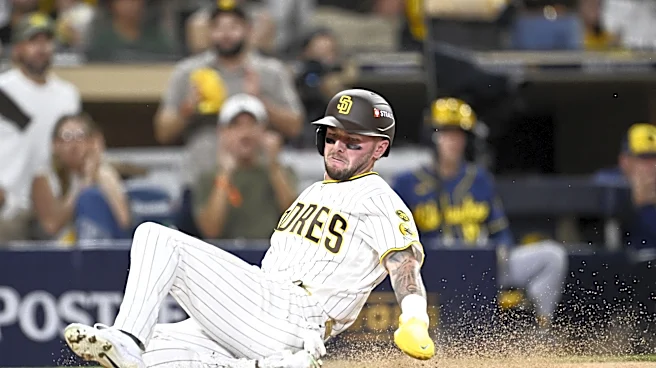
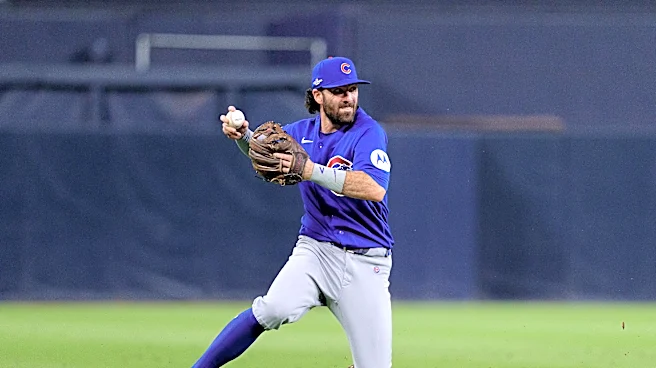
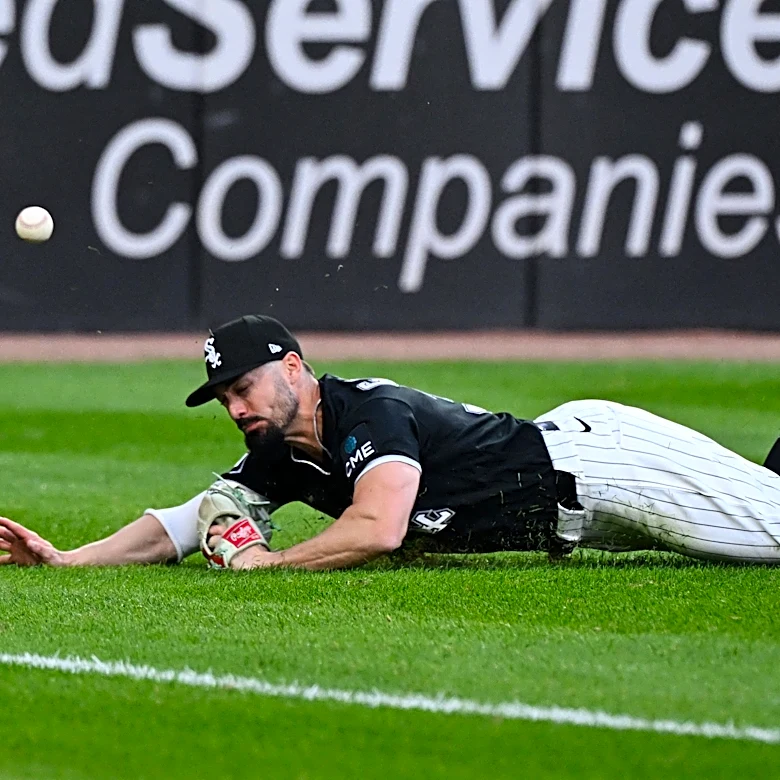
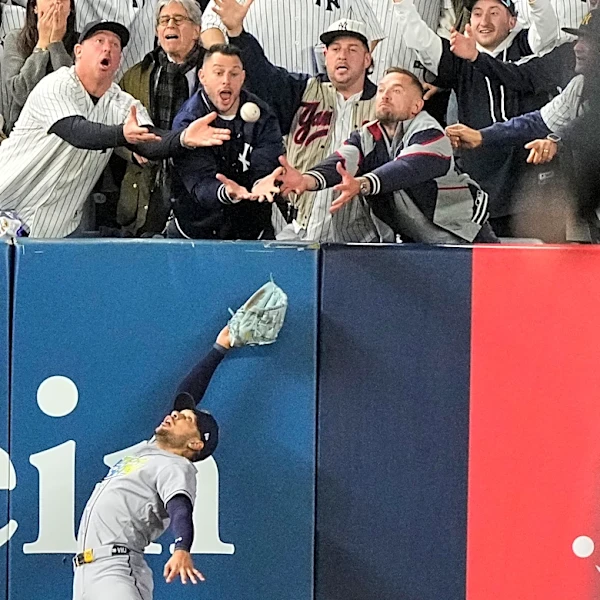
It’s no secret that MLB thinks fielding is too good. Or more specifically, they’re upset that fielders are turning too many balls in play into outs and that is sending batting averages into free fall. Only seven players hit .300 or better in 2026. This year, the league average for batting average was .244. Back in 2006, the league average .269 and that’s with pitchers hitting for half of the teams.
Baseball originally tried to fix this problem by preventing teams from putting three infielders on either side of second base. The shift had become ubiquitous in MLB in the 2010s and it was hoped that by banning it, batting averages would increase.
The plan didn’t work because infielders are just too good these days. It didn’t seem to make much of a difference if the shortstop was one step to the left of second base or two steps to the right. The infielders still got to most balls and turned most of them into outs.
Now MLB is experimenting with a new plan, as outlined by Eric Longenhagen in Fangraphs (Free to read). MLB has been very quiet about this as there has been no announcement that anyone was doing this, but Longenhagen noticed it while watching games in the Arizona Fall League.
You can read the article to see what MLB is trying. Basically, MLB is dictating where fielders must stand before a pitch is thrown. There are green hashmarks on the dirt and the outfield grass and an outfielder must be in that spot before the pitch is thrown. The hashmarks correspond with roughly where players traditionally stood, although it seems like the outfielders have to play fairly shallow. When there are men on base, infielders are allowed to move around as before but outfielders are still rooted to the green hashmark in the outfield.
The details of this are all a little fuzzy because MLB hasn’t announced any of this publicly. Longenhagen suggests that MLB may also be experimenting on where to put the hashmarks and that they may be moved to different spots later in the AFL season. The rules also appear to be in effect only in games at Salt River Field, so we don’t have a lot of data yet on what it means.
So what do you think of this proposal? Personally, I hate it. It seems like a gimmicky and artificial way to try to increase offense. It also appears to be another way that MLB tries to punish “smart” teams so that “dumb” (read: cheap small-market) teams can compete without spending money on an analytics department to determine where fielders should stand. It also seems like they’re forcing outfielders to play unnaturally shallow in order to get more extra-base hits over their heads. (Although as Longenhagen notes, that may just be what they’re testing over the first few weeks and maybe they’ll move them farther back later in the season.)
I also love good defense and want to see it rewarded, although I’m not clear on whether this proposal does that or not. You can see how a fielder like Pete Crow-Armstrong might be able to make a lot more plays even standing in an unnatural position than a lot of other outfielders.
If you want contrary opinion, Brett Taylor over at Bleacher Nation “kinda” likes it. On the other hand, Craig Calcaterra hates it, saying that someone in MLB thinks this dumb idea was a good idea:
It’s probably many of the same people who thought playing a game in the Grand Tetons was a good enough idea to approach the government with it.
I can link to the piece, but it’s from Calcaterra’s paid newsletter and if you subscribe, you’ve probably read it already.
So now it’s your turn. What do you think of this radical limitations on fielder positioning?
Thanks for stopping by tonight and all week. It’s good to stay together in the off-season. Please get home safely. Tell your friends about us. Leave us five stars. Recycle any cans and bottles. Tip your waitstaff. And join us again next week for more BCB After Dark.