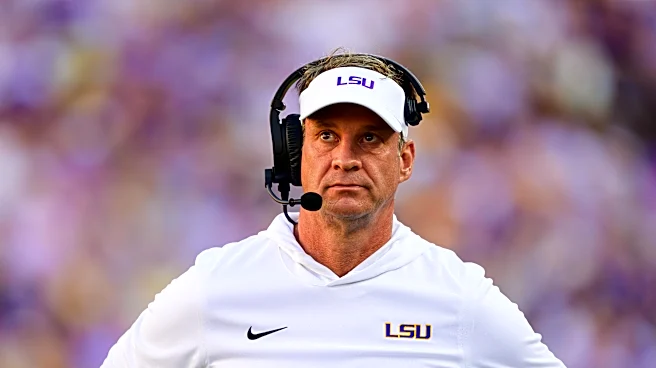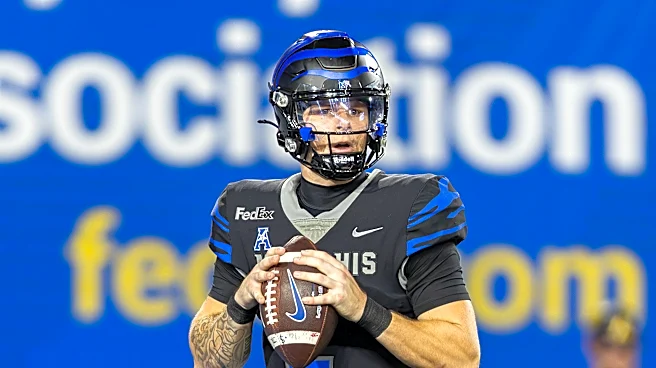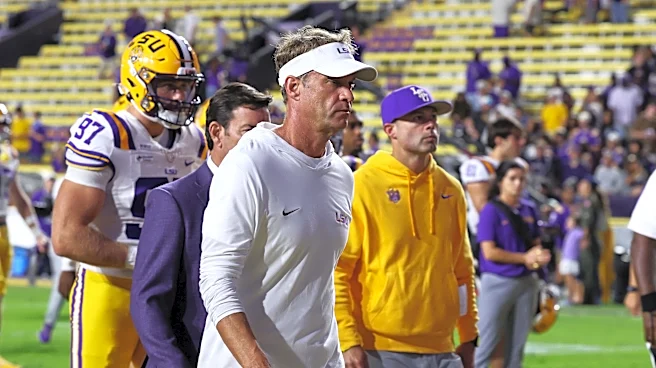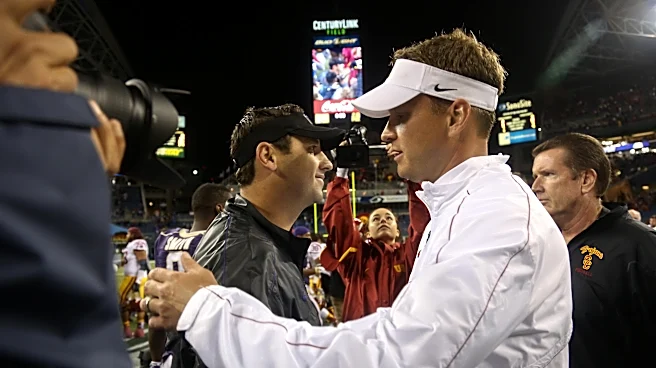

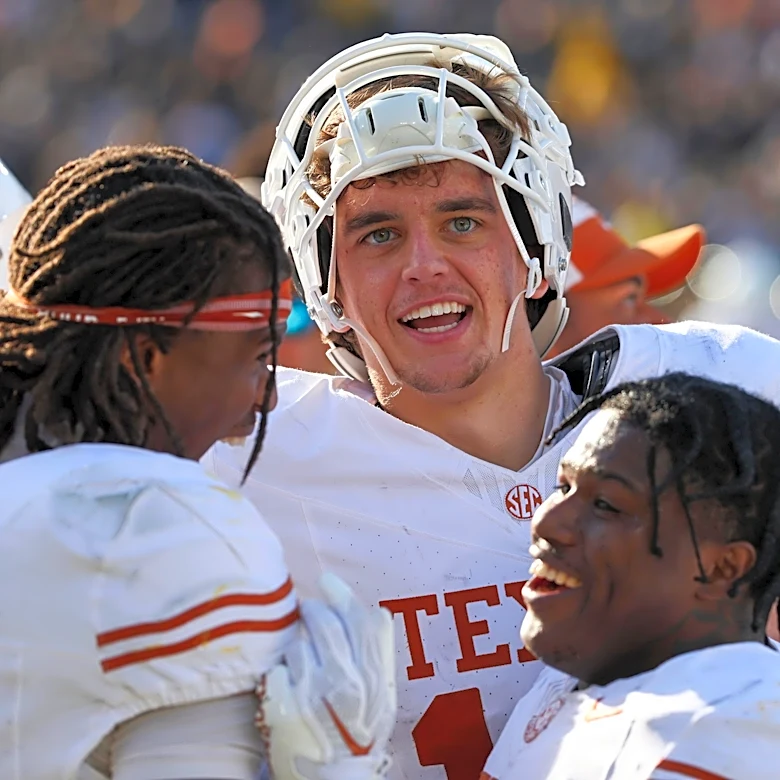
Lane Kiffin was asked Monday about his relationship with Steve Sarkisian and what makes Sarkisian so good as an offensive coach. He never answered the second part. By the end, he was talking about getting sober.
“A major change in my life was getting sober almost six years ago, and he was a big part of that,” Kiffin said. “I owe him a lot.”
Texas visits LSU on Saturday, 25 years after the two joined Pete Carroll’s staff at USC. They have coached together, coached against each other, and held the same
jobs at different times. Sarkisian followed Kiffin as USC’s next permanent head coach and later as Alabama’s offensive coordinator. Both had to rebuild careers that once seemed headed straight up.
The help went both ways. Years before Kiffin credited Sarkisian with helping him get sober, Sarkisian credited Kiffin with helping him get back into coaching. When Nick Saban hired Sarkisian as an Alabama analyst in 2016, Kiffin had pushed for the reunion.
Sarkisian told ESPN in 2022 that Kiffin was “kind of the champion behind a lot of it.”
The education at USC
Kiffin was a first-year tight ends coach when Carroll arrived at USC in 2001. Sarkisian joined as an offensive assistant working under Norm Chow, his former offensive coordinator at BYU, and became USC’s quarterbacks coach in 2002. Kiffin moved to receivers.
They were learning inside a program that was about to take over college football. Carson Palmer won the 2002 Heisman Trophy. Matt Leinart took over at quarterback the next season, when USC won the AP national title.
Their education also extended beyond Carroll’s staff. Monte Kiffin, Lane’s father and the longtime NFL defensive coordinator, became a mentor to Sarkisian on his visits to USC. Sarkisian remembered those conversations at SEC Media Days in 2024, shortly after Monte’s death.
“His father Monte took me under his wing every time he came to town, and we talked football,” Sarkisian said.
An offensive coach could learn plenty from the man explaining how a defense intended to stop him. Sarkisian said Monte taught him the responsibilities within the Tampa 2 so thoroughly that he invited future opponents to use it against him.
“He was so detailed. He was a genuine man,” Sarkisian said.
Sarkisian spent 2004 coaching the Oakland Raiders’ quarterbacks, then returned to USC in 2005 as assistant head coach and quarterbacks coach. By then, Kiffin had become the offensive coordinator. Both were on Carroll’s staff when Vince Young ended USC’s championship run in the Rose Bowl in January 2006.
Texas fans remember that night as the finish. For Sarkisian and Kiffin, much of the story was still ahead.
The jobs came quickly
The Raiders pursued Sarkisian first in January 2007. He stayed at USC, and Oakland made Kiffin its head coach at 31. Sarkisian took over the USC offense. Within two years, both were college head coaches — Kiffin at Tennessee after being fired in Oakland, Sarkisian at Washington.
Kiffin stayed in Knoxville for one season before returning to USC as Carroll’s successor in 2010. Sarkisian stayed five seasons at Washington, taking over a program that had gone winless in 2008 and restoring it to bowl eligibility in his second year. His Huskies and Kiffin’s Trojans were now conference opponents.
Kiffin won 10 games at USC in 2011 while working under NCAA sanctions. The program slipped to 7-6 the next season, and athletic director Pat Haden fired him in September 2013. The dismissal became known for its airport setting, but Haden’s explanation was about a team that was not improving as he expected.
After Ed Orgeron coached eight games on an interim basis, USC hired Sarkisian that December. Sarkisian had gone 34-29 at Washington. Less than two years later, USC fired him, too.
The circumstances were different. In announcing the move, Haden said USC remained concerned for Sarkisian and hoped he could focus on his well-being. Sarkisian has since spoken openly about his alcoholism, about spending 30 days in a treatment facility, and about the days he thought he would never be a head coach again. Reducing his departure to another coaching change would miss what he was trying to recover from.
Kiffin had already found his next job — Saban hired him to coordinate Alabama’s offense in 2014, and the Crimson Tide won three straight SEC championships with Kiffin calling plays. The 2015 team won the national championship.
When Sarkisian visited Tuscaloosa in the summer of 2016, reconnecting with Kiffin was one of the main reasons he came, ESPN reported. He had been visiting friends around football and had committed to broadcasting that fall. As he told ESPN, Saban kept asking him to watch film and offer ideas. Kiffin suggested the analyst job.
“He gave me a chance when I had a hard time getting an interview, never mind a job,” Sarkisian told ESPN of Saban.
Another handoff and another start
The reunion lasted one season. Kiffin accepted the Florida Atlantic head coaching job in December 2016. Sarkisian was named his successor at Alabama, then took over sooner than planned.
On Jan. 2, 2017, a week before the national championship game, Alabama announced that Kiffin would turn his full attention to FAU. Saban cited the time demands of managing both jobs, and Kiffin called the decision mutual. Sarkisian went from analyst to calling plays against Clemson, which beat Alabama 35-31.
That did not lead directly to Texas. Sarkisian left for the Atlanta Falcons, spent two seasons as offensive coordinator, and was fired. Saban brought him back in 2019. His second Alabama stint ended with the Texas job. He was hired Jan. 2, 2021, and stayed with Alabama through its victory in the 2020 season’s national championship game.
Kiffin rebuilt as a head coach at FAU, winning two Conference USA titles in three seasons. At Ole Miss, he won 55 games over six seasons, including an 11-1 regular season in 2025. LSU hired him on Nov. 30, 2025 after a controversial departure from Oxford that left a trail of enmity in his wake — Pete Golding took over as the rebels made their first playoff appearance.
Sarkisian’s first Texas team went 5-7. His third won the Big 12 and reached the College Football Playoff, and his fourth returned to the semifinals. The head coaching career he once feared was over had become the one Texas hired him to build.
Both can point to Saban as the coach who gave them a place to recover professionally. Sarkisian has also explained Kiffin’s role in getting him there. On Monday, Kiffin said what he owes Sarkisian.
At his own news conference Monday, Sarkisian was asked whether he ever foresaw the two of them meeting as the head coaches of Texas and LSU. He said he could not have. Then he brought up something Carroll used to talk about: Nothing is more gratifying than beating your friends. Sarkisian said he was sure Kiffin felt the same way.
They will spend Saturday trying to beat each other. Each knows how much help he has already received from the coach on the other sideline.