


It’s Wednesday night here at BCB After Dark: the hippest hangout for night owls, early risers, new parents and Cubs fans abroad. Come on in and sit with us for a while. There’s no cover charge. The dress code is casual. We still have a few tables available. The hostess will seat you now. Bring your own beverage.
BCB After Dark is the place for you to talk baseball, music, movies, or anything else you need to get off your chest, as long as it is within the rules of the site. The late-nighters are encouraged
to get the party started, but everyone else is invited to join in as you wake up the next morning and into the afternoon.
Last night I foolishly asked you how Jordan Wicks did in last night’s game, settling on a topic and writing the article before first pitch. Well, 79 percent of you gave him an “F,” and I can’t argue with that. Another 16 percent gave Wicks a “D.”
Here’s the part where we listen to jazz and talk movies. You can skip that.
We continue to celebrate Miles Davis for the 100th anniversary of his birth. As noted in earlier pieces, Miles was never content to stay in one place. With his 1968 album Miles in the Sky, Miles went electric. No, it wasn’t as controversial as Bob Dylan going electric was, although there is always grumbling from the purists. Miles didn’t invent fusion, but him getting on the bandwagon of this merger of jazz and rock music gave it a kind of respectability in jazz circles. Plus, he had the better musicians and the better ear to take fusion to a new level.
In 1969, Miles released the electric In a Silent Way that was a lot more controversial. Working with producer Teo Macero, In a Silent Way featured just two tracks, one on each side. While previous jazz records had merged different performances into one longer number in the studio, In a Silent Way was the first to take one solo and loop it into a different part of the piece. Macero even repeated the same solo at different times in the same track. The way I think of it is that Miles used Macero as yet another musician who turned the studio into an instrument in and of itself. Macero and his engineers proved to have just as much creativity as Chick Corea, Wayne Shorter and Joe Zawinul. But it’s also a kind of performance that can only be done in the studio with multiple tracks and not on stage.
Miles always said he was influenced by Jimi Hendrix in making In a Silent Way. I think that Hendrix influence is definitely there (especially the Electric Ladyland album), but there’s a lot more there than just trying to do a jazz version of cutting-edge rock.
Here’s side one of In a Silent Way entitled “Shh/Peaceful.” Besides Miles on trumpet, Shorter is on soprano saxophone, John McLaughlin on electric guitar, Corea, Zawinul and Herbie Hancock on electric piano, Dave Holland on bass and Tony Williams on drums.
A great story from the recording session come from McLaughlin, who had just joined Miles’ group and was understandably nervous. Miles was not happy with McLaughlin’s first take on the album and told him to go work on it. With McLaughlin sweating bullets, Miles told him “Why don’t you play it like you don’t know how to play guitar” which was brilliant advice that only makes sense coming from Miles Davis.
I don’t have a film to write about tonight. I’m in the middle of watching director Wong Kar-wei’s 2004 film 2046, but I had to go to sleep last night with about 45 minutes left before the end of the film. The movie is a sequel to Wong’s earlier In the Mood For Love which I wrote about earlier this year. In the Mood for Love made the BFI Sight & Sound poll of the ten greatest films ever made and I agree that In the Mood for Love is a masterpiece. My opinion on 2046 is still out. So far, it’s like if they decided to make a sequel to Love Story that follows what happened to Ryan O’Neal’s character after the events of Love Story. In fact, they made that film—it’s called Oliver’s Story. But it’s as if someone making that film said “Do you know what Oliver’s Story needs? Some elements from Blade Runner. What Love Story was missing was that science fiction element.“
So in light of that, I thought I’d just throw it open for you to talk about your favorite romantic movies. It can be a rom-com or a straight romantic drama. Even if it’s not your favorite, tell us ones that you think are overlooked and the rest of us should check out.
And yes, you should all check out In the Mood for Love.
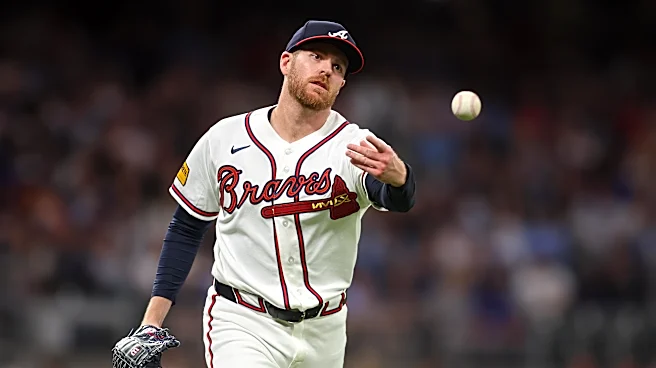
I don’t have to tell you that the Cubs are struggling to find pitching, as several players whom they were counting on this year have come up injured or Phil Maton. In that light, the Cubs signed 32-year-old left-hander Aaron Bummer to a minor-league deal.
So it’s never a positive sign when a pitcher gets released from another organization, especially since the Braves still owe the pro-rated portion of the $9.5 million Bummer was owed this year. But since it’s a minor league deal, the Cubs are only on the hook for the major league minimum once he gets called up. So the risk is low—the Cubs can send him to Iowa for a few weeks and then decide whether or not they want to add him to the major league roster or release him.
To be clear, Bummer has been poor this year. Teams don’t release good left-handed relievers. Over 15.1 innings this year, Bummer has allowed 15 runs, 13 earned, for an ERA of 7.63. His four-seam fastball has lost some velocity, which normally might not be much of a problem since he doesn’t throw it very much. But it does seem to be affecting how his sinker and cutter give the hitter a different look.
Bummer’s problems are that he’s been walking too many hitters and giving up too many home runs. Six in 15.1 innings qualifies as too many. Bummer has been a ground ball pitcher throughout his career, but this year the fly balls are up and they are leaving the yard at an alarming rate. Some of that might be poor luck, but the increases in the fly ball rate indicate it’s not all bad luck. Also, the increase in the walk rate make those home runs hurt more.
So why would the Cubs want someone like that? For one, Bummer was a pretty good reliever with Atlanta in 2024 and 2025 when he posted an ERA of 3.58 and 3.81 respectively. You’re probably familiar with Bummer from his time with the White Sox, but historically he’s been a pretty good strikeout pitcher as well, striking out 10 batters per nine over the course of his career.
So if the Cubs see something that they can fix in Bummer, then maybe they’ve just gotten a good reliever for free. And if they can’t get him back to his 2024 and 2025 form, they haven’t lost much.
So what do you think of the Cubs signing Aaron Bummer? I couldn’t resist tweaking the traditional “Yay!/Nay!/Meh” format that we normally use by replacing “Nay!” with “Bummer.” I guess I could have replaced “Yay!‘ with ”Bummer!,“ but that would have been too confusing.
Thanks for stopping by. We’ve had a rough week, but it’s been better because of you. Get home safely. Recycel and cans and bottles. Tip your waitstaff. And join us again next week for more BCB After Dark.