


The Los Angeles Dodgers finished the 2025 season with more days on the injured list than any other team—it hardly came as a surprise, considering the track record of this organization and many of its pitchers. While that illustrates just how often the Dodgers must turn to their outstanding depth, it doesn’t even cover the whole story. Occasionally moving to a six-man rotation—being quite strict about the pitch counts on their starters—the Dodgers are ultraconservative to benefit the most from their hyperaggression
in capitalizing on their financial advantages to acquire a depth most teams do not and cannot possess.
Oftentimes, we look for one all-encompassing explanation when tendencies such as this one come together due to several different factors, one of which might be overlooked. Yes. The Dodgers have a lot of what one might refer to as injury-prone starters, but they don’t really handle these players in the same way that the other 29 teams would—Blake Snell this season being the latest and one of the better examples of it.
Snell and even Dave Roberts indicated at various points in the buildup to this season that the Dodgers were going to err on the side of caution with the left-hander. After sort of powering through some shoulder discomfort last spring—perhaps looking to prove himself the same way every player does after signing a big-money, long-term contract—Snell ultimately had to be put on the IL during the season. Although he came back in time for the playoffs, that scare inevitably led to a more cautious approach in 2026.
Snell is one of many talented and high-priced Dodger pitchers whom the organization can be cautious with, as it possesses the depth to withstand their absences over the course of a 162-game season. A different way to think about this situation is to ponder how big a health disaster would be required before your average fan was genuinely concerned about the Dodgers’ chances of making the postseason—something nearly treated as a foregone conclusion ahead of every season, however ludicrous that may seem.
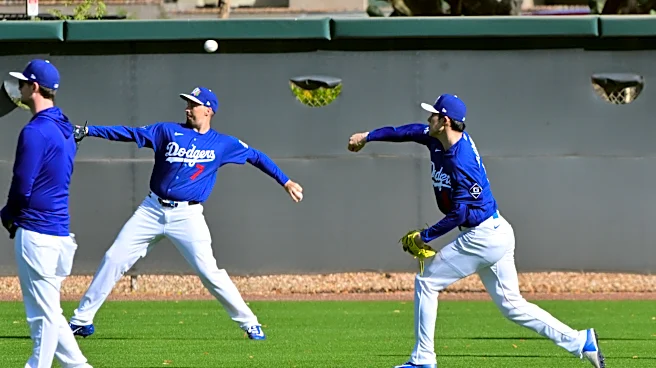
Don’t get this wrong: if they all can follow the lead of Yoshinobu Yamamoto last season and deliver 30+ starts in the regular season and flourish in October, that’s even better. It’s also an unrealistic expectation out of a group with the injury track record of the likes of Snell, Tyler Glasnow, Shohei Ohtani, and company.
It’s impossible to gauge this properly, but there is a very real argument to be made that, individually, any of these pitchers—if they were to play on a more pedestrian team—would find themselves with a larger workload in the regular season or more often powering through potential concerns. Snell’s case is the latest, but even if we go back to Shohei Ohtani’s outlook last season, he could’ve been fully built up to pitch consistently far sooner than he did. However, coming off major elbow surgery in a bit of uncharted waters, the Dodgers only cared about having him at his best and with no restrictions to pitch in the playoffs.
All of this boils down to the Dodgers making the most of what they have. Maybe if the track record of Glasnow and Snell involved fewer concerns, the Dodgers would not have been able to add both of them—certainly not for the price each of them cost. And that’s just to name a couple of the more obvious ones.