
Any transfer between Sunderland and Newcastle United is going to cause something of a stir, but when it comes to acrimony, there was a deal in 1992 that pretty much tops the lot.
The 1904 the sale of Andy McCombie led to a similar fall out because of what happened next – the deal led indirectly to an investigation into Sunderland’s financial affairs that resulted in severe penalties being imposed on the club – but the accusations and reprisals that came at the end of the century were every bit as
intense.
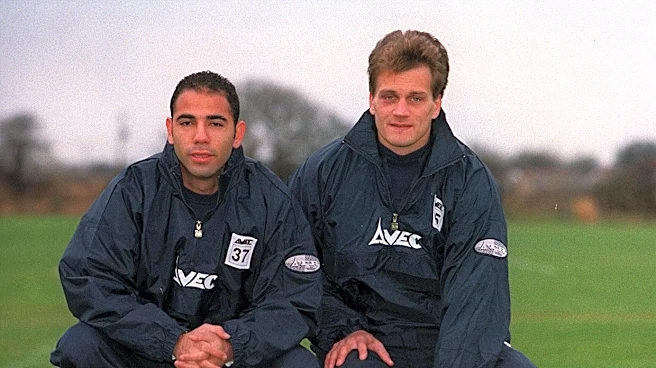
The rancour centered around Paul Bracewell, who’s has just been named technical director at Gateshead, and it’s ironic that he’s now working at a club based in between Sunderland and Newcastle given the row he was once the centre of, which followed his decision to swap Wearside for Tyneside in June 1992.
The midfielder had captained The Lads at Wembley in the FA Cup final in May, but was seemingly unhappy at the new contract he’d been offered by the hierarchy, prompting his switch to our bitterest rivals and kickstarting another spat between the two parties.
Bracewell’s new employers had just avoided relegation to the third tier and were looking to overhaul their squad. As an England international and a former league winner with Everton, he was exactly the type of figure they needed, and the fact that signing him meant they could also claim to have got one over their neighbours was obviously an added bonus.
When faced with accusations of disloyalty (Sunderland had given Bracewell a route back into football when injuries had hampered his Goodison Park career) his camp claimed that the situation wasn’t his fault and that it was Sunderland that had let him down, not the other way round.
The version of events that was put forward, suggesting that owner Bob Murray and his directors were only willing to sign off on a one-year deal, was later challenged in a groundbreaking interview in A Love Supreme.
Issue 28 of the fanzine included what was thought to be the first interview ever held with the full board of Sunderland, and whilst the majority of the questions centered around their efforts to build a new stadium there was some attention given to playing matters – such as Southampton’s attempt to buy midfield Gordon Armstrong.
Alongside Murray was Graeme Wood, John Wood, John Featherstone, General Manager and Secretary Geoff Davidson and Marketing and Commercial Executive Alec King.
A bid for Armstrong had been turned down as manager Malcolm Crosby apparently wasn’t confident that he could find a suitable replacement, but it was the comments on Bracewell that grabbed the most attention, with John Wood claiming that the player had already decided before the FA Cup semi-final against Norwich City in April that he wanted to move on.
Davidson followed this up by saying that the issue of a two-year contract was a “red herring” and that “we weren’t given the opportunity by Paul to get that far” whilst Graham Wood continued by suggesting that the board “never had the opportunity to complete our negotiations.”

Although there was no sign of a conclusion, the story made for some eye-catching headlines, with the Sunday Sun revelling on this day in being able to stoke the fires further and bring readers an angry response from United chairman Sir John Hall, who claimed that the first he’d heard of Bracewell being made available was when he was on holiday in Greece and was informed that his name had been included on the transfer list. Back in April, he said, he was “too busy worrying about relegation and whether we would have a football club.”
That last element referred to Hall’s attempts to save the Magpies from bankruptcy, having only recently taken over an outfit that was heavily in debt.
The property developer had been knighted a year before and was now taking his first steps towards the creation of an infamous ‘sporting club’, but he was to face opposition on a number of fronts. Detractors feared that his plans would destroy a number of already-established organisations for example, whereas the Bracewell scenario proved to be just one of a number of situations during which he and Murray would butt heads over in the coming years.
Hall had been a regular at Roker Park at one point and there had been rumours in the past that he was willing to invest in Sunderland.
However, as a donor to the Conservative Party — and in later years an advocate of Reform UK — he was at a different end of the political spectrum to the left-leaning Murray, so it’s unlikely therefore that the pair would’ve connected.
Certainly, since becoming the figureheads of rival factions, Murray has claimed that when his opposite number was in charge of investment pots, he deliberately snubbed Wearside bids for public funding, and that Hall attempted to obstruct the construction of the Stadium of Light — which if correct, would lend credence to the view held by some supporters that the Newcastle head had indeed been spurned previously and later acted out of spite.
In the short term though, some Sunderland fans probably did wish that Hall was on board at Roker rather than at St. James’ Park.
Since the cup final, the team had struggled and it wasn’t until Peter Reid’s arrival in 1995 that The Lads began closing the gap that had since formed – and who happened to be his assistant during part of that revival? A certain Paul Bracewell of course!
We might never know the full story of how Bracewell’s second stint at club ended (he had also played in red and white during the 1983/1984 season), but he gained promotion under Reid and then later joined the club again as a coach, so whatever exactly happened in 1992, it eventually became water under the Wearmouth and Tyne Bridges.