
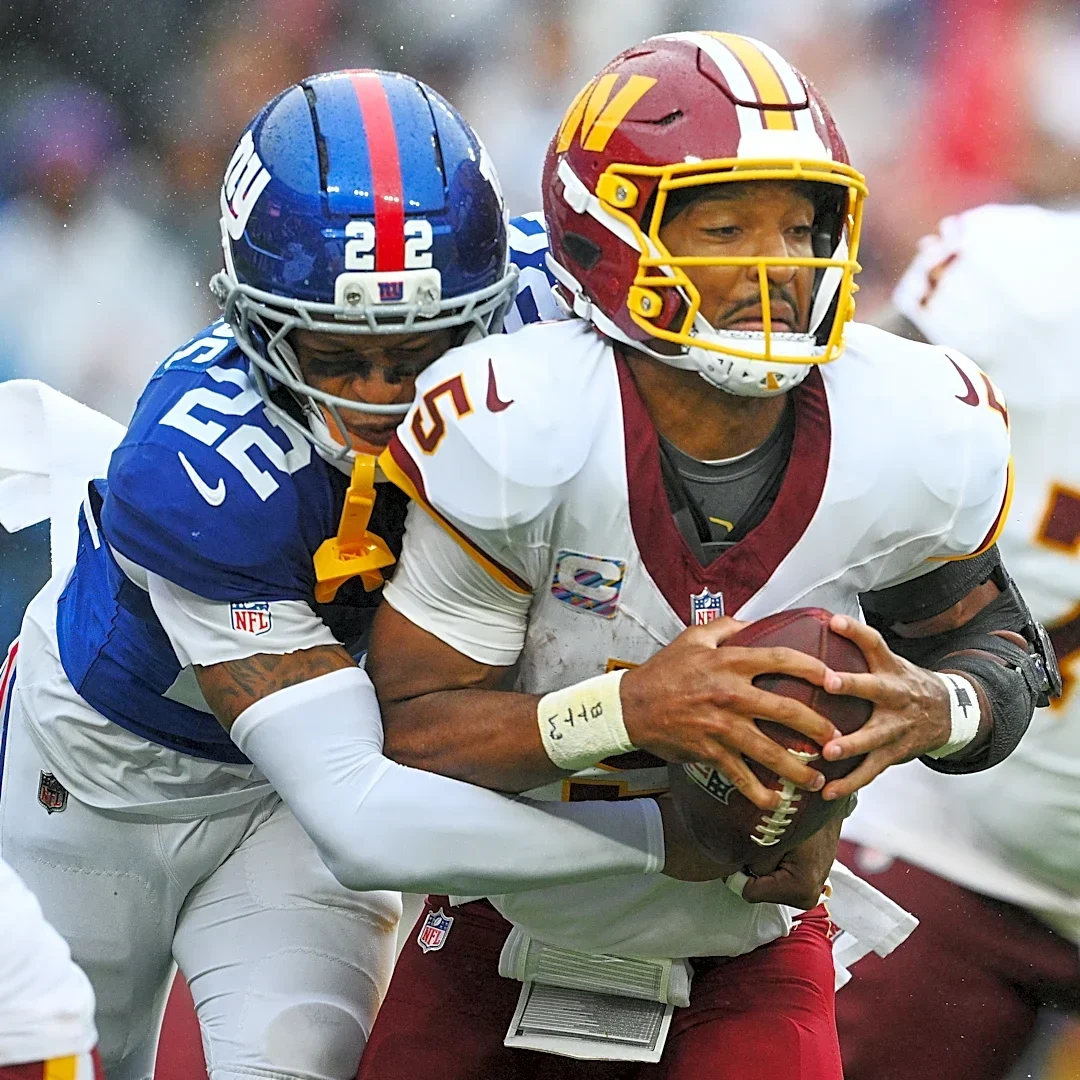


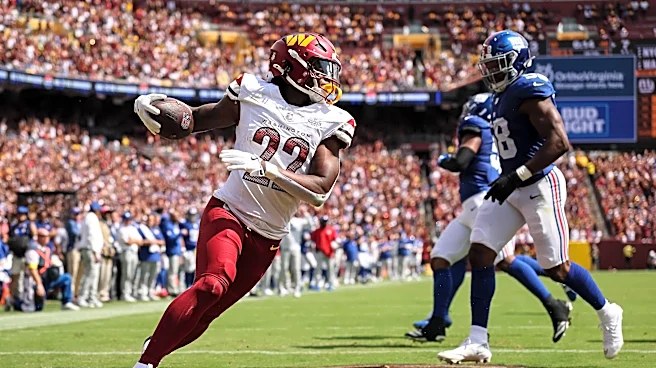

In The Feed this week I saw someone complain that in the ESPN Power Rankings after Week 5, the New York Giants were ranked only No. 19 in the NFL despite their 3-1-1 record and first place standing the NFC EastDivision…and that is down two places from their No. 17 ranking the week before. BBV’s Nick Falato has the Giants ranked only 18th.
It gets worse. The Athletic’s Josh Kendall and Chad Graff also have the Giants at No. 19 in their power rankings this week, but their statistical model guy, Austin
Mock, did his own power ranking analysis with his model, and the model rates the Giants as…No. 31:
Don’t let the chaotic NFC East make you believe the Giants are a good football team. They are not — at least not so far. The Giants’ offense ranks in the bottom 10 in just about every important offensive metric, and the defense isn’t much better, especially against the run. They rank in the bottom five in rush EPA and explosive run rate. If you can’t stop the run, life is going to be easy for opposing quarterbacks, especially with star outside linebacker Brian Burns out for the season.
What’s going on? Are the Giants worse than their fans think? Certainly the hiring of John Harbaugh as head coach has had a major positive effect on how Giants fans view the team (notwithstanding Kyle Hamilton’s veiled knock on Harbaugh after last Sunday’s Ravens game). It seems to have had a positive effect on Giants players themselves (the ones he has not released or benched, anyway). And you have to give them credit for recovering from the dual shock of losing Jaxson Dart and being drubbed by the Rams to go 2-0-1 after that.
To what extent is this a mirage, though?
Let’s look at a variety of metrics of team and opponent performance to get a feel for where this team stands relative to other teams and what that might portend for the rest of the season. The bad news: I am going to show you metrics from Pro Football Focus, whose individual player grades I report on every week and that many of you hate. The good news: The stats I’m going to show are not based on the PFF grades that are the subject of your ire, but rather on by now standard metrics such as expected points added (EPA), which is calculated from outcomes of plays and their effect on eventual scoring by an offense. (For the record, though, PFF’s traditional grading system based on film review has the Giants ranked 23rd in the NFL overall, 25th on offense, 14th on defense, and 4th on special teams.)
First, a plot of defensive vs. offensive EPA. These are adjusted for opponent quality and recent results are weighted more heavily in an attempt to make them more predictive of the future:

The shading indicates teams of similar quality, though with different degrees of offensive and defensive strength depending on where they fall along the diagonal. This paints an even more bleak picture of the present state of the Giants than the subjective analyst power rankings I mentioned earlier and is more in line with Mock’s computer model. According to this diagram, the Giants are one of the absolute worst teams in the NFL. They have gotten their wins against almost equally bad teams (Tennessee, Arizona) and a tie with a team only a little better than they are (Washington). Only their defeat of Dallas was any kind of accomplishment given the Cowboys’ elite offense, but it was facilitated by their league-worst defense. Of comfort is that their one loss was to the Rams, one of the top five teams in the NFL on this chart (which notably does not include special teams). Also note that they are right next to this Sunday’s opponent, New Orleans.
So that seems to support the naysayers. But there’s some good news. Even though PFF weighs recents results more to give them more predictive value, past performance may not be indicative of future results, as they say. First, let’s look at rushing and passing separately:

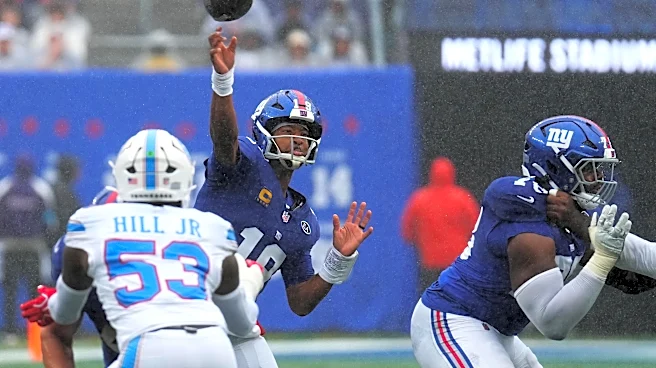
As has been evident recently, the Giants are one of the worst rushing teams in the NFL (as Mock noted in his comment about their lack of explosive rushing plays). Maybe their running backs aren’t great. Maybe their offensive line is poor at run blocking. Maybe their run philosophy and run-pass mix leave something to be desired, as Chris Pflum discussed. Their passing game isn’t bad, though, considering they’re on their second quarterback of the season. The Giants are slightly lower than middle of the pack in passing. Given that they’ve played in the rain (and sometimes wind) three weeks in a row, that’s all right.
The question is that this 3-1-1 record has been compiled against what most see as a soft schedule, and future opponents look to be more formidable (e.g., San Francisco, Seattle, Jacksonville). Here’s a 30,000-foot view of that:

Good news and bad news: Thus far the Giants have faced offenses that are slightly better than average on the whole and they’ve held up at least adequately and sometimes better than that. On the other hand they’ve faced some of the league’s worst defenses so far. In the future? Actually, it doesn’t look all that much worse based on play thus far. The defensive strength of their future opponents overall is somewhat but not much better than what they’ve already seen, and the offenses are if anything a bit worse. Thus, it’s not outlandish to imagine that their strong 3-1-1 start might be sustainable going forward. The team you don’t want to be is the Los Angeles Chargers. They’re 0-5 already and according to the right panel they overall have the toughest future schedule in the NFL.
Interested in something the Giants are almost best in the NFL at? Fourth down on both sides of the ball:

The Giants and the Cincinnati Bengals lead the league in combined EPA gained on fourth down on offense and defense. The defense has been especially “clutch,” trailing only Cincinnati. I would like to see that diagram before and after Dennard Wilson decided to start blitzing a lot.
Finally, since John Harbaugh’s training was as a special teams coach and no one ever looks at special teams, here are two special team ranking figures:

The Giants are the NFL’s best in expected points added on punts and in the top 10 in expected points added on kickoffs. They’re slightly negative in EPA on field goals (I bet that diagram looked a lot different before Dominic Zvada’s bad outing in Washington).
The bottom line
Yes, there’s some validity to the opinions of those analysts who discount the Giants’ 3-1-1 record and place them in the bottom half of the NFL. There are some good things to build on, though. The Giants’ future schedule may not be as tough overall as it looked when the season began, even though there are a few individual games that will be difficult for them to win. To capitalize on that, though, they absolutely have to become a better rushing team. They have been a good fourth down team and they will have to continue that. Their special teams play will help if last Sunday’s field goal meltdown is an isolated occurrence. What will bear watching is how good a passing team they can be. If Jameis Winston can limit turnovers and give them a dangerous downfield attack (and if Matt Nagy leans into the passing game more than he has so far), the Giants have a chance to do some business this year.