

Daily Merengue is a place where you can feel free to discuss all things football. Do not be alarmed by the overt RMCF bias. It’s in the name! Shoutout to the mods who do a fantastic job, Ezek, Valyrian Steel, Felipejack, Juninho, NeRObutBlanco and yours truly, Kung_Fu_Zizou

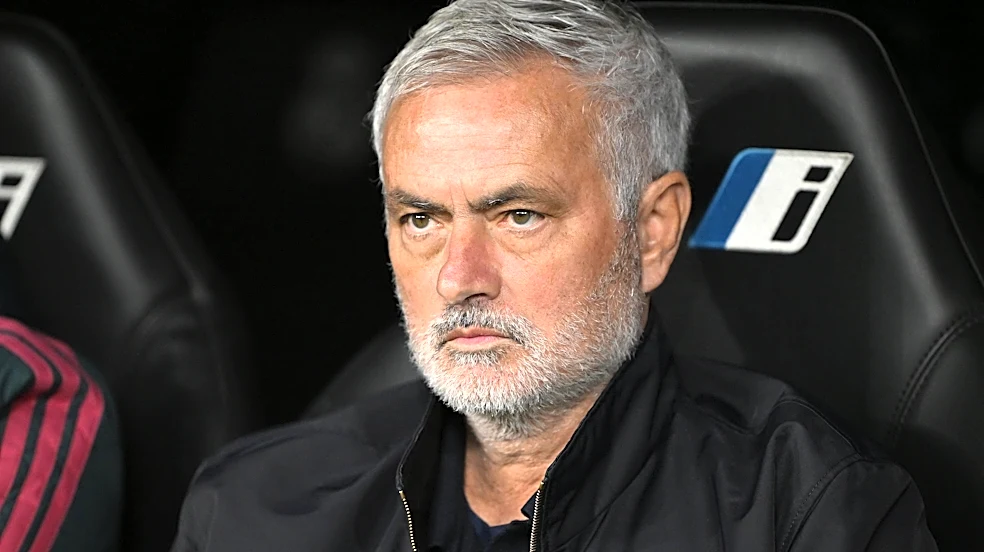
Mourinho’s men are on a three-game winning run.
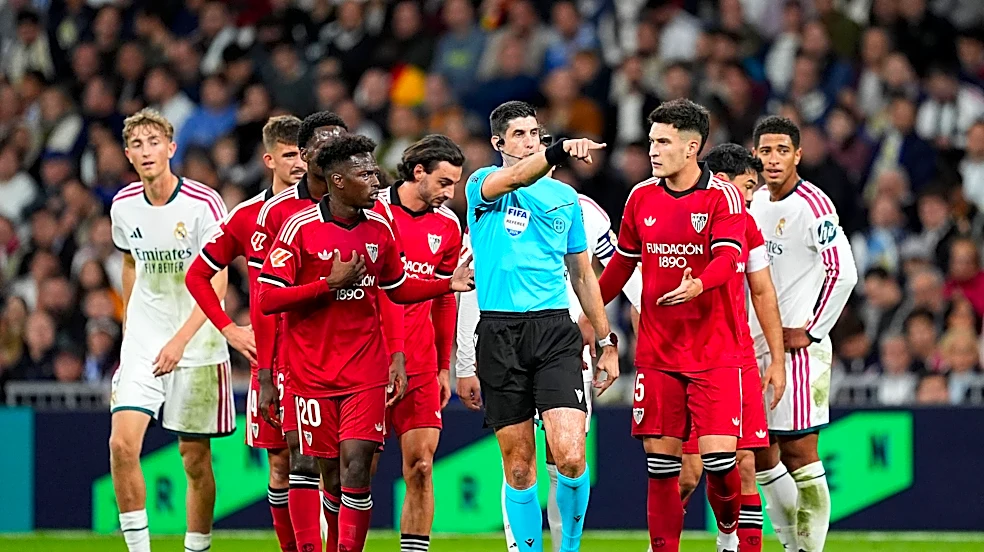
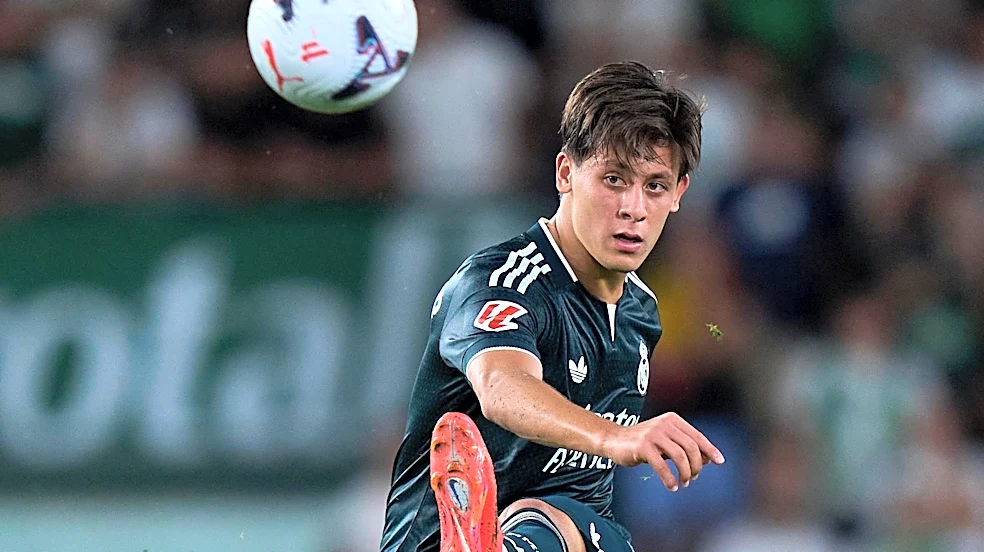
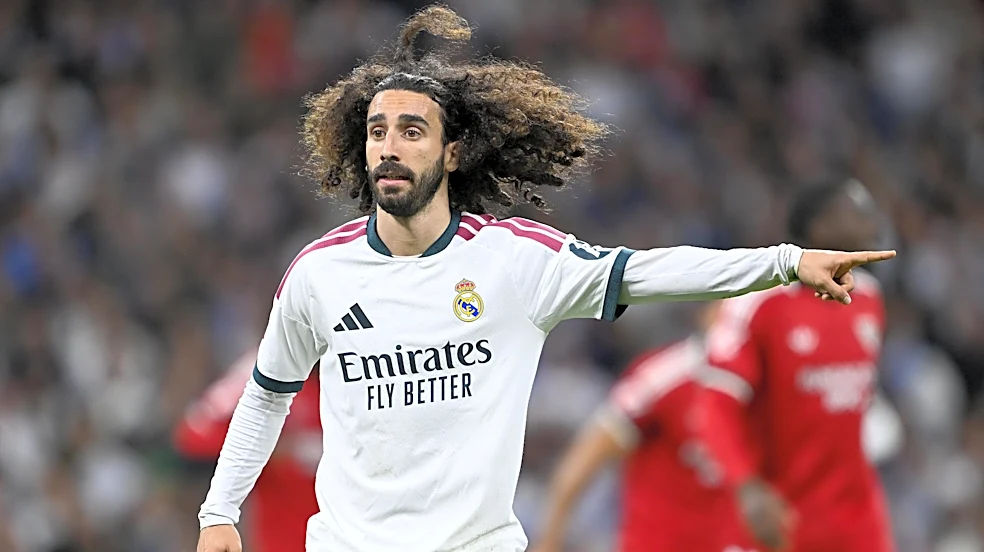
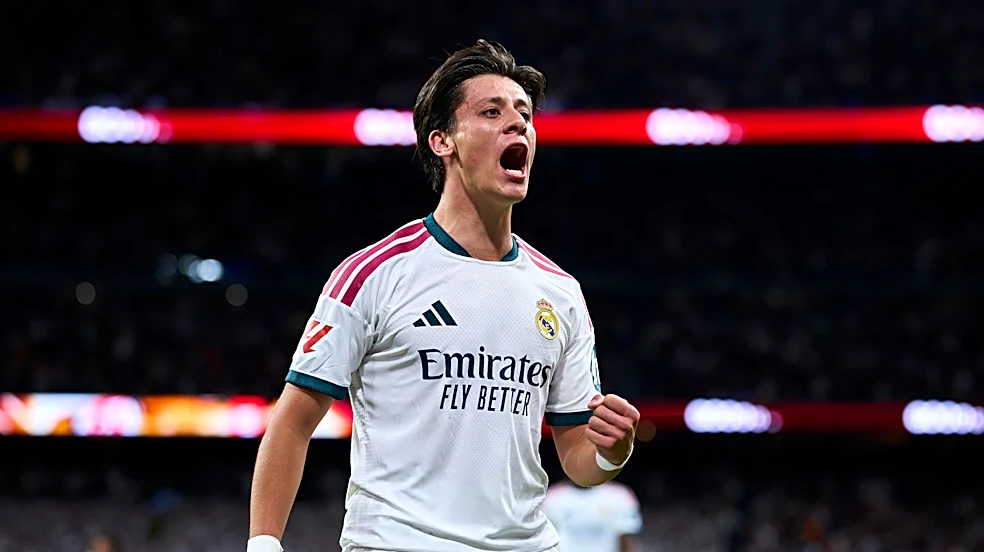
The manager has gradually adjusted his team over the last three games, eventually arriving at the XI that faced Sevilla: Fede Valverde at right-back, Arda Güler starting in midfield
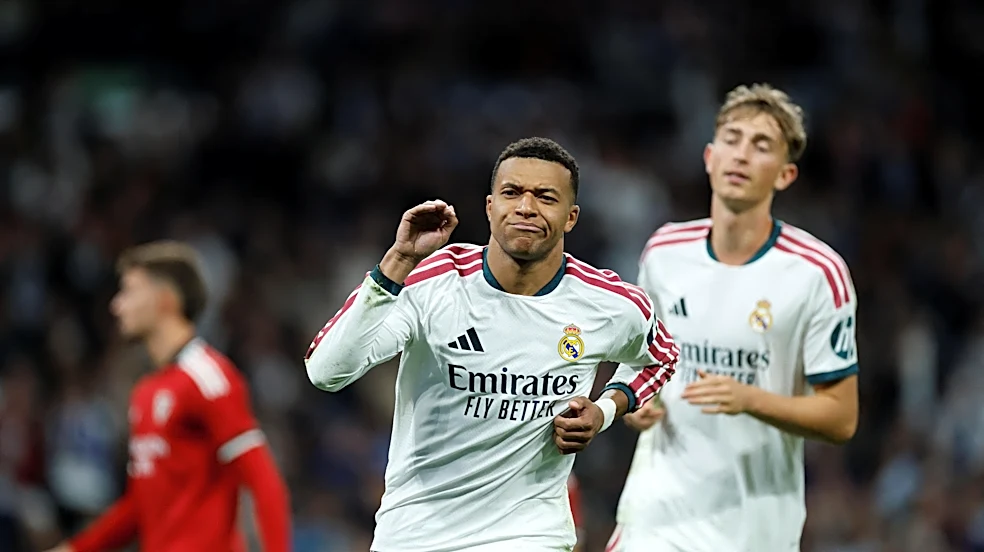
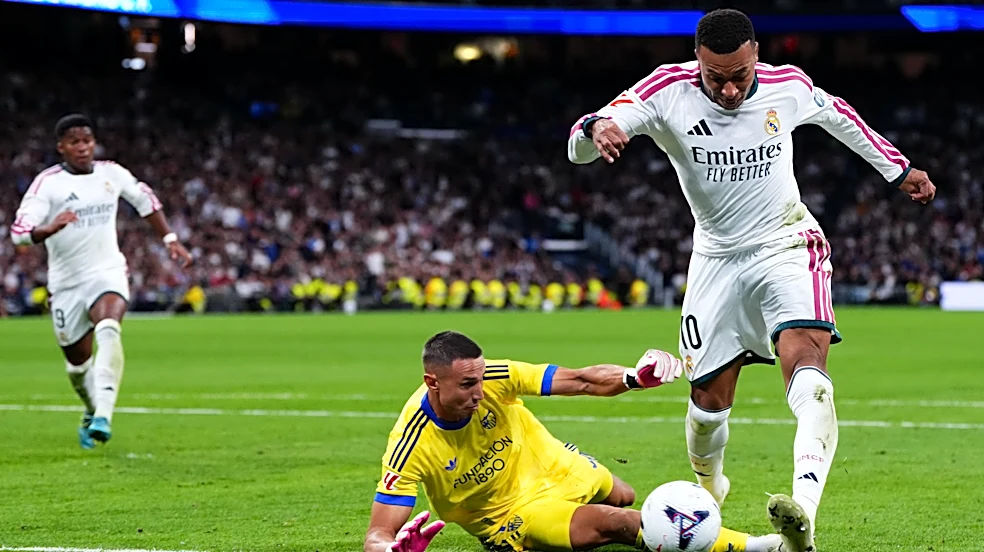
alongside Tchouaméni, and Jude Bellingham operating in a more advanced role. Diomande and Endrick started either side of Kylian Mbappé, with Huijsen providing a solid foundation for ball progression at the heart of the defence.
This is the most dynamic starting XI we’ve seen from José Mourinho so far.
The Axis of Ball Progression
Huijsen, Güler, Trent and Federico Valverde

There are four players who should form the foundation of the XI.
Trent and Valverde are arguably our best combination on the right-hand side. Trent offers the passing range to break opposition lines and switch play, while Valverde provides the mobility, intensity and defensive work rate to cover ground and support the attack. Together, they offer multiple avenues for progression without necessarily sacrificing defensive balance.
Huijsen and Arda, meanwhile, provide the line-breaking passes that make our possession game effective. Their ability to bypass opposition lines should encourage runners further up the pitch, giving Bellingham and Mbappé more opportunities to attack space rather than having to drop deep to help build attacks.
Mourinho must surely have caught a glimpse of his best XI against Sevilla. I would make just one change: bring Trent in at right-back in place of Endrick, moving Valverde into midfield.
That adjustment would preserve the dynamism we saw against Sevilla while introducing a different dimension to our build-up. It would also give us a midfield capable of combining technical quality with the physical capacity to recover possession and defend transitions.
The question is whether Mourinho is willing to trust that balance.
The Return to a 4-3-3

José has shown signs of adapting to his squad, albeit rather slowly.
His appetite for risk is tempered by the need for a solid defensive plan, one that doesn’t revolve around Courtois being a Man of the Match candidate every single game. Yet this squad appears to offer little defensive security regardless of how the team sets up. The pressing is often disjointed, too, leaving the team vulnerable even when its structure ought to provide protection.
Mourinho might find himself leaning towards Carletto’s approach before too long. A return to the 4-3-3 could be less a concession than an acceptance of what this squad does best.
The double pivot offers obvious advantages. Two midfielders protecting the centre can make it harder for opponents to play through us, provide additional cover when possession is lost and reduce the burden on the centre-backs. For a manager who prioritises defensive security, abandoning that arrangement is no trivial decision.
But there is a trade-off. With two midfielders committed to the base of the midfield, we can struggle to get enough players between the opposition’s lines. The distance between our build-up and our attack can become too great, leaving our forwards isolated and forcing our most creative players to operate further from goal.
A 4-3-3 potentially solves that problem by giving us another midfielder to connect the phases of play. Arda can influence the game from deeper positions, Bellingham can attack space further forward, and Valverde can provide the energy to support both phases from his Right-sided position. Rather than asking the double pivot to provide all the security and progression simultaneously, we distribute those responsibilities across the team with Huijsen at CB, Trent and Fede on the right and Arda in the heart of midfield.
Of course, the single pivot introduces its own risks. Tchouaméni would have greater responsibility for protecting the defence, particularly when the full-backs advance and possession is lost. The two number eights would have to be disciplined in their positioning, and the team would need to press collectively rather than in disconnected bursts.
That is the real question: can we create enough defensive security through our collective structure without sacrificing the attacking freedom that makes this team dangerous?
Sometimes, acceptance is the first step towards silverware.
It’s Matchday
Up Next.. RB Leipzig
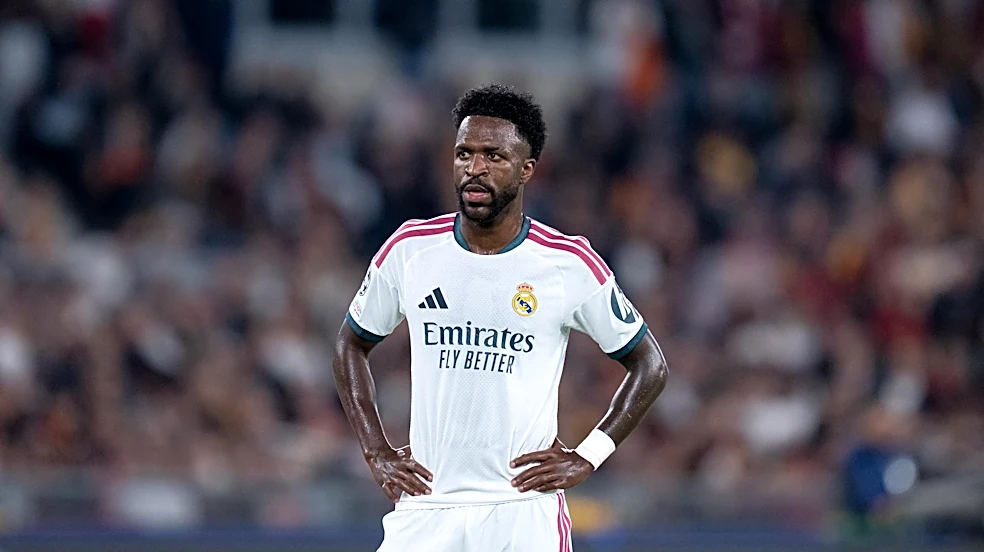
Vinícius Júnior returns to the lineup after watching arguably Real Madrid’s best performance of the season so far from the sidelines.
The Brazilian’s star has fallen, and he will be eager to prove himself. But has the team already offered a glimpse of an alternative?
Vinícius was not missed against Sevilla. That is a significant observation, even if one game is hardly enough to settle the debate. His individual quality is unquestionable, but the question facing Mourinho is how best to accommodate that quality without compromising the collective structure.
If the team has found greater balance and dynamism without him, does he return to his customary role, or must he adapt to the demands of a more fluid front line?
The challenge is not simply to find room for our biggest stars. It is to build a team in which their individual qualities reinforce one another.
Leipzig should offer another opportunity to see whether the progress against Sevilla represents a genuine change in direction or merely a promising performance.
FOOD FOR THOUGHT
What are the trade-offs of returning to the 4-3-3 and abandoning the double pivot?