




We are 57 days away from the Kansas City Chiefs
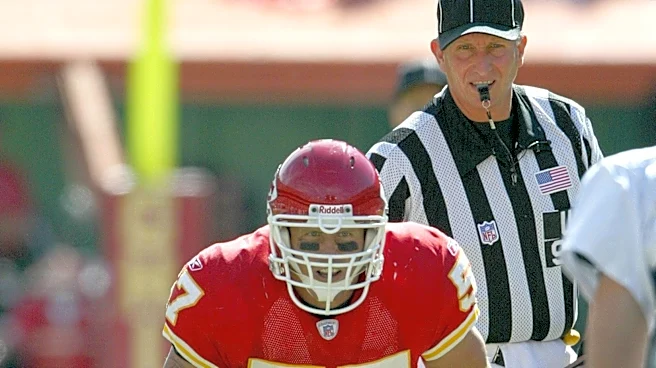
‘ season-opening game against the Denver Broncos on “Monday Night Football” in Week 1.The No. 57 is worn by defensive end Tyreke Smith, a 2022 fifth-round pick of the Seattle Seahawks who ended up on the Chiefs’ practice squad last year after being cut in the preseason. He was signed to the active roster for the final two games.
While we wait to see if Smith can earn the right to wear it on Sundays, here are the memorable No. 57s in franchise history:
The notable No. 57s in franchise history

Orlando Brown Jr. (2021 – 2022)
Mike Maslowski (1999 – 2003)
Chris Martin (1988 – 1992)
Jerry Blanton (1979 – 1985)
George Jamison (1994 – 1996)
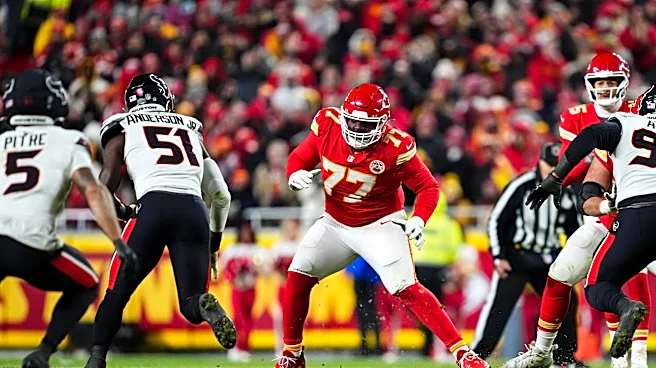
While it was a short stay in Kansas City, the trade with the Baltimore Ravens to acquire Brown proved a key factor in the offense’s return to elite form in 2022. The left tackle stabilized and raised the floor of the offensive line immediately after the infamous, dreadful performance by the unit in Super Bowl LV.
His contributions to a championship put him atop this group, but linebacker and special-teams ace Mike Maslowski deserves some elaboration as well.
The Division III, Arena Football League and NFL Europe standout worked his way to becoming the team’s Mack Lee Hill Rookie of the Year in 1999. In 2002, he set the team’s single-season tackle record (162) at the time in his only year as a full-season starter.
He started in 2003 as well, but missed time due to a knee issue that plagued him throughout his career. It would be his last season in football; he underwent a rare knee procedure the following offseason that ultimately ended his career.
57%: Kareem Hunt’s success rate on rushing attempts last season

Hunt finished sixth among qualified NFL running backs in rushing success rate, a metric that measures how often an attempt is a “positive” one based on down and situation.
The high mark is partially a result of Hunt’s usage (and effectiveness) on short-yardage plays, where a successful run requires just a yard or two, but there’s a bigger point to be made about the team seemingly having a high floor as a run game last season, but a very, very low ceiling.
It’s simple: a strong offensive line, particularly among the interior three spots, will get push up front and make initial room. It’s on the backs to raise the ceiling by maximizing the space given and making second- and third-level defenders miss in space.
It’s a positive indicator that the major talent upgrade to Kansas City’s backfield this offseason could be the solution to deploying an impactful rushing attack.