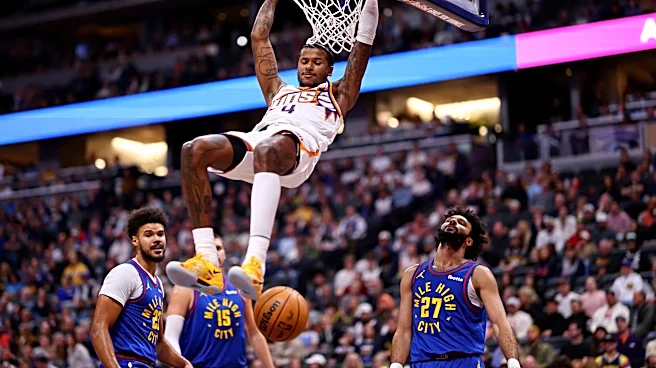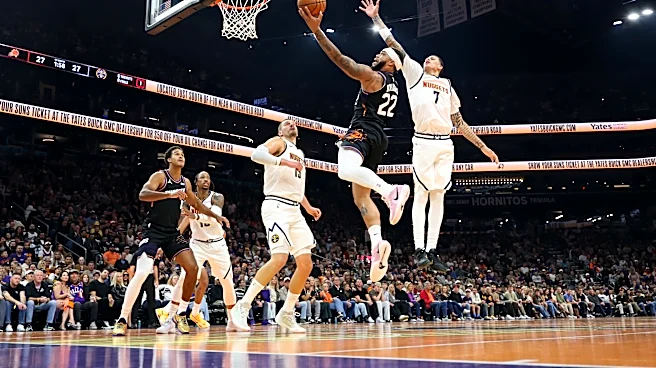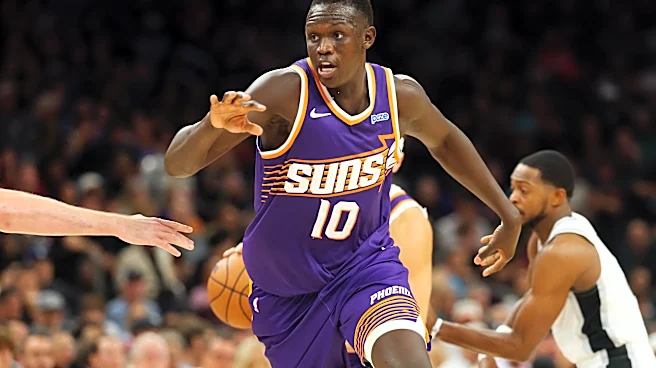




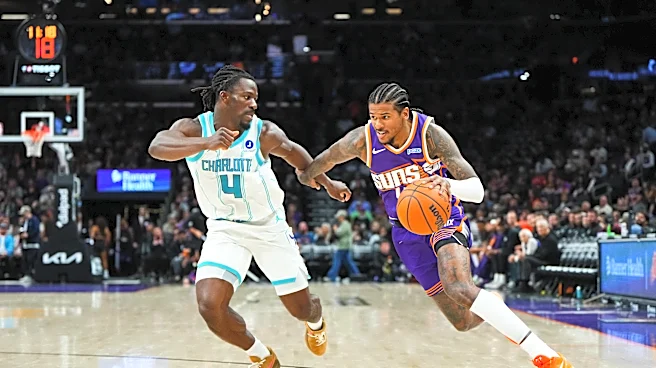
There are a few things in this world I know to be true. Well done is better than well said, you should never hug a cactus, and the center position production for the Phoenix Suns has been less than stellar thus far this season. It’s been a conundrum for head coach Jordan Ott to navigate since the original blueprint was disrupted in September, when Mark Williams tore his left labrum and required surgery.
The original blueprint? Start Williams, have Oso Ighodaro come off the bench, and weave opportunities
for Khaman Maluach’s continued development throughout the season. Perhaps those opportunities would come on the second night of a back-to-back, on nights when Williams needed rest, or in the likely scenario that Williams would miss a week or two due to injury. Instead, the significant injury to Williams derailed the entire plan, leaving Ott to navigate 48 minutes of basketball each night with some combination of Ighodaro, Maluach, and dreaded small-ball lineups.
There’s a particular contingent of the Suns’ fan base that seemingly despises what Oso brings to the basketball court. Whenever he has a particularly bad game, the drums begin rhythmically beating louder, like the inhabitants of Skull Island awaiting the arrival of Kong.
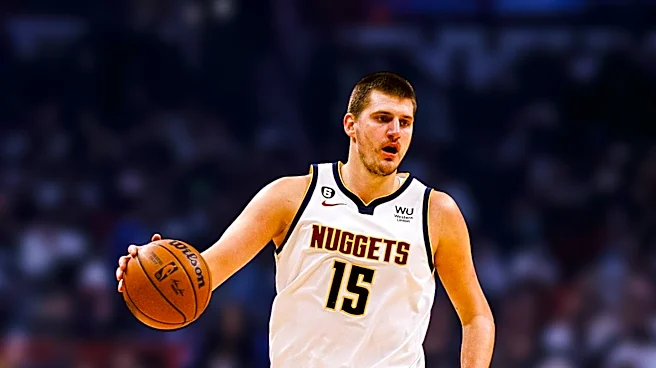
Guess what? When you go up against Nikola Jokic and the Denver Nuggets, chances are whoever is occupying the starting center position is in for a long night. Jokic is a three-time MVP who went for 28 points and 15 rebounds in the Suns’ victory on Monday night. Yet the anti-Oso crowd will inevitably use that performance as another data point to justify why his presence in the rotation is unwarranted.
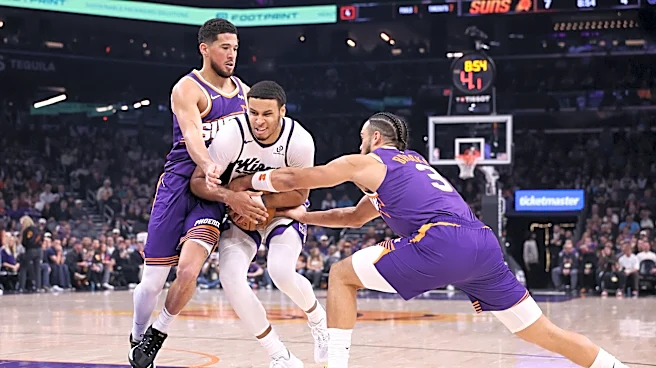
Don’t get me wrong, I have my frustrations with Oso as well. One of the things we witnessed against both Denver and San Antonio, two teams possessing exceptional centers of All-NBA caliber, was how intelligently they exploited Ighodaro’s offensive limitations. Whenever Oso received the basketball above the break, his defender sagged off considerably, essentially operating as a free safety while the other four defenders stuck to their assignments like glue. There’s little reason to respect Ighodaro as a scoring threat from that distance because you know he’s not going to pull up from 18 feet and bury a jumper in your face.
Why bother defending him out there? You can dedicate that defensive resource elsewhere, clog the interior, disrupt passing lanes, and make life considerably more difficult for the other four Suns on the court. It’s sound defensive basketball, and until Oso gives opposing defenses a reason to alter that approach, it’s a vulnerability that intelligent teams will continue to exploit.
Still, I don’t entirely understand why some people are so vehemently opposed to Oso Ighodaro. Is it simply because he doesn’t possess a jump shot? Is the allure of Khaman Maluach the answer because he can shoot a three-pointer, even though he doesn’t make them with much regularity? Is there an infatuation with the modern stretch five archetype, much akin to the love affair some fans have with the traditional point guard archetype? Are we perhaps more enamored with the idea of what a player could provide than what he’s actually providing?
I’m not sitting here suggesting that Oso is a complete basketball player. He has his limitations, and they’re well documented. But he’s a quality facilitator, as he’s third on the team in assist points created (behind Booker and Gillespie). He’s an excellent screener, leading the team in screen assists. He’s a stellar rim runner and an average rebounder*. There is value in those attributes, even if they don’t fit the archetype some envision for the center position.
*he gets pulled out to the perimeter on so many switches, it’s hard to grab the defensive rebound when you’re 24 feet from the rim
Ultimately, I think this requires an acknowledgment that the Suns aren’t in a particularly great spot at center right now. We can’t go around pissing and moaning every time one of our players gets owned by a future Hall of Famer. Nor should we be in the business of pitting our two young centers against each other, as though advocating for the development of one requires diminishing the value of the other.
The Suns are navigating a difficult situation due to an injury, and we’re witnessing Khaman Maluach’s development in real time. We’re only 14 games into his second NBA season, and at this point, I don’t believe he’s equipped to handle the full responsibilities of being a starting center.
Yet. Yet!!
That’s the operative word here. I believe he will be one day, and the developmental path the Suns currently have him on can lead him there. It’s a process, one that is rushed far too often in professional sports because our desire for immediate results supersedes our appreciation for long-term development.
So if you’re someone who falls into the anti-Oso camp, consider that his presence is helping set the table for the future. By absorbing responsibilities that Maluach isn’t necessarily ready to handle, Ighodaro affords his younger teammate the opportunity to develop at a more reasonable pace. You can be excited about what Khaman Maluach might become while still appreciating what Oso Ighodaro provides today. There’s room for both.