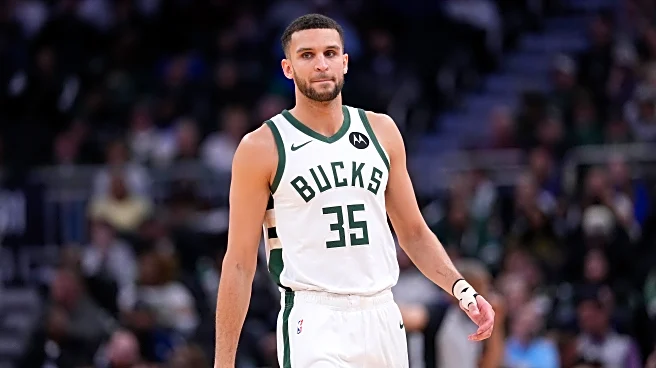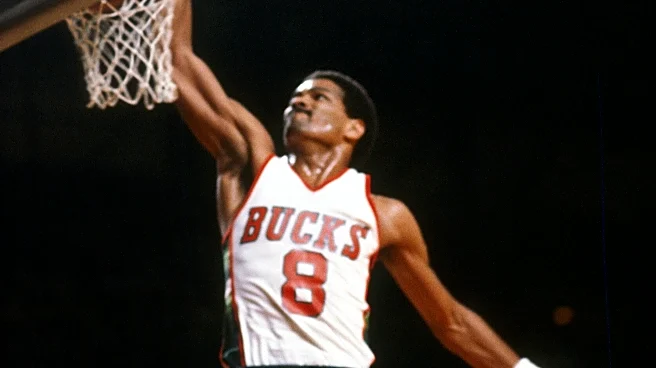

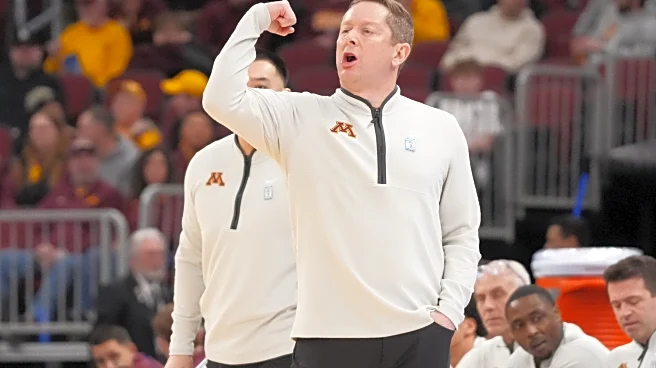
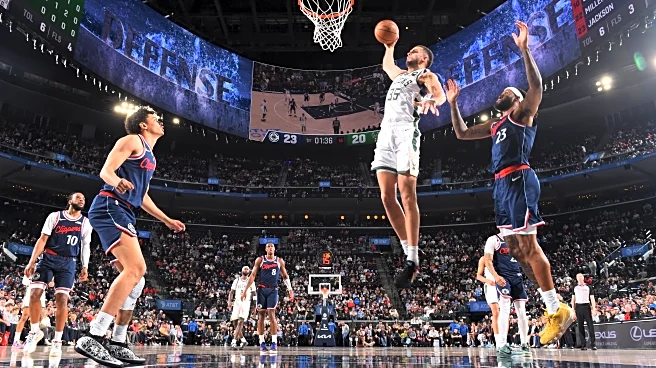
On April 4, the 2026 Naismith Basketball Hall of Fame class of 2026 will be unveiled ahead of the NCAA’s Final Four. As you may recall from about a month ago, the Bucks have two prominent names announced as finalists: head coach Doc Rivers and franchise legend Marques Johnson. The induction will take place on August 15 in Springfield, Massachusetts.
Both Milwaukee’s guys have been on the ballot before, though this is Rivers’ first year as a finalist. He’s a part of the North American committee nominees
alongside several other players, coaches, and a referee. He has to compete with four former All-Stars (Blake Griffin, Amar’e Stoudemire, Kevin Johnson, and Buck Williams), coaches whose success came at other levels (including Mark Few and former Bucks assistant Kelvin Sampson), and only one other former NBA coach (Dick Motta). As the sixth-winningest head coach in NBA history, he’ll get in at some point, if not this year.
Absent from the North American finalists was Johnson, a finalist in that category last year for the sixth time. In 2024, he was passed up in favor of Carmelo Anthony, Dwight Howard, referee Danny Crawford, Bulls head coach Billy Donovan, and the 2008 US Olympic men’s team. Though MJ should still be eligible as a North American committee nominee per Hall of Fame candidacy rules, he made it as the only finalist from the veteran committee this year, who did not nominate anyone in 2025.
This direct-elect committee nominates those who have been out of the game for at least 35 years. Johnson’s NBA career ended in 1989, though he played in Italy into 1990, so perhaps he was also eligible for veteran committee nomination last year. Multiple players eligible for that committee have still been inducted by the North American committee (Maurice Stokes, George Yardley, Vern Mikkelsen, and Dick McGuire), for what it’s worth.
Some notable names nominated by the veterans committee who MJ beat out this year to become a finalist are World B. Free, Willie Nauls, Paul Silas, Dick Van Arsdale, and Gus Williams. And there are plenty of deserving players in Springfield who made it in the same way. Here is a list of Hall of Famers inducted via the veterans committee, starting with the most recent:
- Dick Barnett
- Lou Hudson
- Bob Dandridge
- Carl Braun
- Charlie Scott
- George McGinnis
- Zelmo Beaty
- Guy Rodgers
- Richie Guerin
- Chet Walker
- Gus Johnson
- Arnie Risen
- Buddy Jeannette
- Harry Gallatin
- Neil Johnston
- Pop Gates
- Bob McDermott
- Bobby Wanzer
- Al Cervi
There are a couple of names Bucks fans should be familiar with. Like Johnson, Dandridge is a franchise icon, plus a four-time All-Star and two-time NBA champion. Guy Rodgers was an inaugural 1968 Buck to end his career, but was also a four-time All-Star before Milwaukee. Others you may not have heard of, so I want to highlight Johnston and McGinnis. Both should have been in Springfield far sooner than 1990 and 2017, respectively. The former was one of the NBA’s first true stars, leading the league in scoring three times in the early 50s, won a title with the 1956 (Philadelphia) Warriors, and was First-Team All-NBA four times before Bill Russell and Bob Pettit took over the league.
McGinnis was probably the ABA’s second-best player in the early 70s behind Julius Erving (they were actually co-ABA MVPs in 1975), his eventual teammate in the NBA from 1976–78, though McGinnis made the move first. He immediately made first-team All-NBA and garnered three All-Star nods after joining the association. His 17,009 combined NBA and ABA points scored over 11 seasons exceed what Bob Cousy, James Worthy, and Joe Dumars accumulated during longer careers exclusively in the NBA, to name a few.
Last year, I wrote extensively about why Johnson needs to be in the Hall of Fame. In short, his achievements from both his professional and collegiate careers certainly merit induction, and lesser-accomplished players have been members for years, some enshrined much more quickly. Some of those players whose cases weren’t as good as Johnson’s, like Maurice Cheeks, Calvin Murphy, and Ralph Sampson. I’ll add another feather in his cap this year using Basketball Reference’s Hall of Fame Probability model, which weighs the five major counting statistics alongside championships and All-Star selections. Definitely imperfect because it doesn’t factor in major awards like MVP and All-NBA (Bill Walton’s is 2.4%), but of the 109 retired players above 50%, 101 are already in.
Johnson’s probability is calculated at 25.2%, higher than the following inducted players, all of whom 100% deserve to be there (descending order):
- Arnie Risen
- Bob Davies
- David Thompson
- Manu Ginobili
- Jamaal Wilkes
- Bob Dandridge
- Billy Cunningham
- Earl Monroe
- Chris Webber
- Bernard King
- Bobby Jones
- Pete Maravich
- Spencer Haywood
- Guy Rodgers
- Gus Johnson
- Connie Hawkins
A lot of all-time greats; three inducted from the veterans committee (Dandridge, Rodgers, and Johnson), and three (Cunningham, Monroe, and Maravich) who were on the 50th and 75th anniversary teams. To be sure, there are plenty of other guys below Johnson who don’t really deserve induction; of the five retirees above him that are between 25%–50% (Shawn Kemp, John Wall, Jermaine O’Neal, Penny Hardaway, Bill Laimbeer), some certainly have questionable cases. But MJ’s name belongs atop the bullet-point list above.
In baseball, notoriously the most selective Hall of Fame among the major sports, their veterans committee has sometimes functioned as a way to correct omissions and admit players who fell off ballots, because unlike Naismith, Cooperstown has eligibility limits. It has selected a member of the 3,000-hit club (a milestone only 33 players have achieved in 120+ years), a 300-game winner (24 players), the pitcher third all-time in saves, and someone seven shy of 500 home runs, another round-number club considered exclusive. All of these guys didn’t get in the “traditional” way, for one reason or another, but just like the first-ballot selections (Babe Ruth, Hank Aaron, etc.), they are Hall of Famers.
There is never any distinction made between the veterans committee selections and players who were elected by the Baseball Writers’ Association of America, the route some consider more prestigious. Once in, there’s no difference between Mariano Rivera, the only player ever voted into Cooperstown unanimously, and Jeff Kent, 2026’s Veteran Committee inductee. Again, they are both Hall of Famers. No one refers to either as anything but. Same thing in basketball. Neil Johnston is as much a Hall of Famer as his contemporary George Mikan, the first player ever voted into Springfield.
Sure, some are known as “first-ballot Hall of Famers,” but that has as much to do with timing as anything else. The list of all-time greats who didn’t get in right away in either hall isn’t short. George Gervin, Wes Unseld, Walton, and several others were voted among the 50 greatest players in NBA history in 1996, but they all had to wait at least one year. “First ballot” isn’t as meaningful when you see who else didn’t get in right away.
Ultimately, selection method and date are immaterial. Basketball Hall of Famer is the prestige awaiting Johnson upon becoming a veteran committee finalist, just like it was for many other deserving players. Since 2000, 14 of the 21 players the committee put forward secured election in their first year. So it seems almost guaranteed that this year, Springfield will finally correct one of their more glaring oversights, even if it’s late.