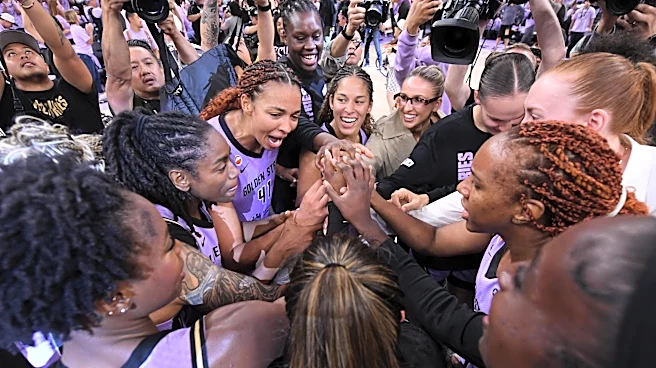


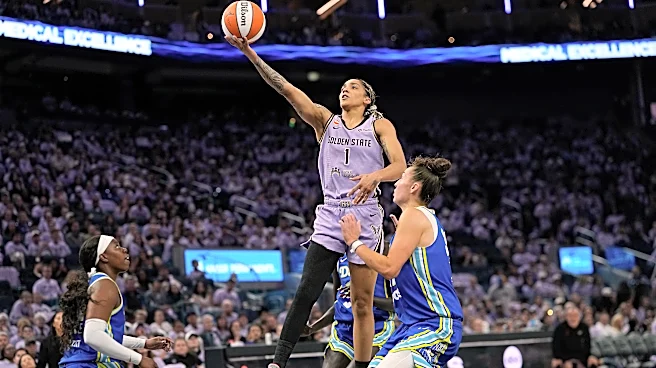
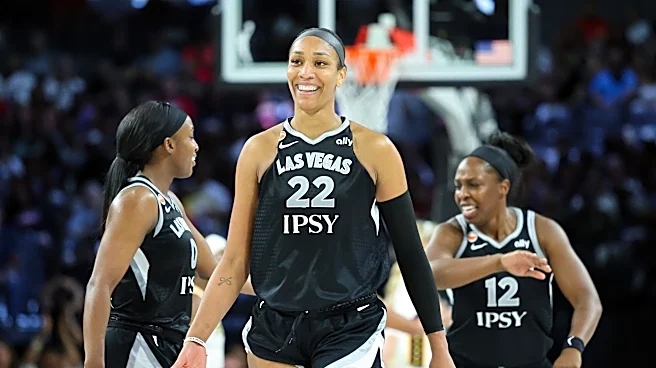
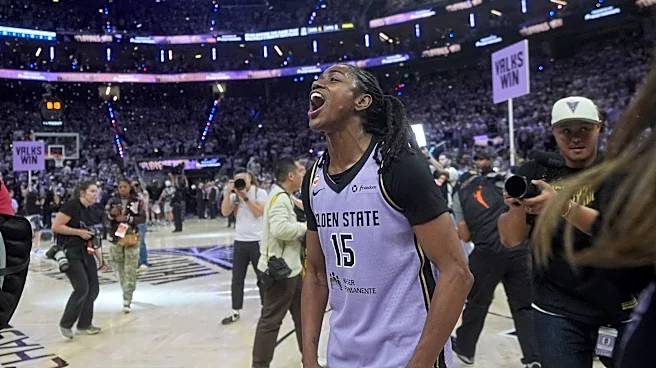
The Golden State Valkyries are marching on in the 2026 WNBA Playoffs, prevailing over the Dallas Wings in the first-round before taking Game 1 of their semifinal series against the Las Vegas Aces.
While it’s exciting to see such a new team have so much success, how they got here—and how it’s a different path than other WNBA powers—should also be appreciated.
The Fever and Aces team builds can’t sustain under the new WNBA CBA

One of the most effective, or at least easiest, team-building strategies in the WNBA ha been through young stars.
Rookie contracts are downscaled
despite the amount of young talent entering the league, so teams led by players on rookie deals have greater flexibility to surround them with big contracts.
The Indiana Fever demonstrate this strategy well.
Aliyah Boston signed an EPIC extension that slotted her onto supermax-structured deal this past offseason, paying her 20 percent of the Fever’s total cap allowance each year from 2027 and 2029, in addition to a base one million dollar salary in 2026. Caitlin Clark will assuredly walk into her own high-dollar EPIC extension at the end of 2027, meaning that the Fever will have 40 percent (or more) of their salary cap tied up into two players. That makes it virtually impossible for them to roster an experienced talent like Kelsey Mitchell, who they’re paying $1.4 million this season. If they felt like a third star was conducive to playoff success, they would forfeit their ability to roster serviceable or desirable role players. Mitchell has already indicated that she’ll be exploring options as an unrestricted free agent this offseason, and it feels unlikely that she’ll be in Indianapolis at the end of Clark’s rookie deal.
But, this isn’t about the specificities of the Fever’s future. This is more about the fact that the Fever’s current roster building only works because Clark is on a rookie contract. Without that financial break, they wouldn’t be able to have such an excess of talent.
Opposite the Fever’s situation is a team like the Aces.
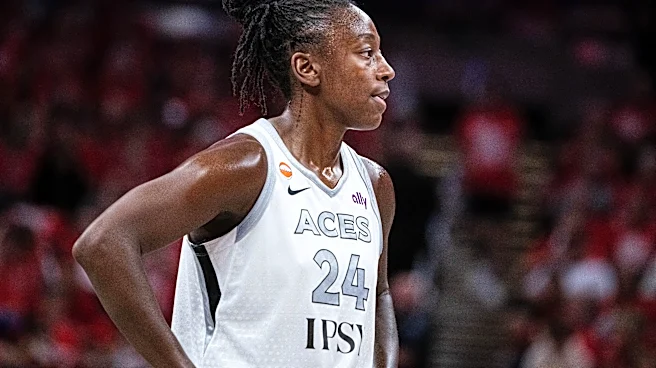
The Aces cap is severely top-heavy, with three players making more than $1 million and Jewell Loyd trailing closely over at over $800,000. With 62 percent of their salaray cap allotted to four players, Las Vegas has both limited their ability to employ impactful role players and tied up money in relatively untraceable contracts. Chelsea Gray earned her money, no doubt. But a $1.1 million payout to a 14-year veteran in 2028 will be hard to work around, even if Gray maintains her 12-point and seven-assist averages. Age and production considered, that’s an almost impossible contract to move if Las Vegas wants to go in a different direction.
A similar story could be told about Loyd. Loyd is a 12-year veteran averaging eight points per game on below average shooting splits who will be making over $800,000 until the end of 2028. If the Aces core production around A’ja starts to falter, their front office has made it extremely difficult to become younger without sacrificing contention. If they had more tradable contracts or overall flexibility, they could have potentially moved off of Loyd in the next couple of seasons and recieved a return of younger or better role players.
Such a top-heavy approach to team building is great while everyone is performing, and obviously the Aces won the championship last year, so they’ve reaped the rewards of those contracts.
But if there was a way to build a more sustainable team while still contending for championships, wouldn’t that be more attractive?
The Valkyries are charting a new, sustainable team-building vision

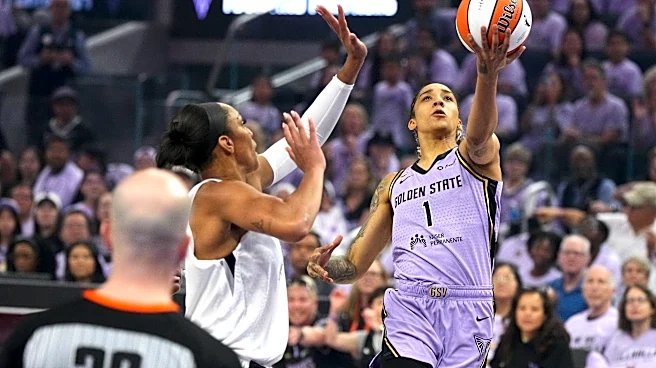
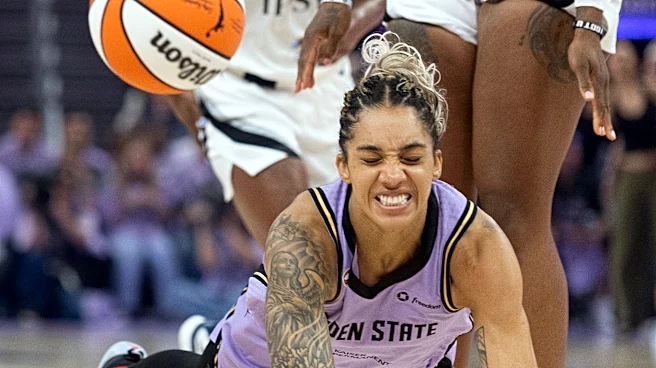
On Sunday, the Valkyries bested Las Vegas in the first game of their semifinal series, 71-60.
Compared to the Aces, who have three players making over $1 million, the Valkyries have one: Gabby Williams.
Williams was signed by the Valkyries in the offseason, becoming their first player on a million-dollar contract. She was coming off an 11 point-per-game season in Seattle, and while she was an All-Star and Defensive Player of the Year candidate, it’s likely that Golden State could have landed her for even less than they did. However, they had to meet the cap floor and were happy to use vacant money towards Williams.
After their top three, the Aces have four total players making between $300,000 and $1 million. The Valkyries have nine—and it shows. Las Vegas’ top three combined for 51 points in Game 1 of the semis, but their next seven players only scored nine total points in game one. That includes Brianna Turner and Jewell Loyd, who both started. In comparison, Golden State’s three highest-paid players combined for 37 points, but the rest of their team scored 34.
Even more importantly, the Valkyries have claimed one of the best team defenses in league history. So not only is their supporting cast scoring the basketball at a much more consistent rate, they’re playing pivotal roles in a machine that held opponents to 99.3 points per 100 possessions in the regular season—best in the league by over five points.
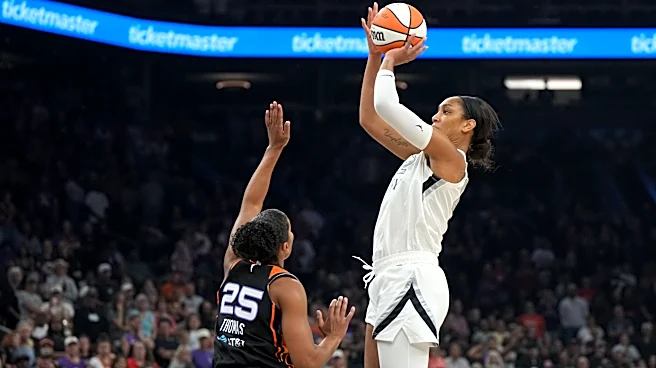
Obviously, the Aces will likely win games this series, and could definitely see another trip to the Finals over the Valkyries. But in the second year of their existence, Golden State has launched towards contention without traditional star power. Wilson will have a greater impact than Williams far more often than not. But the Aces’ supporting cast has been historically inconsistent, while the Valkyries look like a well-oiled machine on both sides of the basketball.
And finally, while the Aces have locked millions of dollars up into veterans with more than 12 season of experience through 2028, the Valkyries have an abundance of tradeable contracts if they feel like it’s in their best interest to get younger. If a team like the Aces want to pivot to a younger roster, they will have to wait out their veteran contracts and go into a full rebuild where they would possibly sacrifice their ability to contend. In comparison, Golden State could easily package their mid-sized contracts for picks from a team needing role players, and restructure their team without taking years off their team-building timeline.
Indiana, Las Vegas and Golden State all made the playoff and are all formidable franchises.
The point of this is not to belittle any of the three rosters, or claim that one is “better” than the other. But in the excitement of their on-court success, it should also be constantly remembered that the Valkyries have gotten to this point with exceptional roster flexibility and contract scale, meaning that they may very well stay in contention for a long time.