




The Portland Trail Blazers have a long and storied NBA history. Their accomplishments include one NBA Championship, three NBA Finals appearances, and a large group of passionate, dedicated fans who care about the franchise as much as they care about breathing.
Periodically, though, the idea gets floated that NBA players don’t want to come to Portland. The Blazers haven’t signed many prominent free agents over the years. When LeBron James supposedly decides between multiple destinations to continue
his career, Portland is never, ever mentioned.
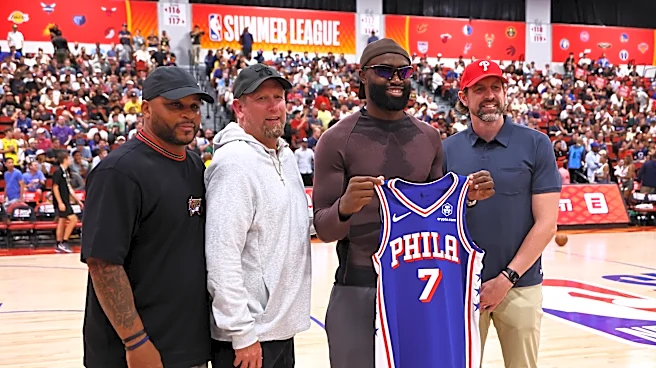
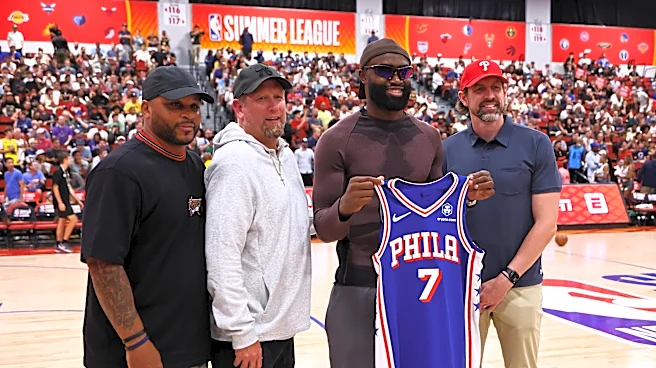
The latest example came when the Blazers supposedly showed interest in former Boston Celtics wing Jaylen Brown. The MVP candidate was eventually traded to the Philadelphia 76’ers for some magic beans and a pet rock. (Ok, Paul George and a couple of first-rounders, but you get the idea.) Portland probably could have beaten that offer. Among the explanations floated for their absence in negotiations: Brown might not have wanted to come to the Pacific Northwest.
That possibility is plaguing this reader of the Blazer’s Edge Mailbag. Check out their question:
Dave,
Reports are now saying that [Jaylen] Brown didn’t want to come to Portland. Can you explain why? If the money is good and he has a chance to win then what’s keeping him and players like him away? Is it just small market phobia? Is it fear of the new owner? Can you explain this to me? Who wouldn’t want to play with Dame [Damian Lillard] and Deni [Avdija]?
Carol
Small market may have something to do with it, but there are lots of small-market teams across the league. San Antonio, Oklahoma City, Memphis, and New Orleans are all smaller than Portland. Minnesota, Detroit, Orlando, and Miami aren’t that much bigger.
Geographical isolation may factor in. The Blazers are tucked in a corner of the country where, at least for now, no other NBA teams lie. That adds to the “middle-of-nowhere” vibe, accentuating the small-market-ness somewhat. It also means that few, if any, players will have passed through Portland in any serious way. It’s not exactly on the beaten path. It’s not a destination city or cultural hub for young folks, rich folks, or NBA glitterati. There are plenty of good things about living in the Pacific Northwest in general, in Portland in particular, but if you’ve never experienced or considered them, they don’t matter.
But these things alone do not explain why a player wouldn’t think of Portland first. They also apply to most of those other smaller-market teams.
To understand the real answer, we have to phrase the question correctly.
We instinctively ask: why would a player not want to play in Portland? We can counter any answer with all the good things about the city, area, and franchise.
But that’s not the right question. The real question is: why would a player want to play in Portland? A response to that is harder to conjure.
It’s not enough to combat the negative, to say, in essence, “We’re just as good as anyone else!” That’s true. But so what? That’s like a fast-food joint setting up shop and saying, “Hey, our burgers are just as good as anyone’s!” So? Why would I bother to choose you, then? Your place is out of the way. It’s new, so trying it is a risk. And McDonald’s is literally sitting right there. If that’s your marketing pitch, why wouldn’t I just go get a Big Mac and be done with it?
The Blazers have had several periods where they could boast more than neutral status. During the Championship years and their immediate aftermath, then again during the Clyde Drexler Era, the team enjoyed huge success on the court. That’s a sales point. If you wanted a legit chance of winning a title, you could come to Portland. The franchise had one stretch in the mid 1990’s when then-owner Paul Allen was writing checks to anybody with a prominent name, paying players left and right. That was also a sales pitch. People were happy to come to Portland because they knew the Blazers would take care of them.
Outside of those eras, the Trail Blazers haven’t offered anything distinct to the NBA that other teams could not also boast. (You could make a case for Damian Lillard’s ascension to the national spotlight in the 2010’s, but that was more about Lillard than the franchise. As soon as Dame left, so did the distinction.) If you thought really hard right now, you’d probably have a hard time naming one thing that makes the Blazers fundamentally different than the Utah Jazz, the Sacramento Kings, the Minnesota Timberwolves or Denver Nuggets. In fact, Portland is behind some of those franchises, because those other guys have actually won while Portland hasn’t.
Functionally, that leaves the Blazers as one of a dozen non-descript teams competing for a small group of elite players. All of those are gathered in a pool of unlikely candidates who are themselves competing against the Lakers, Clippers, and destination markets around the league. Even among the also-rans, Portland doesn’t matter much right now. The distance between that and Repository of Stars is vast.
Nothing is wrong with Portland! They’re perfectly functional, the same way a compact Honda or a Kia sedan are functional. They get you where you’re going and even have some nice amenities. But the best NBA players have millions to spend, brands to build, and invitations from multiple teams waiting for them anytime they want. Blue Collar Joe and Teacher Sam may love those Kias and Hondas. All-Star Guy can afford a custom Lamborghini. Given that, it’s kind of understandable—natural, even—that, when offered the nice Honda, he’s going to say, “No thanks.”
If they want to get out of the nobody-notices, also-ran pool, the Blazers are going to have to find some way to distinguish themselves. On the court would be best. Winning speaks for itself. But if they can’t do that, they’ll need to become the franchise that takes better care of people than anybody, that pays more than average, that has a dynamite, firecracker front office with the golden touch. Whatever it is, they need to stand out, not just fit in.
It’s not good enough to be good enough. At least not in Portland. If the Blazers don’t shine in an obvious way, nobody is going to care. Since they’re not and haven’t been for a while, we shouldn’t be any more surprised about elite players saying they’re passing up Portland than we are with them passing up Milwaukee, Sacramento, or Utah. That’s not an insult. It’s just life.
In the end, the Blazers need to do what everybody who finds themselves in this situation needs to do: work on yourself. Go to the gym. Get therapy. Improve your earning power. Figure out how to get out there and make friends. Whatever it is, it’s no good sitting at home, looking at TMZ and Tinder, wondering why all the candidates you’re attracted to are dating other people and not you. If you didn’t get Jaylen Brown or LeBron James, well, someone else will come along eventually. What will they see when you say hello? That’s the operative question. Work on that, then let everything else take care of itself.
Thanks for the question! You can always send yours to blazersub@gmail.com and we’ll try to answer as many as possible!