



If you’re choosing not to watch the rest of the MLB postseason, I don’t blame you at all. However, something interesting happened in Game 2 of the NLCS, something that prompted me to reflect on the Yankees’ performance (or lack of) against the Rays.
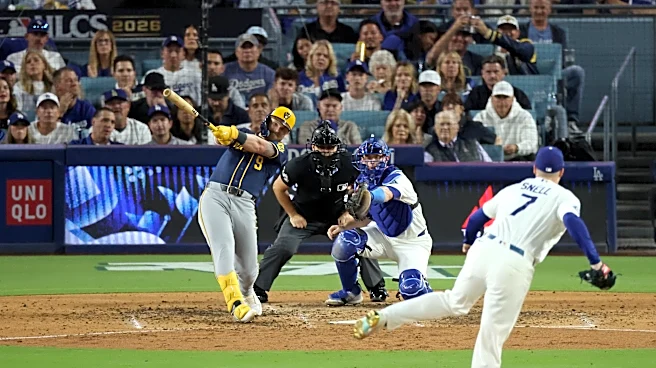
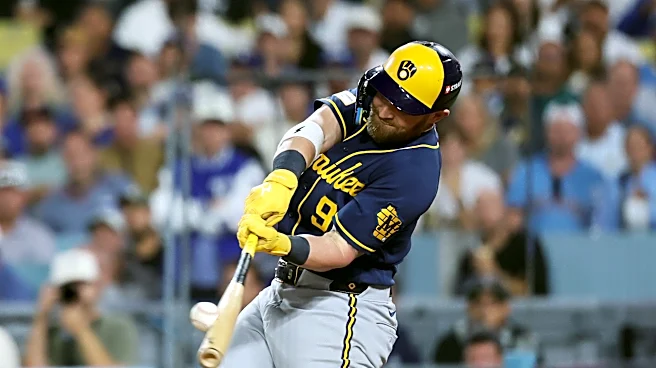
Down 1-0 against the Brewers, the Dodgers started Yoshinobu Yamamoto to try and even up the series. Yamamoto, if you recall, pitched a complete game against those same Brewers in Game 2 of last year’s NLCS, a first-pitch Jackson Chourio homer the sole
blemish on his ledger. This year, however, the Brewers were ready. Taking full advantage of a slightly off Yamamoto, they worked counts and grinded at-bats, chasing him after 2.2 innings, 75 pitches, and 3 runs allowed. Milwaukee went on to win 7-4, completing their revenge.
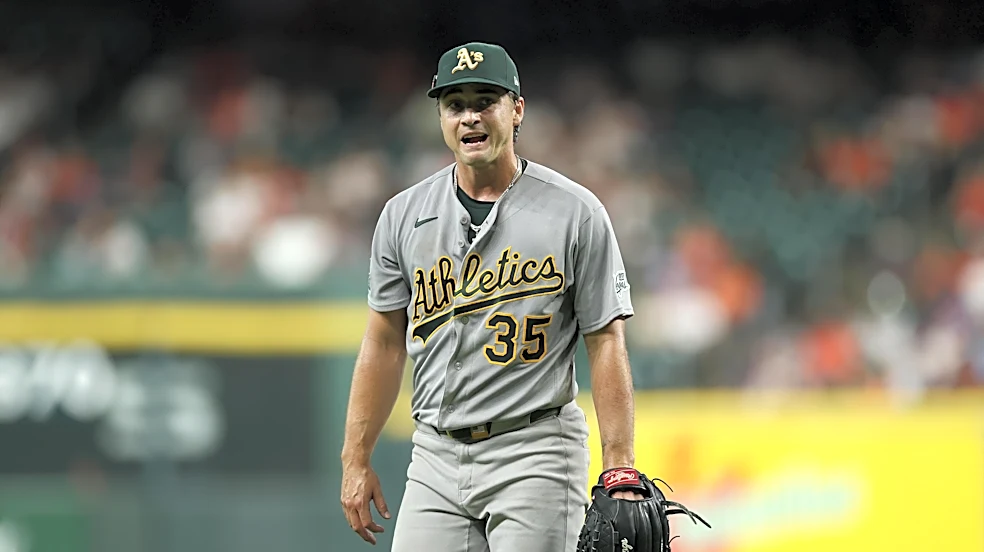
Here was an example of a smart team beating an excellent pitcher who had confounded them in the past. Contrast this with how the Yankees utterly folded against Drew Rasmussen in Game 1 of the ALDS. Why couldn’t the Yankees do as the Brewers did?
Now, I realize that overcoming elite pitching is a tall ask. It’s possible that not even the Brewers could have solved Rasmussen based on how good he looked that night. However, what irks me isn’t the end result, but the process. The Yankees had seen Rasmussen quite recently; he’d beaten the Bombers to clinch the division for the Rays on September 22. The Tampa Bay ace used the same gameplan for ALDS Game 1. However, the Yankees appeared to have done no homework, looking completely unprepared to counter his approach.
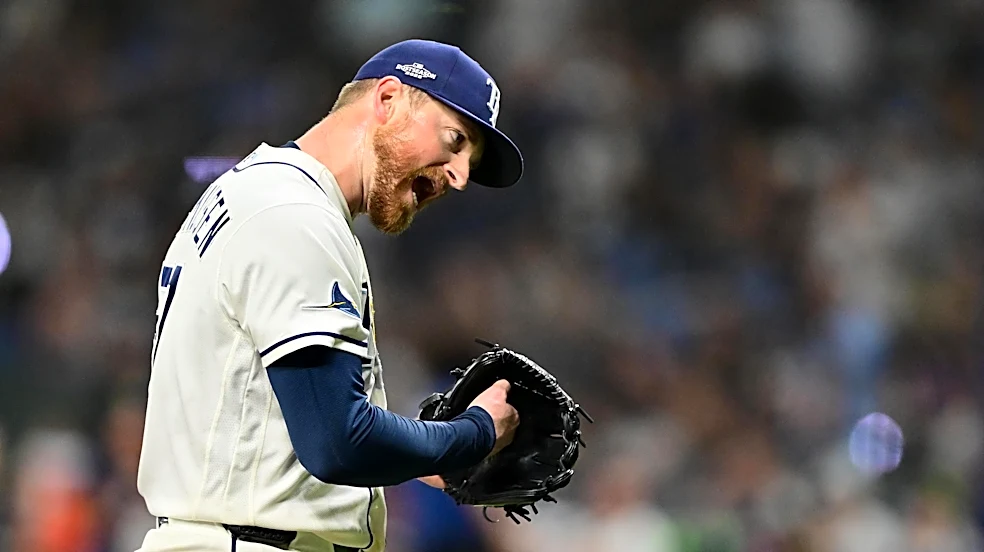
Rasmussen’s style of pitching can be summed up as: throw strikes that are hard to punish. The first part is easy to quantify. This year, 49.7% of his pitches landed in the strike zone, while the league average was 41.5%. He likes to attack batters early, as he ran a 67.1% first-strike rate (league average was 61.4%). Consequently, Rasmussen is extremely stingy about issuing free passes: his 4.8% walk rate placed him in the 97th percentile among all pitchers this season. This is a guy that is comfortable challenging hitters in the zone.
It’s the second part that sets Rasmussen apart from mere strike-throwers. The Rays ace has both the stuff (110 Stuff+) and command (106 Location+) to avoid damage while challenging hitters. While he is generally average at getting whiffs and avoiding contact, he limits barrels and hard contact extremely well (79th and 83rd percentile, respectively), and generates grounders at a comfortably above average clip (65th percentile). This is not someone you go hacking against.
Rasmussen’s strengths were on full display in that September 22 start. Rasmussen pitched 6.2 innings of 1-run ball, striking out 11 in the process. Of the 114 pitches he threw that day, 45.6% were in the strike zone, down from his season average but still above league average. However, the Yankees flailed helplessly against his stuff, making contact only 35 times out of 53 swings for an abysmal 66% contact rate. Even when they did make contact, it was mostly harmless. The Yankees managed just two hard-hit balls in fair territory against Rasmussen, both by Heliot Ramos of all people: a 107.3 mph lineout in the fourth, and a 110.5 mph double in the seventh. I count only two positives from that outing for the Yankees: they managed to make Rasmussen throw 114 pitches, and they coaxed three walks out of him. Other than that, they got schooled.
Now, I’m not going to sit here and tell you that the Yankees just needed to do X, Y, and Z to solve Rasmussen. There are no obvious answers to counter a guy this good. But at the same time, business as usual doesn’t cut it, either. If you’re trying to win against elite pitching in October, you need a team-wide, concerted approach.
For what it’s worth, if I was calling the shots, I would have instructed the Yankees to be extremely passive. I would have implored them to run deep counts, wait for mistakes, and to avoid expanding the zone at all costs. Groundbreaking, I know. But at least this puts pressure on Rasmussen to consistently execute, and while he’s a great pitcher, he’s not a robot. This strategy is also rooted in an honest appraisal of the Yankees’ strengths and weaknesses at the plate: they sucked at making contact (75.1% contact rate, 27th in MLB), but they were above average at avoiding chase (31.9 O-Swing%, 9th best). And if nothing else, this would have likely meant a higher pitch count for Rasmussen. Yes, he throws strikes, but more than half of his pitches still land outside the strike zone. Laying off those even once per at-bat would have resulted in a markedly higher pitch total for Rasmussen, forcing the Rays to go to their bullpen earlier.
However, the Yankees did none of that in Game 1 of the ALDS. Instead, they went up hacking. Their overall swing rate was 50.4%, up from their season average of 46.3%. They kept chasing pitches out of the strike zone; their O-Swing% for the night was 36.5%, much higher than their seasonal mark. They made contact on those pitches just 39.1% of the time, with their overall contact rate dipping to a truly pitiful 60.3%. All this chase and whiff prevented the Yankees from being able to run deep counts; of the 25 plate appearances against Rasmussen that night, 10 ended in three pitches or fewer. And that’s how they let Rasmussen dominate them for 8 innings and 101 pitches.
Again, I’m not saying that the Yankees would have easily solved Rasmussen if only they had been a bit more patient. They ran up his pitch count to 114 on September 22, and he still ended up limiting them to one run. What irritates me is the perceived lack of strategy. Surely, they had to have known about Rasmussen’s strengths. They should have known their own strengths and weaknesses as a team. Why, then, was their plan to just swing away?
I don’t have any insight on the inner workings of the Yankees’ organization. Maybe they were planning on being more patient against Rasmussen, but the plan was just executed poorly. Or maybe their increased aggressiveness was a conscious strategy based on internal data I don’t have access to. But watching Game 1, I couldn’t shake the feeling that the Yankees’ batters were just going up there with no real plan other than “try to hit ball”. It makes you wonder how the Yankees approached advance scouting and preparation for that all-important game – or whether they did so at all.