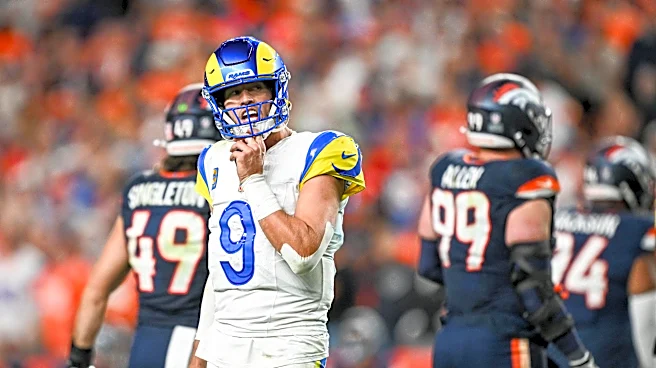


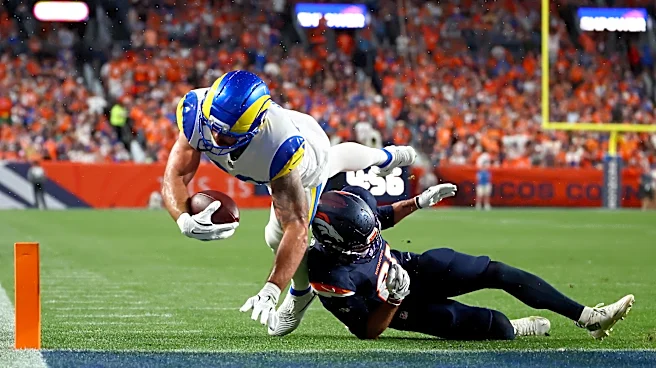
Matthew Stafford did not have his finest game against the Denver Broncos.
It wasn’t a complete disaster by any means for the reigning NFL MVP in Week 3. He completed a subpar 54.5% of his passes for a gaudy 390 yards and a pair of touchdowns, but it took him 55 attempts to get there and he also threw a pair of interceptions, both of which came in the fourth quarter (one of which was returned for a touchdown, one of which was on the final snap of the game).
When you dive into the advanced numbers, it’s
more of the same. In the loss, Stafford posted just .03 EPA/play, a success rate of just 43% and -0.1 completion percentage over expectation (all according toRBSDM.com).
Through three weeks, Stafford’s PFF grade is a flat 60.0, dead-on average by their grading scale. Now, PFF’s grading has always been flawed and is especially unreliable now given what that company has gone through in the last year, but a middling grade at least somewhat matches the eye test through three games.
There is one distinct and easy-to-grasp area in which the Rams and their star quarterback are struggling mightily, and it came to a head against the Broncos: pressure.
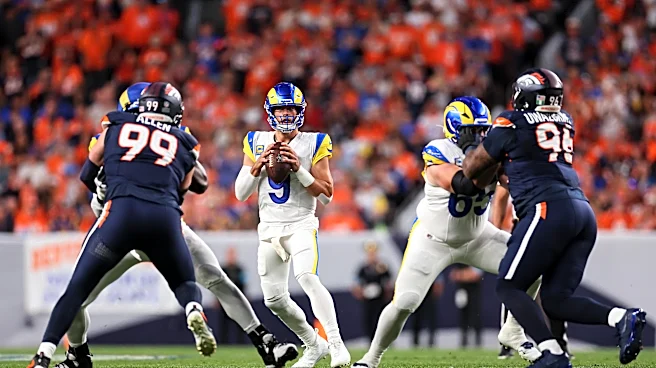
According to Next Gen Stats, when under pressure on Sunday night, Stafford was just 5-of-18 passing for 61 yards with the first interception of the night and he was also sacked four times. From a clean pocket, his fortunes couldn’t have been farther in the opposite direction, save for one play. He went 25-of-35 when kept clean, throwing for 329 yards and two touchdowns plus the desperation pick to close the game.
That’s 3.4 yards per attempt while under pressure, 9.4 yards per attempt from a clean pocket. It’s easy to understand why that is so devastating to an offense.
Obviously, no quarterback in the NFL is ever going to be free from pressure on every snap throughout a game, let alone a season. You have to deal with pressure constantly, especially going up against the league’s best defenses (a group you can still consider the Broncos to be included in). But when the disparity in success is that enormous, it puts even more emphasis on holding the line for your quarterback.
Things were even more stark in the second half when Denver made its comeback. The Broncos pressured Stafford on 57.7% of his second-half dropbacks this weekend, compared to just 23.5% in the first half (again from Next Gen Stats).
It goes without saying that this is something the Rams have to clean up going forward. Concerningly, this has been a trend through the first sixth of this season. Against the San Francisco 49ers in Week 1, Stafford was pressured on 44% of his dropbacks, the highest pressure rate he had faced since Dec. 2024. No one is going to tell you the offense was spectacular or even good in the opener, and no one is going to tell you they were impressed by the offense in the second half of Week 3.
Against the Giants in Week 2, by the way, Stafford only faced pressure on five dropbacks and torched that defense.
The offensive line was one area that drew some concern, or at least some sideways glances, leading into the season. There’s time to improve and it’s not like they’re wholly lacking talent. But this is a legitimate concern and one that needs to be fixed as quickly as possible. With an aging quarterback who’s not exactly fleet of foot, keeping him upright needs to be addressed urgently.
It’s too early to throw in the towel on this team, even at 1-2. That should be a given. But if there’s anything that can derail a title-contending season, your quarterback falling under constant siege and suffering the consequences of it would be at the top of the list.