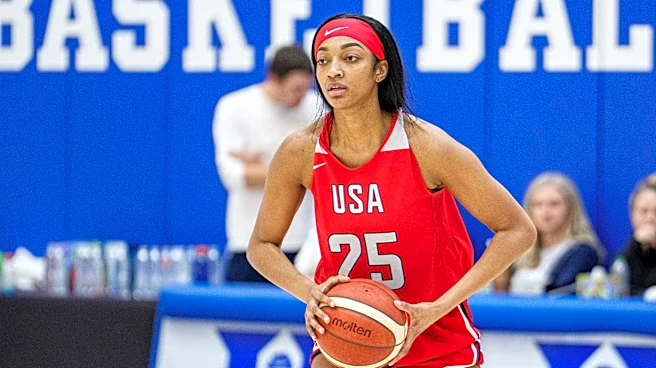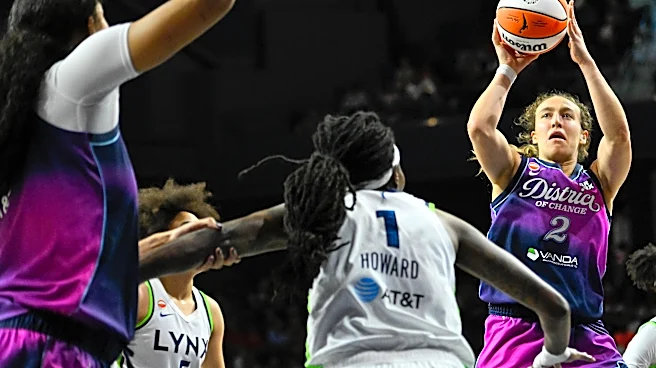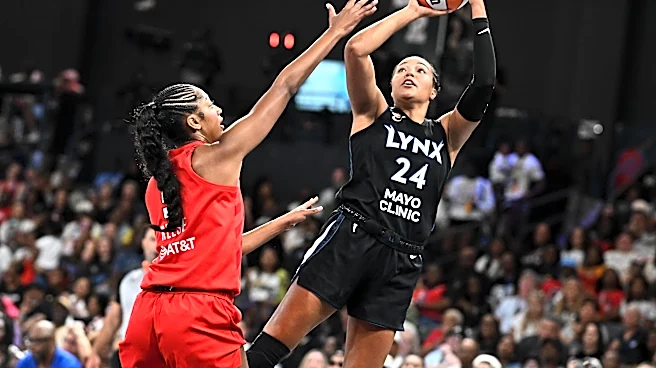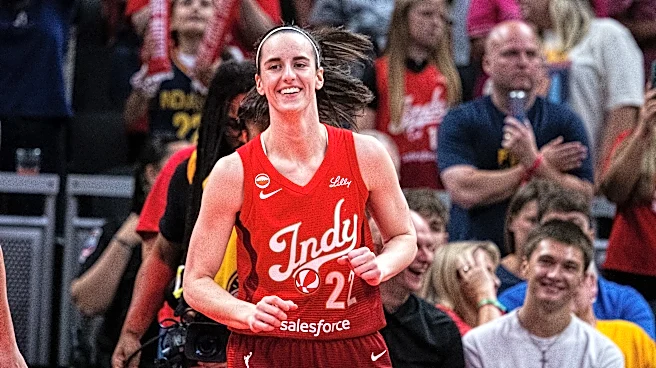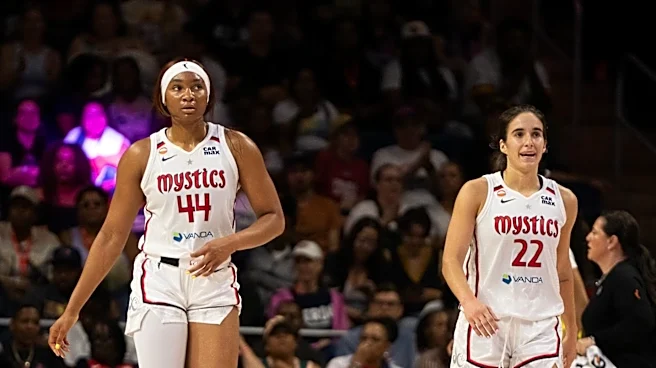

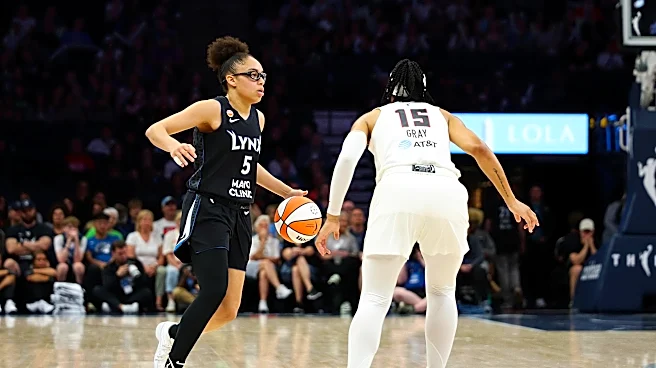
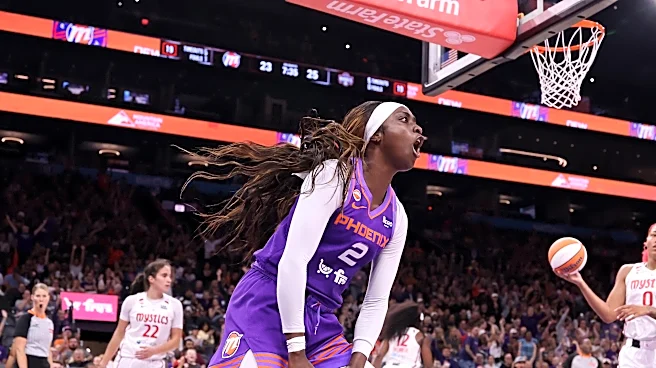
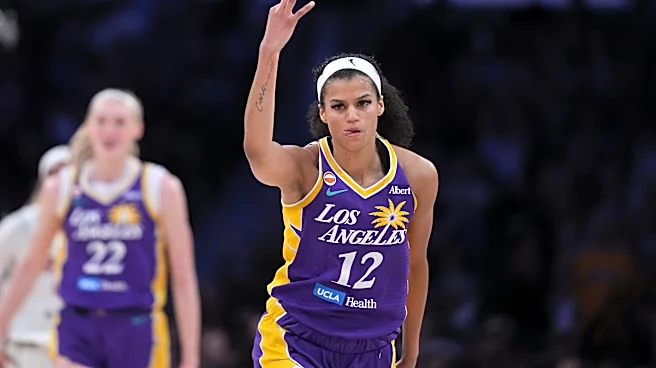
Early Monday morning, it was announced that Washington Mystics stars Kiki Iriafen and Sonia Citron have been added to Team USA’s FIBA World Cup roster, replacing A’ja Wilson and Kelsey Plum who will be inactive due to health reasons.
Both Iriafen and Citron had attended the Team USA training camp in December, with Iriafen also participating in the World Cup Qualifying Tournament in March. But, neither made the initial final roster. Now, the two Mystics head to Berlin, with the 22-year-old Citron and 23-year-old
Iriafen standing as Team USA’s two youngest players.
Additionally, Mystics undrafted rookie guard Alicia Floreé, who has slowly carved out a backup point guard role in DC, was named to Spain’s World Cup roster. Florez is only 22 years old herself, but is competing with fewer WNBA-level players on Spain’s depth chart. Could she make a greater impact on her home country than the American Mystics?
Does Sonia or Kiki have a better chance of emerging as a key contributor for Team USA?

As late additions to the Team USA roster, Iriafen and Citron are looking at an uphill battle to find consistent minutes for head coach Kara Lawson and her staff.
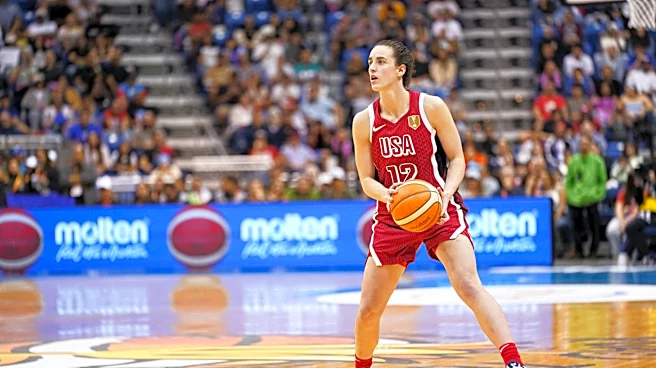
Citron has a greater chance of reprising her Notre Dame role—an off-ball shooting savant—than looking like the ball-dominant creator that she’s developed into in Washington. Looking at Team USA, the biggest competitors for off-ball guard/wing minutes will be Breanna Stewart, Kahleah Copper, Jackie Young, and Rhyne Howard. While Caitlin Clark, Paige Buckers and Chelsea Gray are all guards, their skillsets are much more suited to on-ball usage in comparison to the other names. Two or three of the off-ball players will likely be on the court at once, so Citron may have to position herself above just one of those names if she wants to see minutes off the bench.
Obviously, it’s difficult to see Citron outplaying Breanna Stewart in the few practices that Team USA will have before Friday. Copper, Young and Howard are all much more realistic competitors for Citron, and there’s absolutely a world in which she comes out hotter than one of those names. Howard is notoriously dependent on her 3-pointer falling to be an impactful offensive player, and Citron has shot more than five percent better than Howard from 3 since entering the WNBA last season. Citron has also grown her ancillary playmaking muscle, and has closed that theoretical gap between the two.
Copper and Young, in theory, are more equipped to play the sparkplug scoring role than Citron. On paper, they’re better scorers with more athletic advantages over defenders, although Citron is generally a better shooter than both of them. (I would entertain arguments that Young is a better shooter, not Copper). Assuming that none of them would inherit a large playmaking load alongside Clark, Bueckers and Gray, Citron’s road to playing time may step behind her 3-point percentage.
Iriafen’s positional competitors are no weaker than Citron’s.
A’ja Wilson’s absence opens up significant minutes at the 4 and 5, but Iriafen has to find some edge within a frontcourt room of Napheesa Collier, Angel Reese and Aliyah Boston. Reese and Boston are of a similar age and experience to Iriafen, which helps close the gap in theory. None of the younger post players have represented the senior national team in a World Cup or Olympics, but Collier will need support, especially given that she’s still coming off an injury.
Will there be minutes for four post players to play on a game-by-game basis? Possibly. Collier is accustomed to playing alongside more traditional centers, and her offensive versatility makes her very portable in different lineups. However, it’s hard to see any two of Reese, Boston and Iriafen sharing the court together. They would create incredible rebounding tandems, but their lack of volume floor spacing would introduce a lot of questions regarding a clogged paint. Team USA likely won’t struggle with rebounding due to their guard size, so Lawson may see spacing as a bigger win condition and therefore shy away from double-big lineups.
Iriafen absolutely has a chance to play in each of Team USA’s games, but she likely will see fewer minutes than Collier, Boston and Reese, who were part of the initial selection for the senior team.
Don’t be surprised if Alicia Floréz is an impact player for Spain

Floréz came into the WNBA as an entirely overlooked and ignored addition to the Mystics roster.
She wasn’t drafted, nor was she given a chance on a preseason roster for any WNBA team. Washington signed her to a developmental contract in mid-May, one day before their first game of the season. She didn’t join the team until the end of the month, but she hasn’t had to look back since suiting up. Floréz has become an important piece off of the bench for Mystics head coach Sydney Johnson, and at just 22 years old she could be a long-term rotational player in the W.
Floréz has been equally overlooked in the context of Spanish basketball. Her last appearance for Spain was as a member of their U23 3×3 team. She’s never suited up for the top national team, nor was she apart of the top 3×3 team. Her addition to the national team roster for the upcoming World Cup is a sign that her WNBA success has taken her home country’s basketball executives by surprise.
Having not competed in World Cup qualifiers, it’s hard to tell how much of a role Floréz might have in Berlin.
Maite Cazorla usually runs the point for Spain, with Iyana Martín and Mariona Ortiz supporting. Comparing their WNBA careers, Cazorla played 31 games for the Dream in 2019, but hasn’t been seen stateside since. Ortiz has played professionally since 2010 but has never made it to the WNBA. Iyana Martín, as many will know, was drafted No. 7 overall by the Portland Fire in this past draft, but remained in Spain to train for the World Cup rather than joining the Fire for the 2026 season. Martín is only 20 years old, so Portland is comfortable with her choosing to develop overseas rather than accelerating her timeline to the W.
Compared to Citron and Iriafen, Floréz has a lot less established competition.
Cazorla and Ortiz have significant experience representing Spain’s national team, as both have worn the red and yellow in the Olympics. However, they already split minutes with Martín, showing the team’s willingness to surrender playing time to younger, more talented players. Floréz is an emotional leader on the court despite her youth, so if she can prove to make impact plays, her ability to rally teammates behind her will follow. None of the Spanish guards play under a burden of scoring expectations, and will be deployed much more for their playmaking chops and defensive abilities.
Speculatively, Florez could very well end up as the most impactful Mystic at the World Cup.