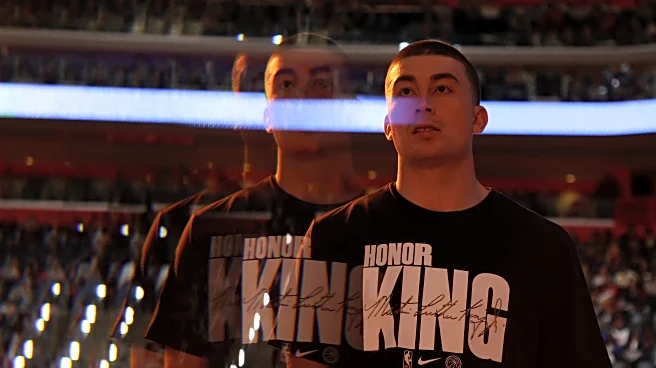




In this series, we’re looking at the biggest statistical differences between last season and the current one to understand how Celtics players have evolved while wearing the same jersey. Not every change is comfortable, but sometimes it arrives at the perfect time to make a player shine on a bigger stage. Payton Pritchard’s season is a great example of that.
Coming into the year, Pritchard’s role was expected to expand – but will he be able to deal with it? Or will Anfernee Simons take what we thought
was his. Well, steadily and deliberately, he owned his spot in the starting five. His minutes per game increased by nearly five, and his usage rose by 3.6 percentage points, signaling a player being trusted with longer stretches and more responsibility within the offense.
That trust shows up most clearly in his playmaking. Pritchard’s assist rate jumped by 5.2%, while his turnover rate dropped (-1.9%), a strong indicator of improved decision-making under a heavier workload. He’s handling more actions, making more reads, and doing so with fewer mistakes — a shift that reflects a move away from a pure bench scorer role.
At the same time, Pritchard is creating more of his own offense. The share of his field goals that are assisted dropped by 19%, the largest decline among Boston’s players. He’s driving more (six drives per game) and taking more pull-up shots (up 2.4 per game), a sign that the Celtics are increasingly comfortable letting him initiate rather than simply finish possessions.

That change is also visible in his shot profile. Pritchard is attacking the rim less and taking fewer corner threes, while spending far more time in the midrange. His short-midrange frequency jumped by 18%, with a smaller increase in long midrange attempts as well. Those shots are harder, less efficient, and rarely accidental — they tend to come when the first option is gone and the offense needs a bailout.
The cost of that responsibility is clear in the efficiency. Pritchard’s scoring efficiency dropped sharply, with declines in both two- and three-point percentage and a fall of nearly 17 points per 100 shot attempts. That doesn’t point to worse shooting touch as much as a tougher shot diet. He’s no longer picking spots; he’s filling gaps.
Defensively, his impact remains largely unchanged. Teams are having more opportunities to target him with more time on the court. That is the cost of becoming a starter in a team that is willing to switch in defense. His steal and block rates dipped slightly, but the overall picture is consistent with a guard whose value is in his scoring abilities and spacing boost.
Payton’s season is going accordingly with what his biggest fans were hoping. More time, more creation, fewer easy looks. Same jersey, different job.
Below is an overview of his statistical evolution, via Cleaning the Glass: