
As the 2026 NFL Draft draws closer, the importance of the Kansas City Chiefs getting it right with pick No. 9 solidifies further each day.
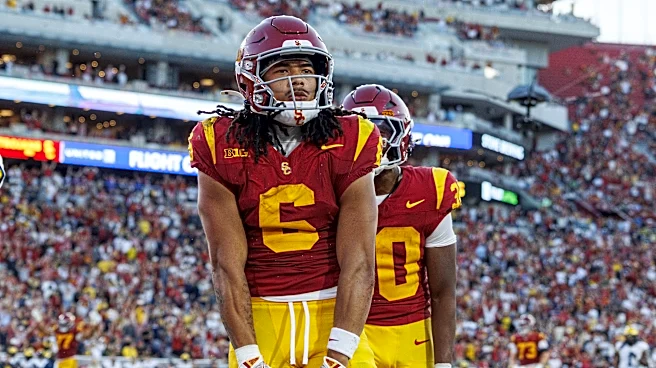
If the options are narrowed to the wide receiver position, three players would be in consideration based on consensus rankings: Carnell Tate from Ohio State, Jordyn Tyson from Arizona State and Makai Lemon from USC.
Arrowhead Pride lead film analyst Caleb James provided analysis on Tate when the draft’s top-ranked receiver told reporters at the NFL Scouting Combine
he met formally with the Chiefs, but the organization was not done meeting with the top-shelf wideouts in this class.
Last week, NFL Draft analyst Ryan Fowler reported that Lemon is scheduled to visit Kansas City on a “top-30” visit, a term that can be explained here.
Let’s take a closer look at Lemon’s draft profile:
Background
From the southern-California city of Los Alamitos, Lemon was the ninth-ranked receiver in the 2023 recruiting class according to 247sports. As a four-star recruit, he decided to stay home and accept the offer from USC over bigger-profile schools that offered, like Georgia, Alabama, Michigan and Oregon, among other powerhouse programs.
Lemon had to wait until his sophomore season to be a big part of the team, although he played both sides of the ball as a true freshman: Lemon played 72 snaps on offense and 18 snaps as a defensive back for the Trojans, according to Pro Football Focus.
In 2024, the defensive role went away, but Lemon became even more versatile in his breakout season. He led USC in receptions, receiving yards and kickoff returns as the team’s starting slot receiver. His special teams role went further than the return game: in punt coverage, Lemon played the sixth-most snaps on the team
He even earned 39 passing yards on his only throw of a stellar sophomore year, which ended with All-Big Ten honors for offense (honorable mention) and his work as a return specialist (third team).
He rode that momentum into his junior season, winning the 2025 Biletnikoff Award as the nation’s best receiver.
He was the catalyst for USC to produce the second-most winning season (9-4) the school has had since 2018. Lemon finished the year with the eighth-most receiving yards (1,156) and ninth-most touchdown catches (11) among all FBS wide receivers.
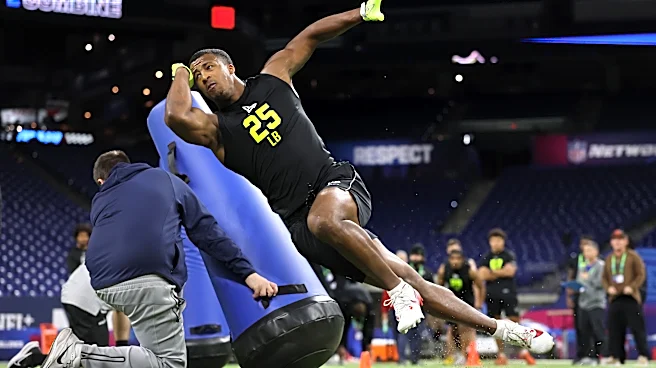
At the NFL Scouting Combine, Lemon did not participate in athletic testing, but measured in at 5 feet 11 inches tall and 192 pounds with 8 3/4-inch hands and an arm length of 30 1/2 inches.
At the USC Pro Day, Lemon unofficially ran the 40-yard dash in 4.47 seconds, although The Athletic’s Dane Brugler cited a range from 4.48 to 4.53 seconds from scouts in attendance.
For a reference point, 4.47 seconds would have ranked 21st among receivers at the Combine, and 4.53 seconds would rank 27th.
Film evaluation
To get a stronger idea of what Lemon will bring to the NFL, I watched all of his snaps against Purdue and Michigan last year.
USC’s top wideout lined up in the slot for 71% of his pass snaps and does a lot of his damage on routes from there.
Most glaringly, Lemon has run-after-catch ability that made him an efficient target, even on underneath passes. He never makes it easy on the first defender approaching him once he turns upfield after a reception, utilizing great elusiveness and short-area explosiveness to slip or burst past defenders in the open field.
The sudden, shifty footwork shows up after the catch most, but he can use it to create space on downfield routes when given a free release.
He combines that with high-level awareness on the fly, constantly adjusting the path of his route depending on the flow of the play. The pair of skills shows up here: Lemon widens the throwing window down the sideline with a strong move, then quickly works back towards his scrambling quarterback once he looks back for the ball.
While Lemon’s most clear trait shows as a playmaker on quick or short passes, the production he had on deep passes in 2025 is extremely intriguing. On passes thrown 20 or more yards in the air, Lemon caught 16 of 24 targets for 522 yards and five of his 11 touchdowns for the season.
While none of those big plays occur in this clip, the speed Lemon shows off grabbed my attention, knowing linear, long speed is not his best characteristic. It’s all about the tempo or pace of his route, and not just on the individual play.
He sets cornerbacks up throughout the game by saving his top gear, even if that acceleration only lasts 5-10 yards. He has the movement ability to run effective short and intermediate routes in second or third gear, waiting to punch the gas until the right time in the pattern to break away.
On downfield throws — which this play may not qualify as — Lemon completed five of six contested-catch opportunities and didn’t register a drop over the 24 targets. Overall, Lemon won 10 of 14 jump-ball battles by PFF’s terms in 2025.
For his size, he’s exceptionally instinctual and competitive when positioning himself at the catch point.
How he fits with the Chiefs
When watching Lemon, it’s hard not to compare him to Chiefs’ wide receiver Rashee Rice. Both are players an offense can feel good about giving the ball to at high volume.
As a newcomer, Rice’s immediate impact in Kansas City came through quick screens, and they still represent a large portion of his usage. Lemon was incredibly efficient on similar plays in 2025: on catches behind the line of scrimmage, Lemon gained 154 yards over 22 receptions; seven yards per catch is absurd for those scenarios.
The bottom line
Lemon looks the part of a seamless fit in the Chiefs’ offense, more so than Tate, in my opinion.
The irony is that Kansas City’s receiving corps could use a shakeup from the typical player it employs. Tate is the outside receiver to complement the slot receiver skills of Rice, Xavier Worthy and even tight end Travis Kelce.
On the surface, Lemon’s skillset feels too redundant — with too low of a ceiling — to invest a top-10 pick in. The key for the Chiefs will be to determine if his downfield production and high-traffic catch statistics can translate to the NFL, which could raise the ceiling of his career and potentially make him a stronger long-term choice than Rice ever was on the field.