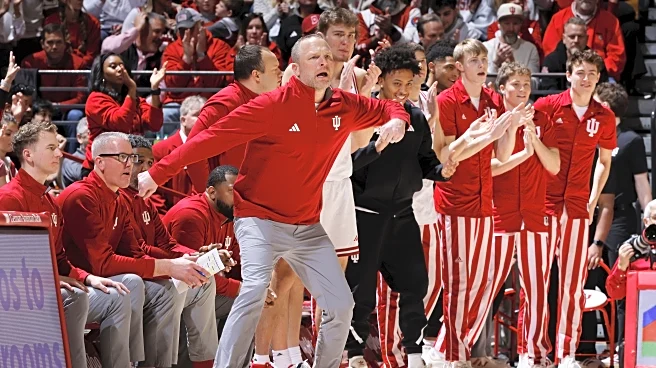

Indiana men’s basketball’s first season under Darian DeVries came to an end when the Hoosiers didn’t receive a bid for the 2026 NCAA Tournament. The Hoosiers finished 18-14 overall and 9-11 in Big Ten play, with a late collapse ending their March Madness hopes.
We’ll be recapping and analyzing DeVries’ first season in a few different ways from individual players to other lineups and trends. First, reviewing each individual players’ season starting off with a starter: Sam Alexis
Sam Alexis
- Final statline: 8.8 PTS, 4.8 REB, 1.2 AST
- Role: Depth C -> Starting C
Stats provided by KenPom
or CBB Analytics.
Alexis, like the vast majority of Indiana’s roster, joined the program through the transfer portal last spring after DeVries was hired. He, unlike several of his counterparts, came from a high-major program in Florida, which he joined after spending his first two seasons with Chattanooga.
With Florida’s frontcourt being as good as it was, Alexis’ playing time was very limited in 2024-25 with the vast majority of his minutes coming during the Gators’ non-conference slate. He stayed on the bench for all but one minute starting midway through February as Florida’s rotation tightened with the postseason looming. When he entered the portal, it was clear he was seeking the minutes he wasn’t going to find in Gainesville, minutes DeVries and Indiana were able to offer.
Alexis carved out a prominent role from there, starting the season as Indiana’s second center behind Reed Bailey before taking over as a starter when Indiana tweaked the lineup following a loss to Louisville. The Hoosiers stuck with a similar approach as they had before, splitting minutes at center between the two depending on matchups and how each was playing, until the closing stretch of the season when Alexis took on the bulk of the minutes.
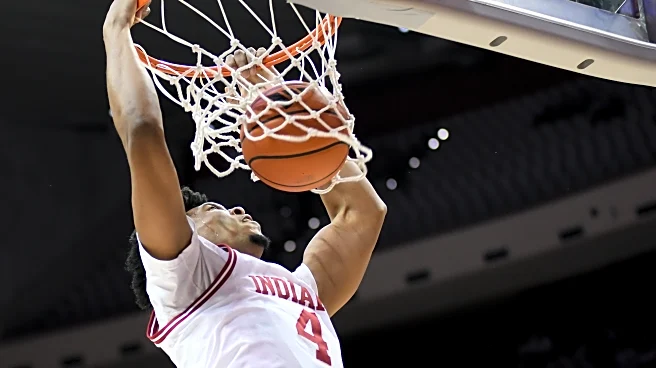
Alexis boasted Indiana’s highest offensive rating at 131.6 (KenPom) and very quietly broke the program’s single season FG% record, hitting 68.7% of his shots. That wasn’t a “feasting on smaller defenses in the noncon” number either, he went 69.4% in Big Ten play.
The vast majority of his production came either in the paint or right at the rim, with just eight attempts from 3-point range and nine from the midrange area.
Alexis was, by some distance, most effective under the rim and Indiana made sure that’s where the majority of his shots were taken one way or another. This usually came in the form pick and rolls, lobs with Alexis cutting to the rim and, occasionally, him taking the ball there himself off the drive or bullying his way into a shot in the post. He had limits, standing at just 6’9” in a league where most centers have a strong height advantage, but he made the most of his opportunities, clearly.
The problem being Indiana probably could’ve used more of those opportunities.
Alexis finished the season with a %Poss (percentage of possessions used) of 18.4% and ranked fifth in field goals attempted. Indiana’s offense was, of course, incredibly dependent on shots from 3-point range, but it’s fair to wonder in hindsight if it could’ve used more of Alexis.
There were games where he played tremendously, such as against Minnesota, Wisconsin and Oregon and games where he was more pedestrian, including against Purdue (both times), Washington and Michigan State at home. More often than not, this was due to a lack of attempts rather than poor shooting performances.
As mentioned previously, Alexis’ points usually came off of lobs because he was excellent at knowing when he had open space to work with and Indiana could create said space. Teams like Michigan State were able to limit Alexis by keeping him from finding said space, with the Spartans having Jaxon Kohler stay glued to him during their win in Assembly Hall when he finished with just 8 points on 3-6 shooting from the field. Illinois used a similar approach with its bigs, holding him to 11 points on 5-8 shooting. He occasionally found some success creating for himself in these situations, taking the ball to the rim, but the off-ball looks were significantly harder to come by than they were against, say, Minnesota, where the Gophers had no such interest in keeping a guy glued to him.
Indiana probably could’ve done with more of this self creation, I think. He found success with it, but the offense was clearly designed for more movement. For a team hurting for a real inside presence, I think a biiiit more of Alexis in the post could’ve opened things up a biiit more overall, creating space for shooters at the expense of some of that FG%. DeVries mentioned something to this effect during the season, saying Indiana needed to utilize it more.
Defensively, Alexis was Indiana’s best rim protector by some distance with a block rate of 6.2%. That’s not really excellent or anything, but he was the best shot blocker on the roster. He was rarely the tallest, longest or strongest player on the floor, but balanced protecting the paint with covering centers who, at times, could stretch the floor.